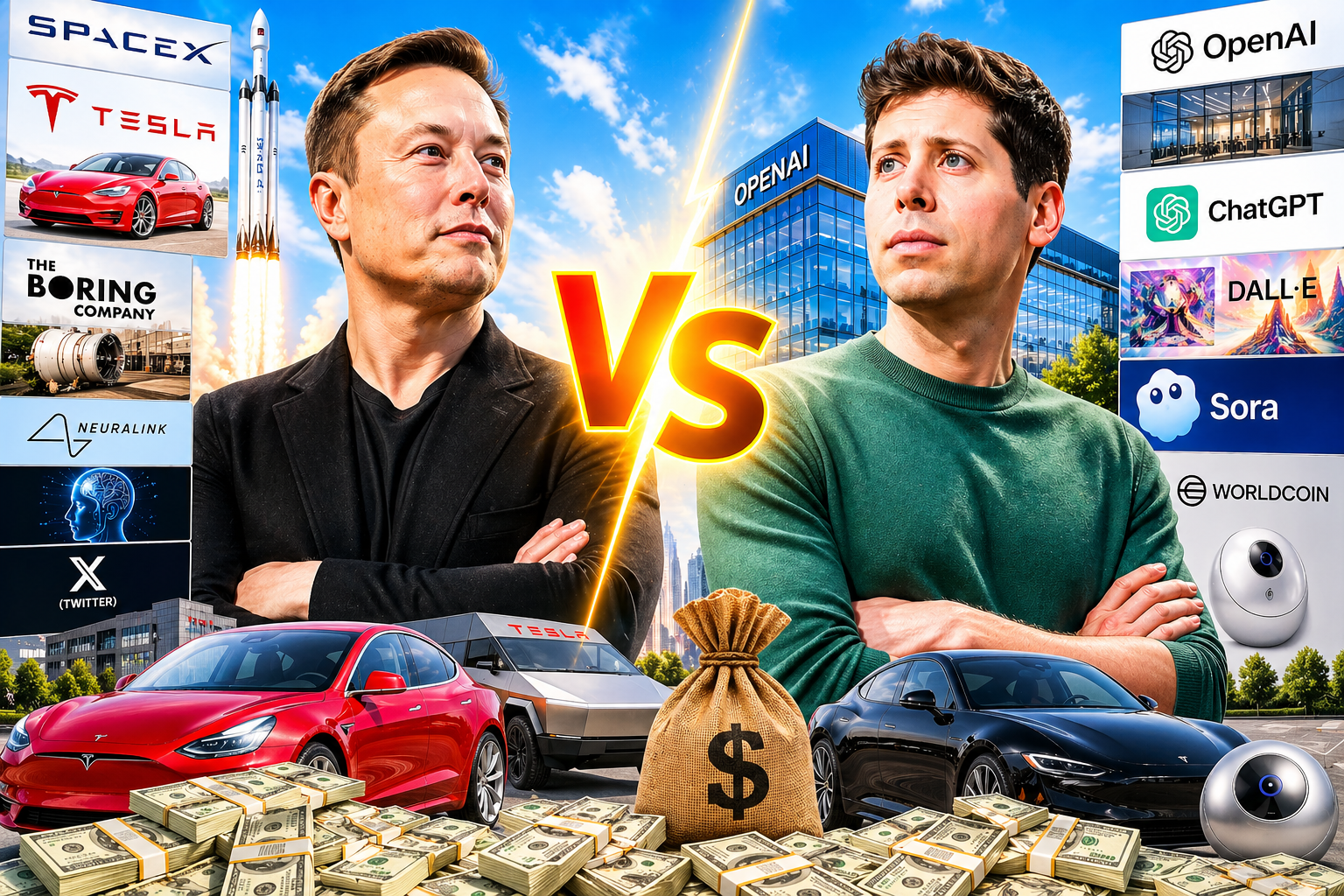

A legal dispute between two prominent figures in the technology sector has drawn renewed attention to their personal fortunes. The ongoing lawsuit, filed by Elon Musk against OpenAI and its CEO Sam Altman, has prompted comparisons of their net worth as of 2026. Observers note that while both individuals are billionaires, the liquidity and composition of their wealth differ significantly.
The lawsuit, often described as a clash between billionaires, centers on allegations regarding OpenAI’s transition from a non-profit research organization to a for-profit entity. Musk, a co-founder of OpenAI who left the board in 2018, has accused the company and Altman of breaching its original mission. Altman has denied these claims, asserting that the company’s restructuring was necessary to secure the capital required for advanced artificial intelligence development.
Net Worth Comparison in 2026
According to financial data and public filings available in 2026, Elon Musk’s net worth is estimated to be largely tied to his equity in Tesla, SpaceX, and other ventures. Analysts describe his wealth as highly illiquid, meaning that a significant portion of his holdings are not easily converted to cash without affecting market prices. This assessment comes from reports by financial news outlets and wealth tracking indexes.
Sam Altman’s net worth, while also substantial, is derived from a different mix of assets. His wealth includes stakes in OpenAI, which following its restructuring has attracted significant investment, as well as holdings in other technology startups and venture capital funds. Financial experts suggest Altman’s portfolio is relatively more liquid compared to Musk’s, though both fortunes remain subject to market volatility.
The Nature of the Lawsuit
The legal action, filed in a California court, alleges that OpenAI’s move to a for-profit model violates the terms of its original founding agreement. Musk’s legal team argues that this shift prioritizes commercial gain over the safe and responsible development of artificial general intelligence. The complaint seeks to enforce the original non-profit charter or, alternatively, to require the company to compensate for alleged breaches of fiduciary duty.
OpenAI and Altman have responded by stating that the company has always operated within the bounds of its evolving mission. They contend that the for-profit arm is necessary to attract the billions of dollars required for research and compute resources. The defense has also pointed to Musk’s own business interests, including his own AI venture, xAI, as a potential source of conflict.
Broader Implications for the AI Industry
The case has implications beyond the personal wealth of the individuals involved. It raises questions about governance, transparency, and the ethical frameworks guiding artificial intelligence development. Legal experts observe that the outcome could set a precedent for how technology companies, particularly those originally founded as non-profits, can transition to for-profit structures. The ruling may also influence how investors evaluate risk in the AI sector.
Market analysts have noted that the ongoing litigation has not significantly impacted the valuations of Tesla or OpenAI in the short term. However, the case has intensified public and regulatory scrutiny of the AI industry. Lawmakers in several countries have cited the lawsuit in discussions about potential new legislation for AI safety and corporate accountability.
Expected Next Steps
The court is expected to schedule a hearing on preliminary motions in the coming months. Both parties have indicated a willingness to engage in discovery, a process that could take up to a year. A trial date has not yet been set. Observers predict that the case may ultimately be settled out of court, though no formal settlement discussions have been reported. The final resolution, whether through judicial decision or settlement, is expected to have lasting effects on the governance models of major AI research organizations.
Source: Mashable