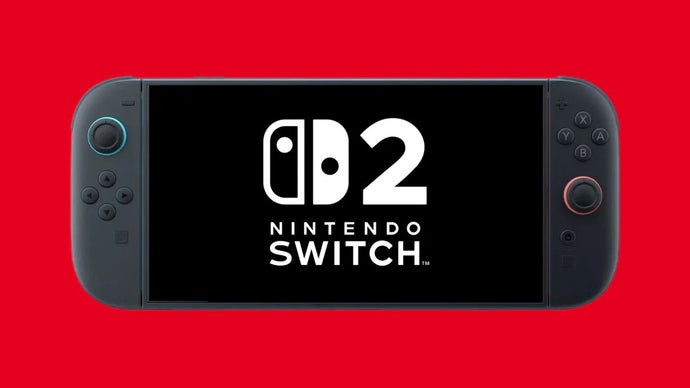

Nintendo’s share price has declined following a statement by company president Shuntaro Furukawa, who acknowledged that recent price increases on the company’s hardware would “raise the barrier to purchase” for consumers.
The admission came after Nintendo announced adjusted pricing for its Switch 2 console across several major markets, including Japan, the United States, Canada, and Europe. Investors reacted negatively to the news, with shares falling in trading sessions following the announcement.
Furukawa made the remark during a briefing to investors and analysts, where he addressed the company’s decision to revise console costs. He stated plainly that higher prices would make it more difficult for potential buyers to acquire the hardware, a direct acknowledgment of a risk that investors had been weighing for weeks.
The price adjustments affect both the standard Switch 2 model and the bundle that includes a digital copy of the game “Mario Kart World.” In Japan, the base console now carries a retail price of ¥49,980, while the bundle is priced at ¥53,980. In the United States, the standard model costs $449.99, with the bundle priced at $499.99.
Market reaction
Market analysts pointed to the price sensitivity of the gaming audience as a key factor behind the share drop. Nintendo’s stock, which had seen gains earlier in the year on strong software sales and anticipation of the new hardware, reversed course after the price news broke.
The company’s president did not offer specific forecasts for how much sales volumes might decline as a result of the higher price point. However, his statement was widely interpreted as a warning that the company expects a measurable impact on consumer demand.
Industry context
The gaming hardware market has faced upward pricing pressure across the industry in recent years, driven by rising component costs, supply chain constraints, and inflation in key manufacturing regions. Nintendo’s competitors have also raised prices on their latest generation consoles, though the company had historically resisted such moves longer than its rivals.
The Switch 2 is the successor to the original Nintendo Switch, which has sold more than 140 million units worldwide since its launch in 2017. The new model features upgraded processing power, a larger display, and compatibility with existing Switch software and accessories.
Investor outlook
Investors now await further details on preorder figures and launch sales data, which are expected to provide a clearer picture of how consumers are responding to the higher price tags. Nintendo has not yet released official preorder numbers for the Switch 2 in any region.
The company is scheduled to report its next quarterly earnings in several weeks, at which point management is expected to provide updated guidance reflecting the pricing changes and their anticipated effect on unit sales.
Analysts have noted that while the price increase presents a short term headwind, the long term success of the Switch 2 will depend largely on the strength of its software lineup and the continued expansion of the Nintendo Switch Online subscriber base.
Nintendo’s share price had risen approximately 15 percent over the past six months prior to the announcement, driven by strong sales of existing titles and optimism surrounding the new console launch. The recent decline has erased a portion of those gains, though the stock remains above its 12 month low.
Source: GamesIndustry.biz