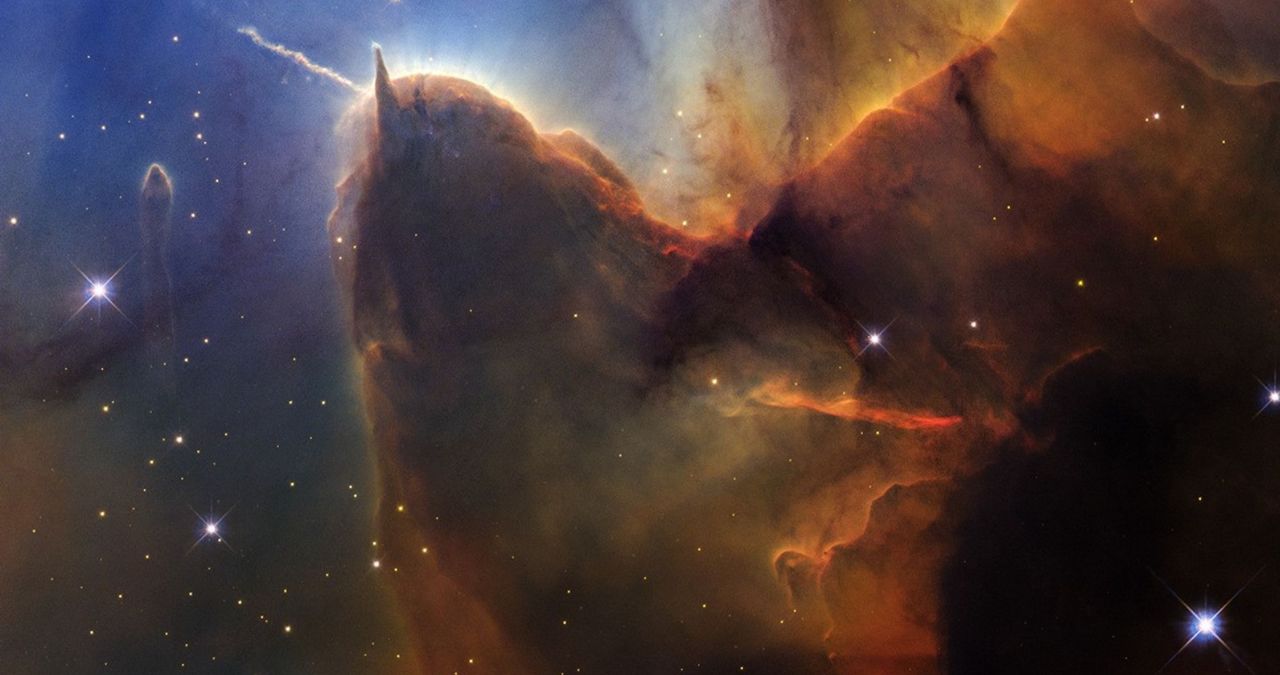

NASA has released a new image of a strikingly vivid cosmic structure that is drawing significant attention from astronomers and the public. The photograph, captured by a combination of space telescopes, shows a glowing formation that resembles a translucent sea lemon, a type of marine animal.
The image was released by the agency’s Jet Propulsion Laboratory and depicts what scientists formally identify as a planetary nebula. This particular nebula, located thousands of light years from Earth, is the result of a dying star expelling its outer layers into space. The intense ultraviolet radiation from the remaining stellar core causes the ejected gas to glow, producing the bright, alien like colors visible in the photograph.
The structure’s unusual appearance, which includes a bulbous, translucent body and wispy tendrils, has prompted comparisons to aquatic life. Researchers note that the visual similarity to a sea lemon is coincidental, arising from the specific chemical composition and geometry of the expelled material.
How the image was created
The composite image combines data from multiple observatories, including the Hubble Space Telescope and the Chandra X ray Observatory. Each telescope captures different wavelengths of light, allowing scientists to see details invisible to the human eye. The glowing green and blue hues in the image correspond to ionized oxygen and hydrogen gas, while other colors represent different elements.
This technique, known as multi wavelength imaging, is standard procedure for studying the life cycles of stars. By analyzing these images, astronomers can determine the temperature, density, and velocity of the gas surrounding the dead star. The data helps refine models of stellar evolution and the dispersal of heavy elements into the galaxy.
Relevance to astronomical research
Planetary nebulae like the one in the image are critical for understanding the final stages of medium sized stars, such as the Sun. Approximately five billion years from now, the Sun is expected to undergo a similar transformation, creating its own planetary nebula. Studying these objects provides a preview of that eventual process.
The glowing material also enriches the interstellar medium with carbon, nitrogen, and other elements. These elements are essential building blocks for planets and life. The image therefore serves not only as a visual curiosity but as a tool for fundamental astrophysical research.
Scientists have identified the nebula’s central white dwarf star, which is slowly cooling over billions of years. The surrounding gas shell is expanding at a rate of several kilometers per second, a motion that researchers have measured using spectroscopic observations.
Public reaction and observational details
Following the release of the image, the formation has been widely described as hypnotic or bewitching on social media, though such reactions are anecdotal. The photograph is part of a broader effort by NASA to make astronomical data accessible to the public. The image file and associated data products have been made available for free download on the agency’s website.
Amateur astronomers with appropriate equipment can locate the nebula in the night sky, though its faintness requires dark skies and a moderate sized telescope. The constellation in which it resides is visible from both hemispheres at certain times of the year.
The photograph reinforces the ongoing value of space based observatories in capturing phenomena that are difficult to observe from Earth’s surface due to atmospheric interference. Ground based telescopes had previously imaged the object, but with considerably less detail.
Future observations
Additional observation time on the James Webb Space Telescope has been allocated to study similar nebulae in infrared wavelengths. These observations are expected to reveal the chemical composition and dust structure hidden within the glowing shells. Astronomers anticipate that the data will help resolve unanswered questions about how quickly these nebulae disperse and what triggers their irregular shapes.
A paper detailing the physical properties of the nebula is under peer review and is expected to be published later this year. Until then, the NASA image remains the most detailed public view of this particular cosmic formation.
Source: NASA Jet Propulsion Laboratory