
A major international law enforcement operation has successfully dismantled a sophisticated criminal proxy service known as SocksEscort. The service operated by compromising hundreds of thousands of home and small office internet routers, turning them into a global botnet used for large-scale fraud and other cybercrimes.
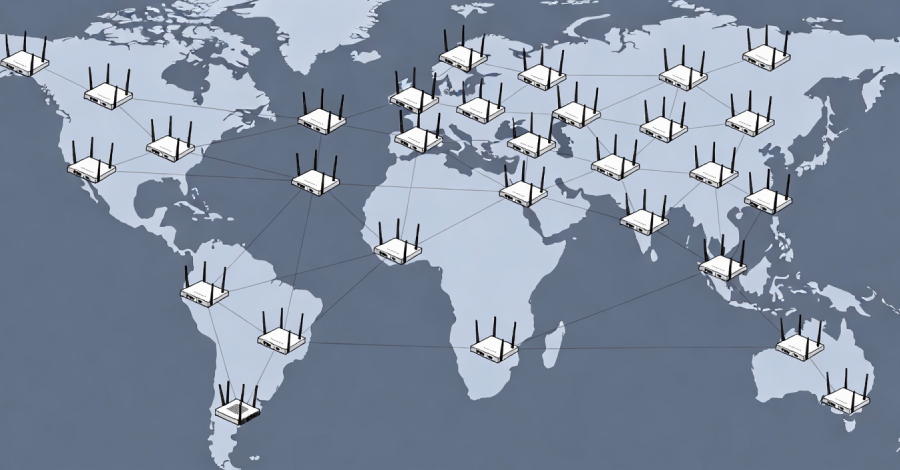
The coordinated takedown, authorized by a U.S. court, targeted the infrastructure of the SocksEscort service. According to the U.S. Department of Justice, the operation neutralized a network that had compromised approximately 369,000 unique IP addresses across 163 countries.
How the Botnet Operated
“SocksEscort infected home and small business internet routers with malware,” the U.S. Department of Justice stated in its announcement. This malware allowed the operators to covertly control the devices, creating a massive pool of residential IP addresses.
This network, often called a “residential proxy” or “SOCKS5” botnet, was then sold as a service to other cybercriminals. Customers could route their malicious internet traffic through these enslaved devices, making their activities appear to originate from legitimate, everyday home networks. This technique is commonly used to evade IP-based security blocks, commit ad fraud, and hide the true origin of attacks.
Scale and Impact of the Network
The scale of the SocksEscort operation was significant. By exploiting vulnerabilities in consumer-grade routers, the criminals created a pervasive and difficult-to-detect proxy infrastructure. The 369,000 compromised IPs provided a vast resource for anonymizing illicit online activities on a global scale.
Law enforcement agencies have not detailed all the specific crimes facilitated by the botnet, but such services are typically used for credential stuffing attacks, distributing spam, scraping data in violation of terms of service, and click fraud. The use of real residential IPs makes these activities far harder for security systems and website operators to distinguish from normal user behavior.
International Law Enforcement Collaboration
The operation highlights the increasing collaboration between international agencies in combating cybercrime that crosses borders. While led by U.S. authorities, the takedown likely required investigative support and legal cooperation from multiple countries where the infected devices were located.
Actions like this are part of a broader strategy to disrupt the cybercrime-as-a-service ecosystem. By targeting the infrastructure providers, such as proxy networks, authorities aim to raise the cost and difficulty for a wide range of downstream criminal actors.
Protection and Next Steps
For the owners of the compromised routers, the takedown likely means their devices are no longer being secretly used for criminal traffic. However, the underlying malware infection may persist. Experts routinely advise consumers and businesses to change default router passwords, regularly update device firmware, and disable remote management features not in use.
Looking forward, the investigation into the individuals behind the SocksEscort service is ongoing. The Department of Justice and its international partners are expected to continue forensic analysis of the seized infrastructure to identify operators and users of the service. Further legal actions, including indictments, may follow as authorities work to attribute responsibility for building and maintaining the extensive botnet.
Source: U.S. Department of Justice