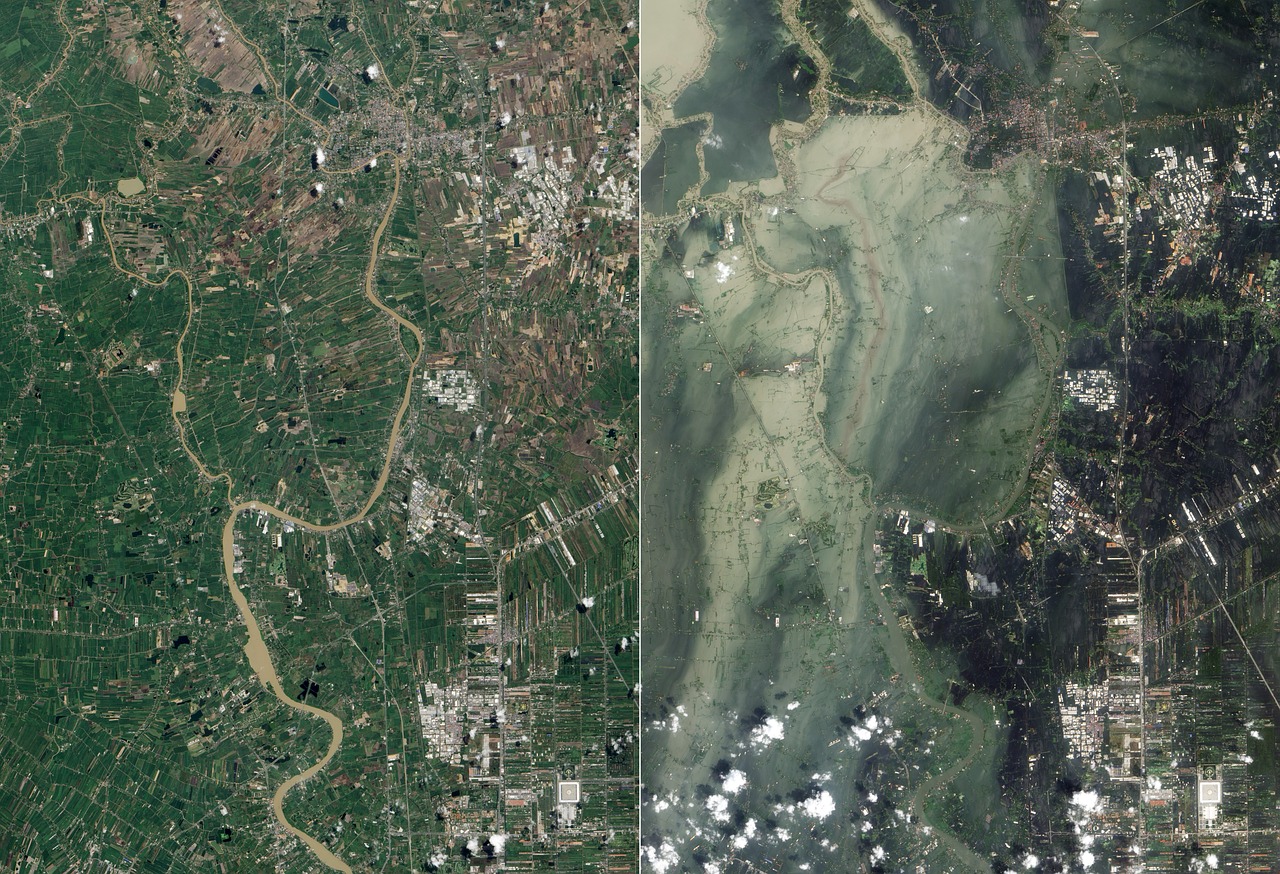

Google has developed a new system that uses artificial intelligence to analyze decades of old news reports and weather data to predict flash floods. The research, detailed in a scientific paper, addresses a critical lack of reliable historical flood data in many regions. This advancement could significantly improve early warning systems for sudden, deadly flooding events worldwide.
Addressing the Data Scarcity Problem
Accurate flood forecasting, particularly for rapid-onset flash floods, relies heavily on historical data to train machine learning models. In many parts of the world, especially in developing nations, consistent and quantitative records of past floods are scarce or non-existent. This data gap has long been a major obstacle for creating reliable predictive models in vulnerable areas.
Google’s approach tackles this problem by converting qualitative descriptions into usable data. The company’s researchers employed a large language model, a type of generative AI, to scan and extract information from thousands of news articles about floods published over the past two decades.
Turning News Reports into Training Data
The AI system was designed to read news stories and identify key factual details. It extracts specific information such as the location of a flood event, its severity, the depth of water, and the impacts on infrastructure and communities. This process transforms narrative reports into structured, quantitative data points that can be used to train and validate hydrological models.
By creating this new dataset, researchers can better understand flood patterns and the relationships between rainfall, geography, and flood outcomes. The synthesized data helps fill historical gaps, allowing models to make more accurate predictions even in data-poor environments.
Integration with Global Forecasting Systems
This method complements Google’s existing global flood forecasting platform, which provides alerts in over 80 countries. The platform uses various data sources, including satellite imagery and weather forecasts, to predict riverine floods. The integration of insights from news-reported flood events is intended to enhance the model’s ability to foresee flash floods, which are triggered by intense rainfall over a short period and are notoriously difficult to predict.
The technology is not yet deployed in public warning systems but represents a significant research breakthrough. The work demonstrates a novel application of large language models for social good, moving beyond text generation to solving concrete scientific and humanitarian challenges.
Future Developments and Applications
Google researchers indicate the next steps involve further validation and refinement of the technique. The focus will be on improving the AI’s accuracy in extracting data from diverse news sources and languages, and on integrating this enriched historical dataset more deeply into operational forecasting models. The long-term goal is to make flash flood warnings more reliable and provide earlier alerts to people in harm’s way, potentially saving lives and reducing economic damage. Similar AI-driven data extraction methods could eventually be applied to other climate-related disasters where historical records are incomplete.
Source: Nature