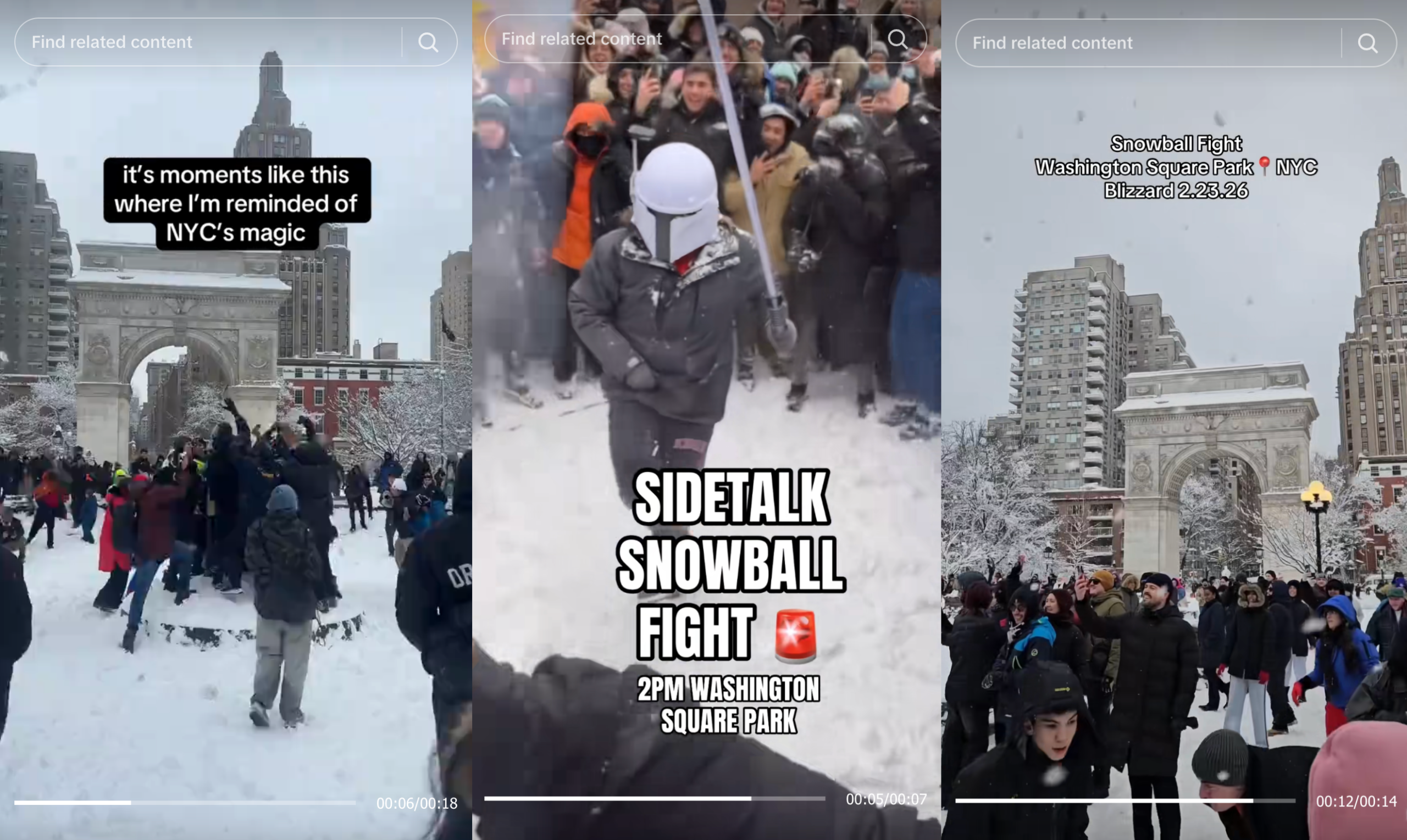

A large-scale, impromptu snowball fight involving hundreds of participants took place in New York City‘s Washington Square Park on Monday, following a significant winter storm that blanketed the region. The event, captured in numerous videos that circulated widely on social media platforms, occurred after a blizzard deposited approximately 20 inches of snow in parts of the city, creating ideal conditions for the wintry clash.
Event Details and Location
The conflict unfolded in the iconic Washington Square Park, located in Manhattan’s West Village neighborhood. Participants, primarily young adults, engaged in the friendly battle using snow accumulated from the historic snowfall. The park’s central arch and open spaces served as the backdrop for the organized chaos, which lasted for several hours during the afternoon.
Local authorities reported no major injuries or arrests directly linked to the snowball fight, though they maintained a presence to monitor the crowd. The New York City Department of Parks and Recreation noted that such spontaneous gatherings are not uncommon after major snow events, but the scale of this particular incident was notable.
Social Media Amplification
Videos and images from the event quickly gained traction online, with clips being shared across platforms including Twitter, Instagram, and TikTok. The visual content showed large groups dividing into loose factions, building snow fortifications, and launching volleys of snowballs across the park’s central fountain area. The hashtag #WSPsnowballfight trended locally for several hours.
This rapid dissemination on social media is credited with drawing additional participants to the park as the event progressed. Digital trends analysts observed that the organic, joyful nature of the content resonated with a global audience weary of pandemic-related news, providing a moment of lighthearted viral engagement.
Meteorological Context
The snowball fight was made possible by a powerful nor’easter that moved up the Atlantic coast, impacting a broad region from the Mid-Atlantic to New England. The National Weather Service had issued blizzard warnings for New York City, its first such warning in several years. Official measurements confirmed snowfall totals reaching up to 20 inches in Central Park, marking one of the top ten snowfalls in the city’s recorded history.
The storm caused widespread disruptions, including the closure of schools, vaccination sites, and non-essential city services. Public transportation faced significant delays and cancellations. The substantial snowfall, however, provided the raw material for the spontaneous recreational activity that followed once the worst of the storm had passed.
Community and Official Response
Reactions from local residents and business owners in the West Village were mixed. Some expressed delight at the community spirit and playful use of public space, while others voiced concerns about noise, litter, and the potential for property damage. The Greenwich Village Block Associations noted they received a handful of complaints but described the overall event as largely peaceful.
A spokesperson for the New York Police Department’s 6th Precinct stated that officers monitored the gathering to ensure public safety but saw no need for intervention. The priority, according to the spokesperson, was to allow for community enjoyment while preventing the congregation from spilling into surrounding streets and disrupting traffic.
Historical Precedents and Urban Culture
Spontaneous mass snowball fights have historical precedent in New York City and other major urban centers following heavy snowfalls. They are often viewed as a manifestation of collective cabin fever and a desire for communal interaction, particularly after periods of social isolation. Urban sociologists note that such events temporarily transform public spaces into arenas for unstructured play and social bonding.
The event in Washington Square Park echoes similar occurrences in other cities, such as Seattle’s annual “Snowpocalypse” gatherings and historical snowball fights in London’s Hyde Park. These events typically remain self-regulated by participants, with social norms preventing escalation beyond playful conflict.
Looking Forward
With the snow beginning to melt and city cleanup operations ongoing, officials do not anticipate a repeat event of similar scale. The forecast calls for gradually warming temperatures over the coming week, which will reduce the available snow. The Parks Department has indicated no plans to prohibit such activities in the future, provided they remain safe and do not result in damage to park property or pose a risk to participants or bystanders. Community leaders have suggested that the positive energy from the event could be channeled into organized winter festivals in subsequent years.
Source: Various local news reports and social media verification.