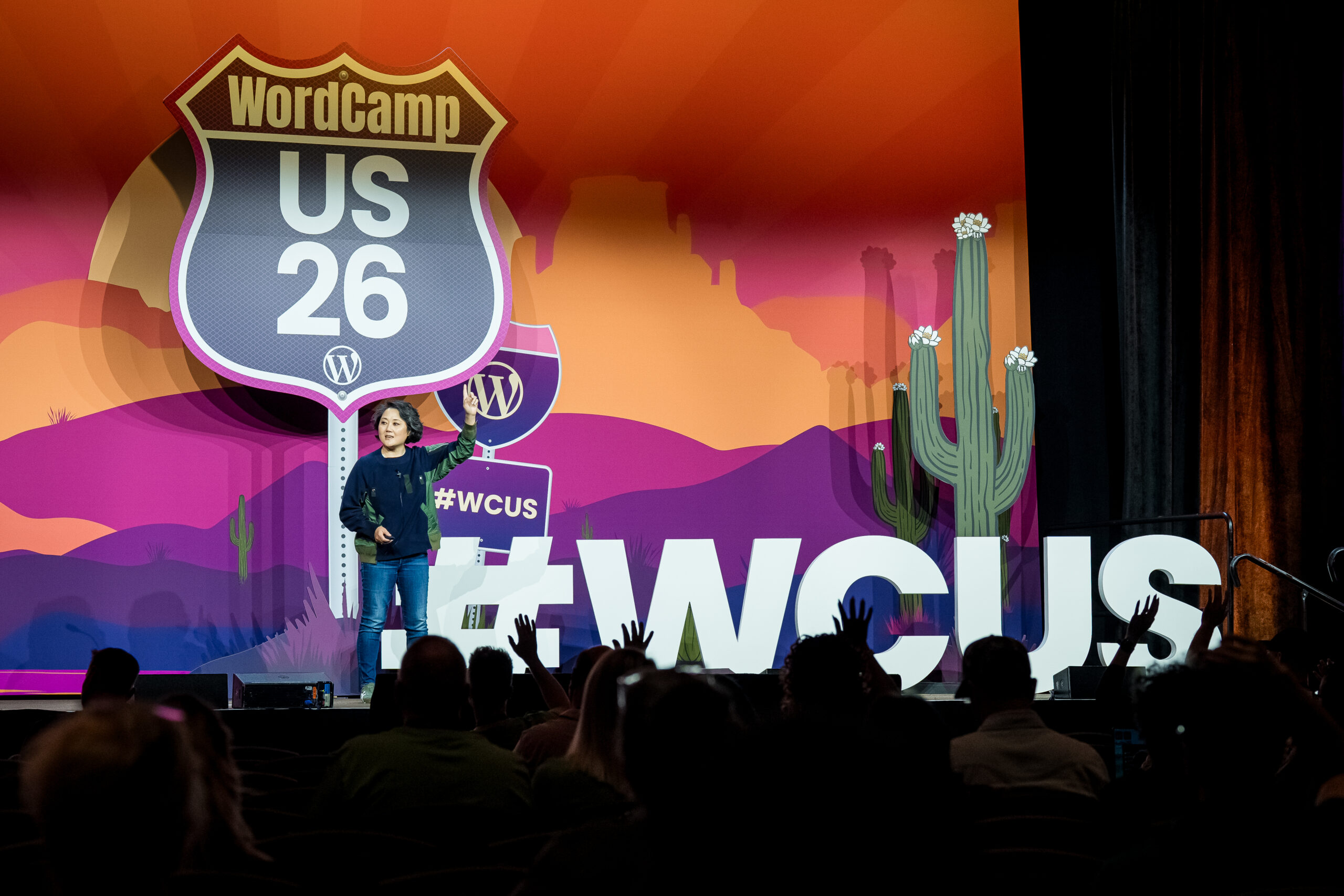

Phoenix, AZ. <a href="https://delimiter.online/blog/WordPress-studio-ai-desktop-app-launches-in-public-beta/” title=”WordCamp US”>WordCamp US 2026 convened 1,100 registered attendees at the Phoenix Convention Center from August 16 through 19, marking one of the largest gatherings of the WordPress open-source community in North America this year. The event featured over fifty sessions across four tracks, with thousands more participants joining via official livestreams.
Organizers reported that Contributor Day, a dedicated session for improving the WordPress platform, attracted 425 participants, including 29 first-time contributors. These volunteers formed 26 teams focused on completing specific project goals within a single day. The event concluded days before the official release of WordPress 7.1, named “Mary Lou” after the pioneering jazz artist Mary Lou Williams.
Conference Focus on artificial intelligence
A significant portion of the program, nearly half of all sessions, addressed artificial intelligence tools and their integration into web development workflows. Topics included agentic development, AI-powered plugin pipelines, and the concept of “vibe coding” for non-technical users. This represents the highest proportion of AI-related content at a flagship WordCamp to date.
The opening keynote, delivered by Loyal Pyczynski, drew on his experience at Disney and Meta. Pyczynski argued that AI can produce tools that are both more useful and more distinctly human, provided that developers include creators and researchers early in the process and prioritize real user feedback over assumptions. He suggested that user engagement, measured by sustained attention, serves as the primary metric for successful product design.
The closing session featured WordPress co-founder and Automattic CEO Matt Mullenweg alongside Robert Jacobi. During the fireside chat, Mullenweg discussed the need for simplification in technology development, noting a trend toward unnecessary complexity that he believes wisdom should correct. He also announced the revival of his @photomatt social media handle on Tumblr and X, a reference to his personal photography interest.
New Tools and Educational Initiatives
WordPress.com used the conference to highlight recent product launches. The WordPress.com Student Plan, announced during the event, provides students with access to a live WordPress site for coursework, allowing them to retain and continue developing their projects after the course concludes. This initiative targets educational institutions seeking practical web development training.
At the exhibition booth, company representatives demonstrated WordPress Studio, a local development tool with agentic capabilities, and WordPress Agent, an AI assistant designed to make direct changes to user websites. A related feature called Guidelines gives the Agent shared memory for a site’s voice, goals, and visual direction. Attendees reportedly engaged in extended demonstrations, exploring how these tools might integrate into their existing content management routines.
Community and Local Business Integration
Beyond technical sessions, the conference emphasized human connection and local culture. Organizers cited a “family reunion” atmosphere, with attendees seeking in-person interaction in a digital age. The venue hosted several creative activities, including a “Paint your own Wapuu” station featuring the WordPress mascot, and a Creator Studio equipped with professional lighting and recording gear for producing video content.
The WordPress Mercantile featured local Arizona businesses built on the WordPress platform. Booth giveaways included water bottles, fans, and sunscreen, alongside bags and bandanas designed by local artists, reflecting the host city’s desert environment. Recreational areas included cornhole and air hockey tables.
The event also included a private screening of “Code for the People,” a documentary about the WordPress community, complete with stickers and merchandise. The conference Wi-Fi password reportedly made a playful reference to the integration of technology and art, a detail that circulated among attendees on social media.
Organizers have not yet announced the dates or location for WordCamp US 2027. Registration details and session recordings for the 2026 event are expected to be published on the official WordCamp US website, and WordPress 7.1 updates are slated for continued rollout to users worldwide in the coming months.
Source: Delimiter Online