
Christian Fonnesbech, a games industry consultant and founder of the Copenhagen-based IP development firm Leverage, has argued that switching main characters for a game sequel carries significant commercial risk, particularly for young franchises that have yet to build a large audience. Fonnesbech, who previously served as head of IP development at Nordisk Film Games, made the argument in remarks published by GamesIndustry.biz. He founded Leverage in 2019 to help studios develop their intellectual property. His consulting work has included engagements with teams behind Dead Island, Metro, Conan Exiles, Dune Awakening, Exoborne, and the Dark Pictures Anthology, though non-disclosure agreements limit what he can disclose about those projects.
Fonnesbech said the main character is often the most valuable element of a new IP, even though it is not the only component. He noted that gameplay and the game world are both major parts of any franchise, but the character is the easiest element to own in a court of law and the primary point of emotional connection for players. He said the character also shapes player expectations when they return to a franchise, and that altering it carries serious risk.
He said reaching the point where an IP connects with an audience is extremely difficult. Creative people often believe they can produce hit after hit, but most cannot, he said, adding that emotional connection with millions of people is so difficult that a studio should consider itself fortunate to produce even one hit. He cautioned against comparing most studios to companies such as Landfall or Blizzard, describing that level of repeated success as unrepresentative of how the industry generally works.
For studios that do produce a hit, Fonnesbech recommends guarding the IP closely. He said a successful connection provides evidence that something works, not merely a single success. If that emotional connection resides in a character, he said, studios should be very careful about discarding it, because doing so gives up accumulated player time with that character and amounts to a large bet that the studio can reproduce the connection without breaking what worked originally.
Character continuity and franchise identity
Fonnesbech said the main character provides the player’s chief connection with a title. He said gameplay shapes the emotional journey, but after hundreds of hours in the company of a character such as Agent 47 from Hitman, players cannot easily separate the character from that feeling. The character becomes the emotional experience, he said, and it also travels across merchandise, film, and other parts of a franchise, which supports maintaining continuity.
Asked about sequels that have changed leads, Fonnesbech cited Hades 2, in which the player controls Melinoë, sister to the first game’s protagonist Zagreus. He said the game has been a success, but he distinguished between artistic and business decisions. He said an artistic choice to feature a female character is legitimate, but it is not automatically a business choice. He described the first Hades as brilliant across gameplay, character, and world, with a clear emotional journey about a young man rebelling against his father, discovering a troubled family history, and breaking that pattern. Hades 2, he said, is about finding home, a different emotional journey. He said the sequel’s gameplay remains strong, but the franchise’s identity has become less clear. He called the choice artistically brilliant and expressed uncertainty about it from a business standpoint.
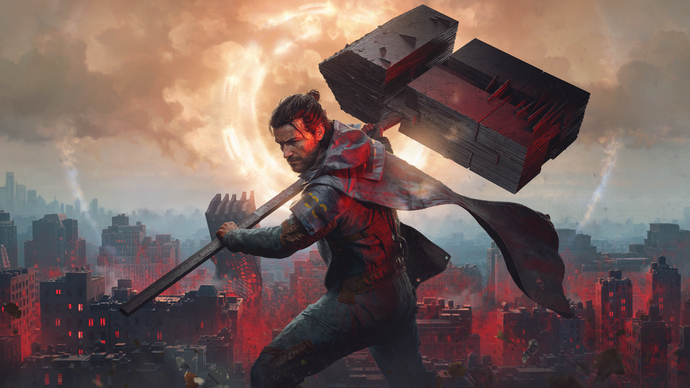
Fonnesbech also addressed upcoming titles that change leads, including Control Resonant, God of War Laufey, and The Witcher 4. He said some cases involve bigger mistakes than others. In the original Control, he said, protagonist Jesse Faden had a clear emotional journey centered on searching for her brother, while the sequel places her brother Dylan in the lead. He said millions of players spent many hours with Jesse, making her an IP asset of enormous market value, and questioned the switch. He compared the decision to a hypothetical Tomb Raider sequel centered on Lara’s brother.
He said he understands the artistic impulse to try something new, but argued that changing leads disrupts what audiences expect from a franchise. He compared the situation to a James Bond film that does not feature James Bond. On God of War Laufey, he said players return to the series for Kratos. He described the 2018 God of War reboot as a rare and brilliant achievement because it gave Kratos a son and created a fresh emotional journey while retaining the same character. He said Laufey may be equally brilliant but is a different character. He added that even a switch to Kratos’s brother would be a mistake. He said public debate often reduces the issue to whether women can lead games, which he called a separate matter. He said games should feature more women, but that existing franchises should not lose the central figure supporting them.
Familiarity, audience reach, and genre changes
Fonnesbech said familiarity is central to successful franchises. He said players lower their purchase risk by buying something they know, including its quality, subject matter, and emotional connection. Changing the main character creates friction and risks undermining that familiarity. He said retaining the same characters does not necessarily make a franchise creatively stale, citing Hollywood’s periodic reinvention of Batman with different actors and tones. He expects more of this approach in games, with the 2018 God of War reboot as an early example of a character refresh.
On Star Wars, Fonnesbech said the franchise did not begin as a world-building exercise. He said it originally centered on Luke, Leia, and Darth Vader across three films. He said an IP can eventually evolve from a handful of characters’ emotional journeys into a brand or ecosystem, but that transition occurs much later, when a franchise reaches roughly a hundred million fans rather than ten million. He said Cyberpunk 2077 is attempting a world-focused strategy relatively early in its life, describing it as an anthology set in Night City without a tentpole character. He said he is not sure it is the best strategy and believes a recognizable central character would strengthen it. He noted that when Cyberpunk: Edgerunners was released on Netflix, many players returned to the game to kill the villain from the series, which he said shows that audiences latch onto characters even when a franchise does not pursue a character strategy.
Fonnesbech said an argument for switching main characters is that a game can reach a new audience, but he said the opposite can occur. He said the risk is addressing a subset of the original audience and slicing that audience thinner with each release. He said consistency across world, characters, emotional journeys, conflict, themes, and gameplay is key. In his consulting work, he said, studios sometimes ask whether they can apply a different kind of gameplay within an existing IP. He advises caution, noting that Star Wars can support such experiments because of its enormous fan base, while a franchise with five million fans that switches from first-person shooter to real-time strategy may sell far fewer copies. He cited the Halo Wars real-time strategy titles as an example, saying they were widely regarded as good games but are not why players buy Halo.
Fonnesbech’s remarks arrive as several major studios prepare sequels that replace their established protagonists. The commercial performance of those titles, including Control Resonant, God of War Laufey, and The Witcher 4, will provide the clearest evidence yet of whether character continuity remains as decisive a factor as he argues.