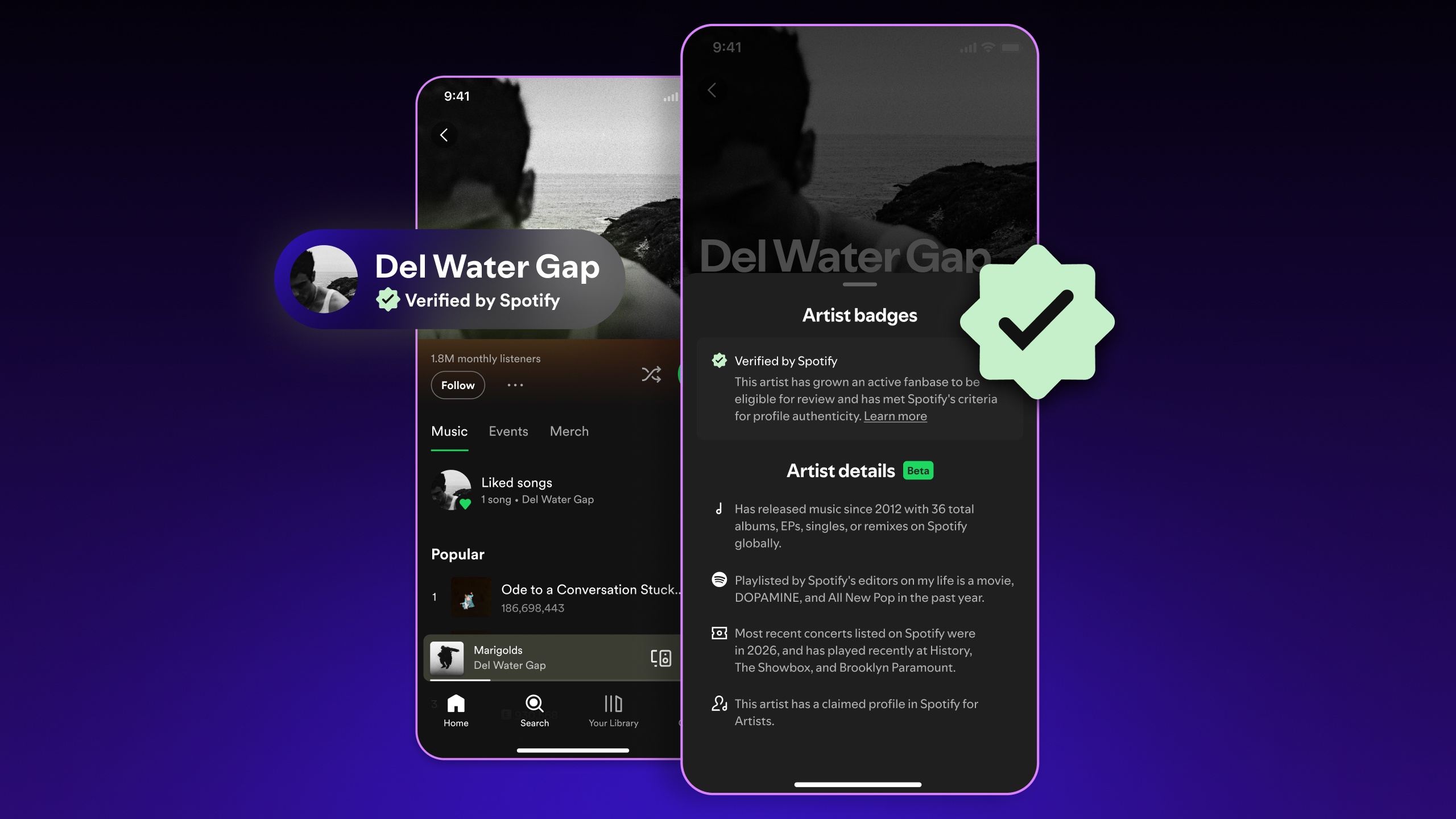

Music streaming service Spotify has introduced a verification badge designed to distinguish human artists from profiles that generate music solely through artificial intelligence. The company announced the new system on April 30.
The badge, named “Verified by Spotify,” will appear as a small green checkmark on artist profiles across the platform. It is intended to help listeners identify musicians who are real people, as opposed to synthetic or AI created profiles that have become more common on the service.
Spotify stated that the verification badge will initially be rolled out to a selection of artists. The company said it plans to expand the program over time to include more creators. The badge is tied to the artist’s identity as a human creator, not to the popularity or size of their audience.
Background
The move comes amid growing concerns in the music industry about the rise of AI generated music. In recent months, streaming platforms have seen an increase in tracks produced by artificial intelligence tools, sometimes using the likeness or style of existing artists without their consent.
Spotify has faced criticism for hosting AI generated content that mimics human artists. The company has previously stated that it does not ban AI generated music outright, but it does prohibit content that infringes on copyright or impersonates real artists.
The new verification system is one of several measures the platform is adopting to address these issues. The badge is intended to provide a clear signal to users that a given artist is a verified human creator, which may help listeners make more informed choices about the music they stream.
Reactions and implications
Industry observers have noted that the verification badge could become an important tool for artists seeking to establish trust with their audience. By visibly marking profiles as human, Spotify may help reduce confusion among listeners who struggle to differentiate between human made and AI generated music.
Some artist advocacy groups have welcomed the initiative, calling it a step toward greater transparency on streaming platforms. However, critics have pointed out that the system does not address all concerns related to AI music, such as the use of AI to clone a human artist’s voice or style without permission.
Spotify has not disclosed the specific criteria used to determine which artists receive the badge. The company said it is working with record labels, distributors, and artist representatives to verify identities and ensure the system is fair and accurate.
Technical context
Verification badges are a common feature on many social media and content platforms, including Twitter, Instagram, and YouTube. They are typically used to confirm that an account is the authentic presence of a notable public figure or brand.
In the context of music streaming, the badge serves a similar purpose but focuses specifically on the distinction between human creators and automated or synthetic profiles. This is a relatively new challenge for the industry, as generative AI tools become more sophisticated and accessible.
Spotify has not specified whether the verification badge will be applied retroactively to existing artist profiles or if it will only be available to new accounts. The company indicated that the program will be phased in gradually and that artists can expect to receive updates through their Spotify for Artists dashboard.
The streaming giant also said it will continue to invest in technology and human review processes to identify and label AI generated content appropriately. The verification badge is part of a broader effort to maintain trust and authenticity on the platform.
No timeline has been given for a full rollout of the badge to all eligible artists. Spotify confirmed that the program is active as of April 30 and will expand in the coming months.
Source: Mashable