
Samsung has unveiled its latest flagship smartphone series, the Galaxy S26, positioning advanced Artificial Intelligence and enterprise-grade privacy features as its core selling points. The launch, announced globally, marks a strategic shift for the company towards monetizing AI services and addressing the security demands of professional users.
The new lineup consists of three models: the Galaxy S26, S26+, and S26 Ultra. Pricing varies by storage configuration and region. The company’s central narrative for the generation is “agentic AI,” which involves a deeper integration of on-device and cloud-based AI to automate a range of tasks. These tasks include intelligent call screening, generative photo editing, real-time transcription and translation, and workflow automation.
Channel and Enterprise Opportunities
This focus on AI as a service creates new bundling opportunities for sales channels. Resellers can package AI-powered services with data plans, insurance, and trade-in programs. Mobile network operators can integrate features like AI call screening and scam detection into premium security bundles. For enterprise resellers, the AI productivity tools can be combined with mobile device management platforms and existing software contracts from providers like Microsoft and Google.
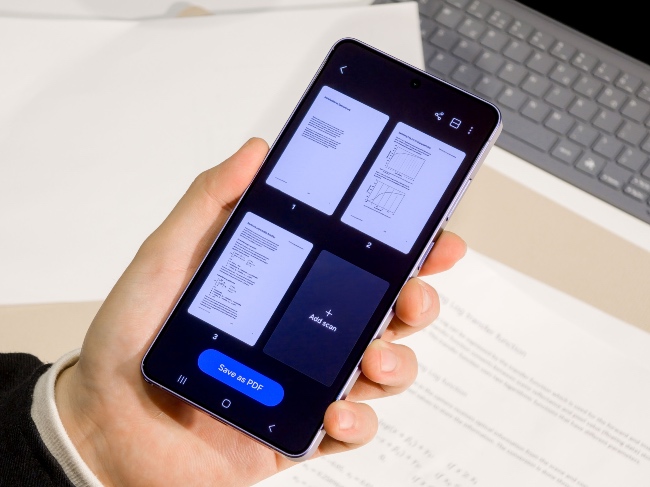
Retail demonstrations can highlight the practical benefits of AI photo editing, translation, and document scanning to justify the devices’ value. Analysts note that Samsung appears to be repositioning its Galaxy AI platform as an orchestrator of multiple AI assistants, integrating Google’s Gemini and an upgraded Bixby alongside new partnerships, aiming to provide context-aware task automation.
Privacy as a Key Feature
A significant hardware introduction is the built-in “Privacy Display” on the S26 Ultra model. This feature narrows the screen’s viewing angles so that only the user directly in front of the device can see the content clearly. Samsung anticipates this will be a major talking point for sales teams targeting sectors with strict visual privacy requirements, such as healthcare, government, and legal professions.
The privacy suite is complemented by software features, including AI-driven alerts for sensitive app access, a Private Album within the Gallery app, and the implementation of post-quantum cryptography protection. The devices continue to be protected by Samsung’s Knox security platform and are promised seven years of security updates.
Evolutionary Hardware Updates
The Galaxy S26 Ultra receives the most substantial hardware update, centered on the new Snapdragon 8 Elite Gen 5 processor. Samsung claims this delivers significant performance gains for both general tasks and on-device AI workloads compared to its predecessor. The design has been refined to be slightly thinner and lighter, improving ergonomics while maintaining a familiar aesthetic.
Camera hardware on the Ultra model remains focused on a 200-megapixel main sensor and a dual-telephoto setup. Samsung states that improvements in lens brightness and image processing algorithms yield better low-light photography and videography, branded as Nightography. The display retains its size and resolution but uses a more efficient and brighter OLED panel. Charging speeds and storage standards see incremental improvements.
Overall, the S26 series represents an evolutionary update rather than a radical redesign. The core camera sensors, battery capacity, and design language see minimal changes, with the primary advancements coming from the new chipset’s efficiency, minor camera refinements, and the new privacy-focused display technology.
Availability and Market Context
The Galaxy S26 series is available for pre-order through various mobile carriers and retailers. Promotional offers at launch include storage upgrades and trade-in programs. Analyst Paolo Pescatore of PP Foresight suggests that while Samsung is leaning heavily on AI as its primary differentiator, the technology still may not be a must-have for all consumers. He notes that the Privacy Display could emerge as a standout feature in a crowded market, potentially becoming a key purchase trigger if marketed effectively.
Samsung’s launch underscores the intensifying competition in the high-end smartphone market, where differentiation increasingly relies on software, services, and specialized features rather than pure hardware specifications. The emphasis on privacy-compliant tools directly targets the growing enterprise and professional user segment.
Looking ahead, industry observers will monitor consumer and enterprise adoption rates of the new AI services and the practical impact of the privacy features. Samsung’s ability to clearly communicate the tangible benefits of its “agentic AI” vision, beyond marketing terminology, will be crucial for the Galaxy S26 series’ market performance in the coming quarters.
Source: Mobile News CWP