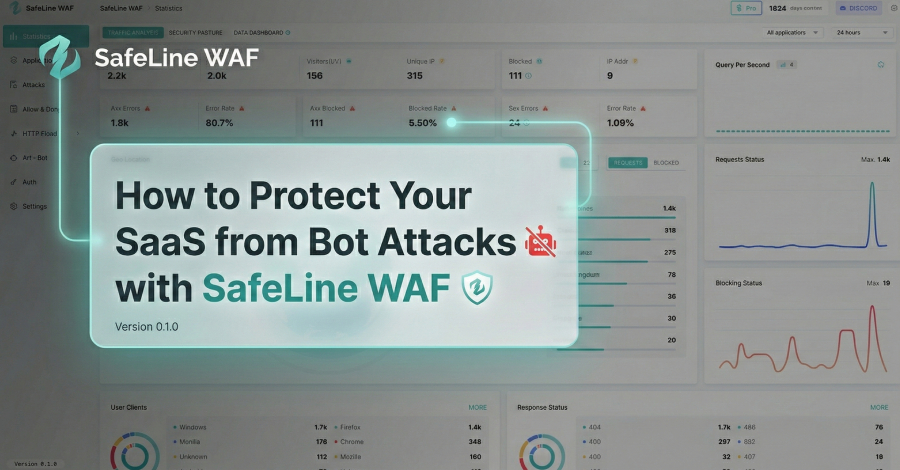

Software-as-a-service companies globally are experiencing a significant rise in automated <a href="https://delimiter.online/blog/cybersecurity-recap/” title=”bot attacks”>bot attacks that distort key performance metrics and inflate operational costs, according to recent industry analysis. This trend, often masked by seemingly positive growth data, poses a substantial threat to the financial health and security of online platforms.
Many SaaS providers initially interpret a surge in traffic as a sign of successful user acquisition. Metrics such as increased sign-ups, higher session counts, and more frequent API calls typically indicate growth. However, security experts warn that a portion of this activity is increasingly fraudulent, originating from automated scripts rather than genuine human users.
Identifying the Hidden Impact
The primary challenge lies in detection. The fraudulent activity often mimics legitimate user behavior, making it difficult to distinguish from real growth. Common indicators include a noticeable discrepancy between user registrations and actual product activation. A high number of accounts may be created, but very few proceed to engage meaningfully with the service.
Furthermore, infrastructure costs, particularly server and bandwidth expenses, can escalate rapidly without a corresponding increase in revenue. This imbalance directly impacts a company’s bottom line. System logs may also reveal patterns of repeated requests originating from a limited set of IP addresses or using identical, non-standard user agent strings, which are hallmarks of automated tools.
The Broader Security Implications
Beyond financial drain, these bot attacks present several security and operational risks. They can be used for credential stuffing, where stolen username and password combinations are tested at scale to gain unauthorized access to user accounts. Bots are also frequently deployed to scrape proprietary data, such as pricing information or content, from SaaS platforms.
This type of automated traffic can degrade service performance for legitimate customers by consuming server resources. In extreme cases, it can be a precursor to or part of a distributed denial-of-service (DDoS) attack, aiming to overwhelm and take down the service entirely.
Mitigation Strategies and Industry Response
The cybersecurity industry has developed specialized tools to address this threat. Web Application Firewalls (WAFs) with advanced bot management capabilities are a common line of defense. These systems analyze incoming web traffic and API requests in real-time, using behavioral analysis, fingerprinting, and challenge mechanisms to identify and block malicious bots while allowing legitimate users through.
Security professionals recommend that SaaS companies implement layered security strategies. This includes monitoring analytics for the specific anomalies mentioned, employing robust WAF solutions, and conducting regular security audits. The focus is on implementing solutions that can accurately differentiate between human and automated traffic without creating friction for real users.
Industry observers note that as SaaS adoption continues to grow globally, the economic incentive for malicious actors to target these platforms with automated attacks will likely increase. The ongoing development of more sophisticated bots necessitates equally advanced and adaptive defensive measures from service providers.