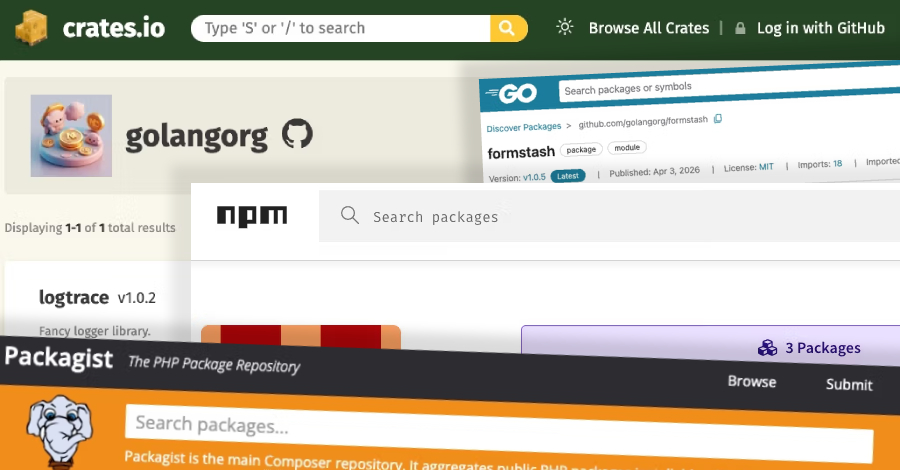

A persistent North Korean cyber-espionage campaign has significantly expanded its reach by publishing approximately 1,700 malicious software packages across major open-source programming ecosystems. The activity, attributed to the group known as Contagious Interview, targeted repositories for JavaScript (npm), Python (PyPI), Go, and Rust over an extended period, security researchers confirmed this week.
The packages were designed to impersonate legitimate developer tools and libraries, a tactic known as dependency confusion or typosquatting. Once downloaded by unsuspecting developers, these packages functioned as malware loaders, enabling the hackers to deploy additional malicious payloads onto victims’ systems. This operation marks a substantial scaling of the group’s established methods.
Campaign Details and Modus Operandi
According to analyses from multiple cybersecurity firms, the threat actor meticulously crafted package names to closely resemble popular, legitimate ones. This increased the likelihood of developers accidentally including them in their projects, either through manual error or automated build processes. The malicious code within these packages was often obfuscated to evade initial detection.
The primary function of these packages was to establish a backdoor connection to servers controlled by the hackers. This connection could then be used to steal sensitive data, including credentials and intellectual property, or to facilitate further network intrusion. The campaign’s broad targeting across multiple programming languages suggests an intent to cast a wide net across the global software development community.
Attribution and Historical Context
Security researchers have linked the activity to the North Korean state-sponsored group tracked as Contagious Interview, which is also known by other identifiers like Jade Sleet. This group is believed to be subordinate to North Korea’s Reconnaissance General Bureau (RGB) and has a long history of targeting technology companies, cryptocurrency firms, and defense contractors.
This latest campaign represents a continuation and evolution of the group’s strategy. By poisoning open-source software supply chains, they gain access to the networks of potentially high-value targets, including software developers and the organizations that employ them. The scale of this operation, involving thousands of packages, indicates a high level of coordination and resources.
Industry Response and Mitigation
The maintainers of the affected package repositories, including the npm and PyPI registries, have been notified and have taken action to remove the identified malicious packages. Major security vendors have also updated their databases to detect these threats. However, the sheer volume of packages means some may remain undetected for a period.
Security experts are urging developers and organizations to practice heightened vigilance. Recommendations include meticulously verifying package names before installation, implementing software composition analysis (SCA) tools, scanning dependencies for known vulnerabilities and malware, and enforcing strict controls over which external packages can be used in development pipelines.
Ongoing Threat and Future Outlook
The incident underscores the persistent and growing threat posed by nation-state actors to the global open-source software ecosystem, which forms the backbone of modern application development. Analysts expect similar supply chain attacks to continue, as they provide a efficient vector for compromising a large number of potential targets through a single point of entry.
Security teams are anticipated to increase monitoring of package repositories for suspicious activity, including bulk registrations and packages with minimal functional code. Collaboration between repository maintainers, security researchers, and the developer community is considered critical to defending against future campaigns of this nature. The investigation into the full scope and impact of the Contagious Interview campaign remains ongoing.
Source: Multiple cybersecurity research reports