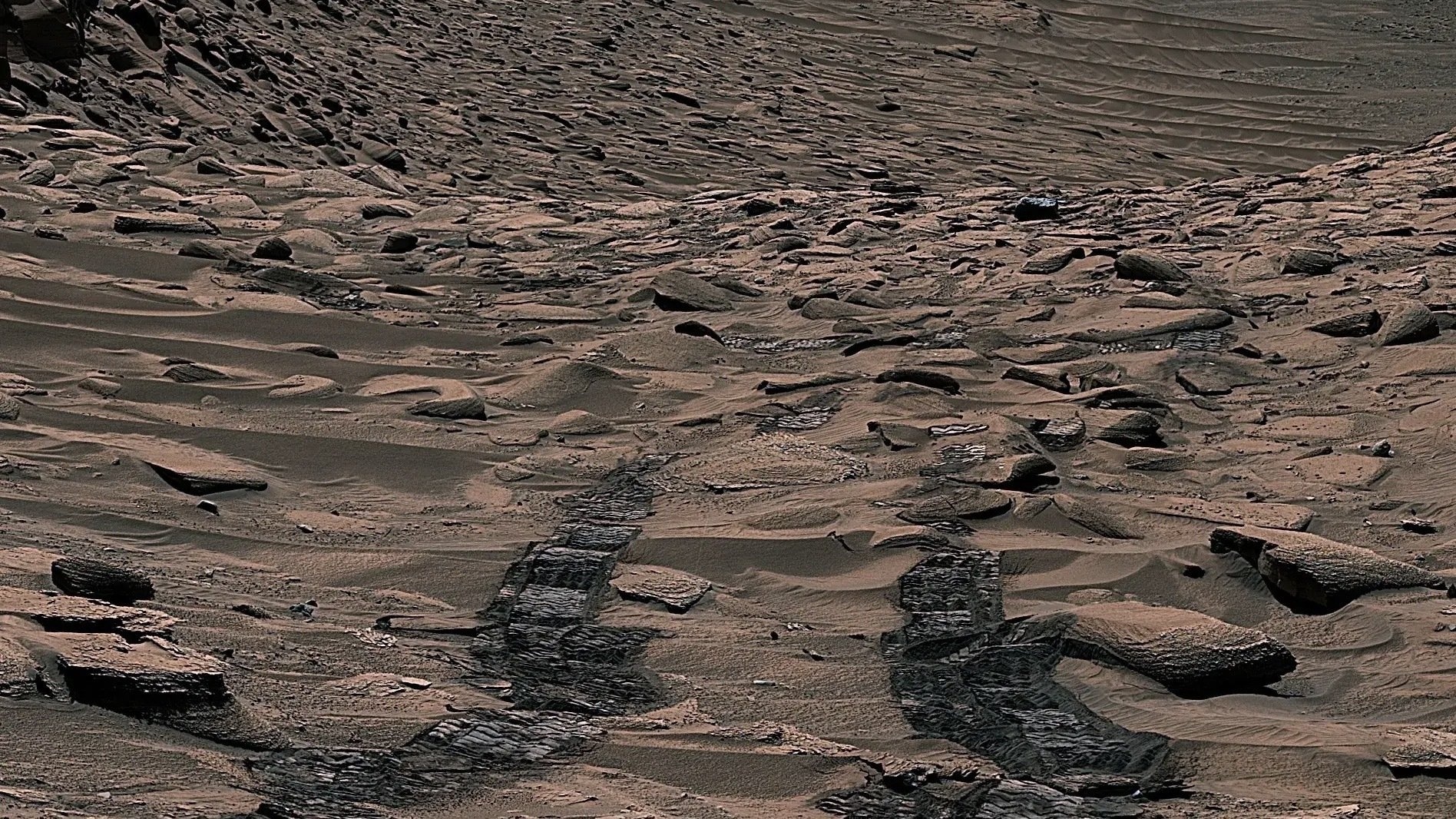

NASA has released a two-minute timelapse video compiled from images captured by the Curiosity Rover, one of its two operational robotic vehicles on Mars. The footage, published by the U.S. space agency, documents the rover’s traverse across the Martian surface over a significant period.
The video serves a scientific purpose rather than a promotional or sentimental one, according to the agency. It Shows the changing landscape beneath the rover as it moves, with dust and terrain shifting over time. The footage was assembled from a series of photographs taken by Curiosity’s hazard avoidance cameras, known as Hazcams.
Curiosity has been operating on Mars since its landing in August 2012. As of the publication of the video, the rover has traveled approximately 30 kilometers (about 18.6 miles) from its landing site in Gale Crater. The timelapse compresses years of movement into a short clip, illustrating the rover’s progress and the environmental conditions it has encountered.
The video’s release coincides with ongoing analysis of data gathered by Curiosity. The rover continues to study the Martian geology and atmosphere, searching for evidence of past habitable conditions. NASA officials have noted that the timelapse provides a unique perspective on the rover’s journey, showing not only distance traveled but also the dynamic nature of the Martian environment, including dust accumulation and wind erosion.
Scientific Context and Purpose
The Hazcams are primarily used for navigation, helping the rover avoid obstacles such as rocks and steep slopes. However, NASA engineers periodically repurpose the images to create visual records of the rover’s path. The agency stated that the timelapse allows researchers to track changes in the rover’s surroundings that might affect future operations or scientific observations.
One key observation from the video is the presence of persistent dust on the rover’s solar panels and instruments. This dust reduces power generation over time, though Curiosity’s nuclear power source mitigates this issue. The visual data also helps Ground teams plan routes that avoid hazardous terrain while maximizing scientific returns.
Implications for Future Missions
The footage underscores the challenges of long duration robotic exploration on Mars. Dust storms, which can obscure cameras and reduce visibility, are a recurring factor in mission planning. NASA’s current rovers, including Curiosity and Perseverance, are equipped with advanced sensors to monitor these conditions.
The video may also inform the design of future Mars missions. Engineers can study how dust accumulates on surfaces and how terrain changes affect mobility. These insights are critical for upcoming sample return missions and potential human exploration, where environmental predictability is essential.
Looking ahead, Curiosity is expected to continue its ascent of Mount Sharp, a layered mountain within Gale Crater. Scientists aim to analyze rock layers that may contain clues about ancient water activity and potential microbial life. The rover’s ongoing operations are part of NASA’s broader Mars Exploration Program, which includes the Perseverance rover and the Ingenuity helicopter.
Source: NASA, Mashable