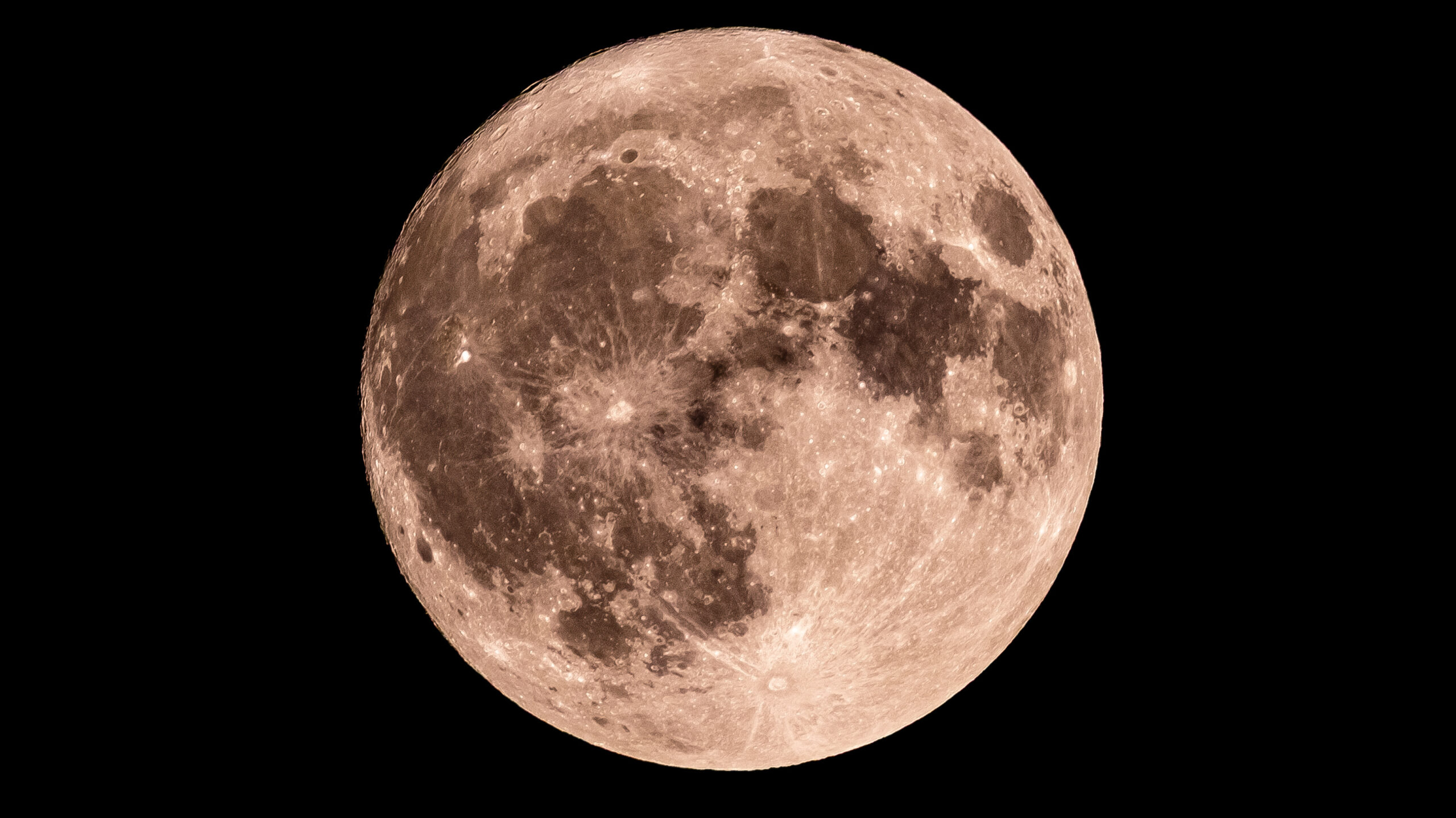

Observers in many regions worldwide witnessed a full moon on the night of April 1, marking the peak of the lunar cycle. The event signifies the transition into the waning phase, where the moon’s illuminated area will gradually decrease each night until the next New Moon.
Following the Full Moon, the lunar disk enters the waning gibbous phase. The change is not immediately obvious, but over subsequent nights, the moon will appear to diminish in brightness from its right side as viewed from the Northern Hemisphere. This optical effect is caused by the changing angle of sunlight hitting the moon’s surface relative to Earth.
The Lunar Cycle Explained
The moon’s phases are a direct result of its orbit around Earth. As the moon circles our planet, the portion of its sunlit hemisphere visible from Earth changes. The cycle, known as a lunation, takes approximately 29.5 days to complete, progressing from New Moon to Full Moon and back again.
A Full Moon occurs when the moon is positioned opposite the sun, with Earth in between. This alignment allows the entire sunlit face of the moon to be visible from our planet. The precise moment of fullness is instantaneous, but the moon appears fully round to the naked eye for about a day on either side of that peak.
What Observers Can Expect
For skywatchers, the post-full moon period offers a clear view of lunar surface features along the terminator, the line separating day and night on the moon. During the waning gibbous phase, this shadow line reveals craters and mountains in sharp relief along the moon’s eastern limb, providing excellent opportunities for observation with binoculars or telescopes.
The moon will continue to rise later each evening. In the coming nights, it will appear increasingly as a bulging, less-than-full shape, often described as a “waning gibbous” moon. The rate of change becomes more pronounced as the moon approaches its Last Quarter phase, roughly a week after the Full Moon.
Scientific and Cultural Context
Lunar phases have long held significance for calendars, agriculture, and cultural practices across civilizations. In astronomy, the predictable cycle serves as a fundamental celestial clock. The waning phase is often associated in various traditions with a time for release, decrease, or introspection, mirroring the moon’s diminishing light.
From a scientific standpoint, the absence of a significant atmosphere on the moon means its surface transitions abruptly from extreme heat to extreme cold. The changing angle of sunlight during the waning phase alters the temperature gradients across lunar features, which is a subject of study for planetary scientists.
Looking Ahead
The moon will continue its waning journey through April. The next major phase is the Last Quarter Moon, expected in about a week, when half of the moon’s near side will be illuminated. Following that, the moon will shrink to a waning crescent before reaching the next New Moon, when it will align with the sun and become virtually invisible in the night sky. After the New Moon, the cycle will begin anew with the waxing crescent phase, leading to the next Full Moon approximately 29.5 days after the April 1 event.
Source: Mashable