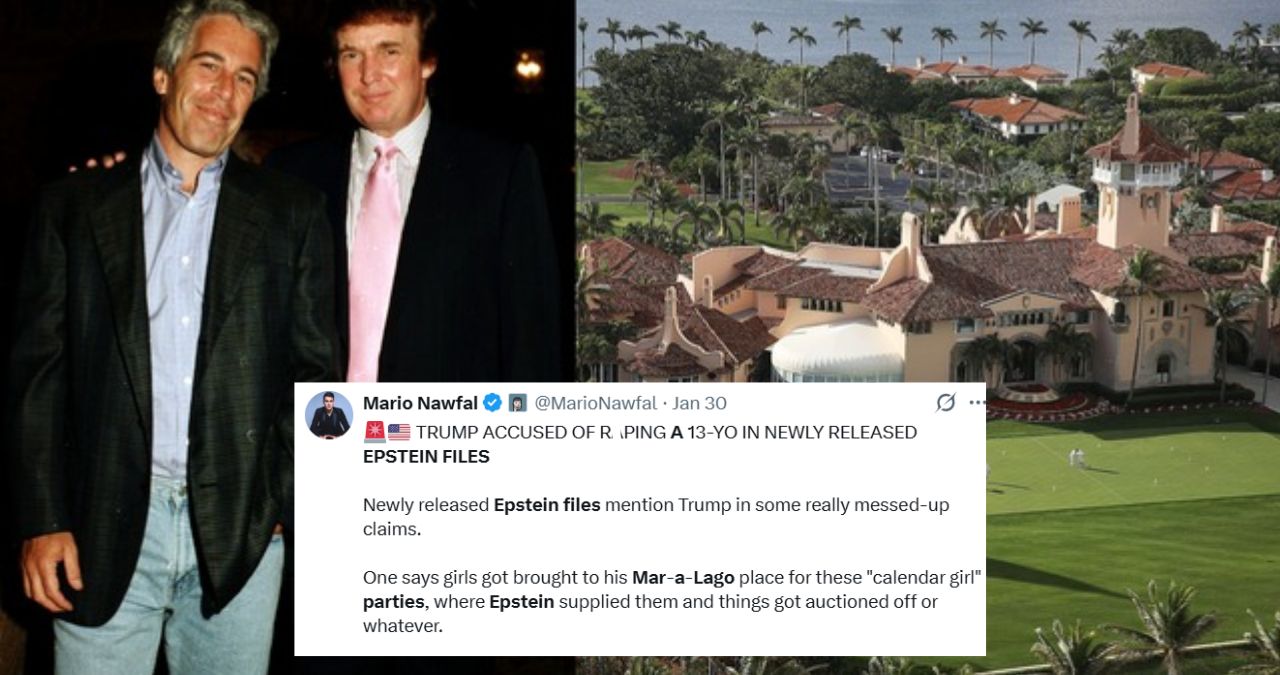

Palm Beach’s most prominent private club is facing renewed public and legal scrutiny following the release of court documents related to the Jeffrey Epstein case. The documents, unsealed by a federal court, contain allegations regarding activities at the Mar-a-Lago property in Florida during the late 1990s and early 2000s.
Allegations in Unsealed Filings
The newly public records include a deposition from a witness, Johanna Sjoberg. In her testimony, Sjoberg alleges she was present at Donald Trump’s Palm Beach club when she was recruited for a massage by Epstein’s associate, Ghislaine Maxwell. Sjoberg stated she was 22 years old at the time of the alleged incident.
Separate allegations from a Jane Doe, whose testimony remains partially redacted, claim she was sexually abused at Mar-a-Lago in 1999 when she was a minor. These claims have not been independently verified in a court of law. The documents are part of a since-settled 2015 defamation lawsuit brought by Virginia Giuffre against Maxwell.
Context and Legal Background
Jeffrey Epstein was a financier convicted in 2008 of procuring a minor for prostitution. He was later arrested in 2019 on federal sex trafficking charges and died by suicide in a Manhattan jail cell. His associate, Ghislaine Maxwell, was convicted in 2021 on sex trafficking and other charges and is serving a 20-year prison sentence.
Mar-a-Lago, a historic estate and private club owned by former President Donald Trump, has long been a venue for high-profile social and political events. The property’s association with Epstein, who was a member in the past, has been a subject of prior media reports.
Response and Statements
A spokesperson for the Trump Organization has previously and consistently denied any knowledge of or involvement in inappropriate activities at Mar-a-Lago. In past statements, representatives have characterized Epstein as merely a club member from 1993 to around 2002 and asserted that Trump himself had banned Epstein from the property.
Legal experts note that the inclusion of allegations in unsealed court documents does not constitute a finding of fact. The testimony reflects claims made in the course of litigation and has not been adjudicated specifically against the property or its owner.
Ongoing Legal and Public Repercussions
The document release has triggered widespread media coverage and public discussion. It has also prompted calls from some quarters for further investigation into the broader network associated with Epstein. The unsealing process is part of an ongoing effort by media organizations and legal advocates to increase transparency in the long-running case.
As a private club, Mar-a-Lago is not subject to the same level of public oversight as a commercial business. However, its status as a frequent gathering place for influential figures ensures that allegations connected to it receive significant attention.
Legal analysts expect the release of these documents to fuel continued civil litigation related to Epstein’s activities. Investigative journalists and law enforcement agencies may also examine the claims further, though no new criminal charges related to these specific Mar-a-Lago allegations have been announced. The full impact of the document disclosures on public perception and any potential future legal action remains to be seen.
Source: Various Court Documents