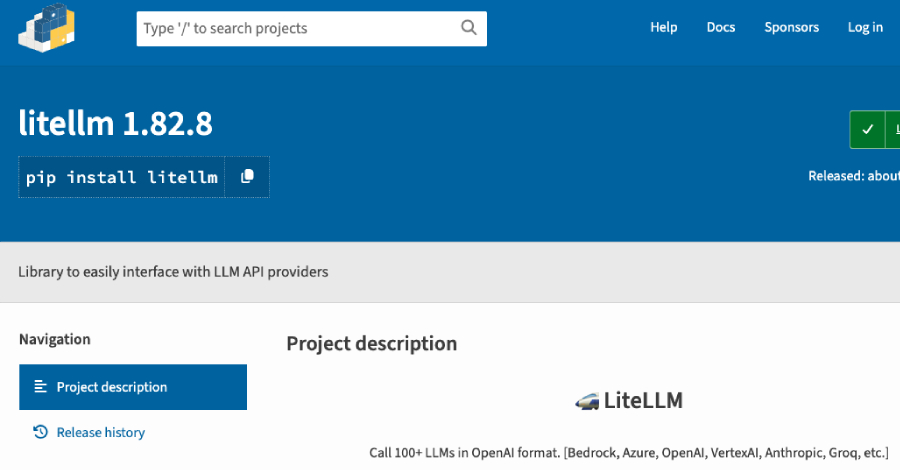

A widely used Python library for managing large language model APIs has been compromised, with two of its versions containing a sophisticated backdoor designed to steal credentials and infiltrate Kubernetes clusters. The threat actor known as TeamPCP, previously linked to breaches in other security tools, is believed responsible for the attack on the LiteLLM package.
Security researchers from Endor Labs and JFrog disclosed that versions 1.82.7 and 1.82.8 of the LiteLLM package, published on the Python Package Index (PyPI), contained malicious code. The compromised versions were available for download for a period before being identified and removed. The incident highlights a growing trend of software supply chain attacks targeting critical open-source infrastructure.
Nature of the Compromise
The malicious code embedded within the fake LiteLLM releases functioned as a multi-stage attack tool. According to analysis, the package included a credential harvester designed to collect sensitive information from infected systems. Furthermore, it contained a toolkit specifically built for lateral movement within Kubernetes environments, a popular container orchestration platform used by enterprises worldwide.
Most critically, the package established a persistent backdoor, giving the attackers ongoing remote access to any system where the tainted version was installed. This access could be used for data theft, deploying further malware, or launching attacks on other networked systems.
Connection to Previous Attacks
The attack has been attributed to the threat group TeamPCP by multiple security firms. This group is the same entity implicated in recent compromises of the Trivy vulnerability scanner and the KICS infrastructure-as-code scanning tool. The method of intrusion suggests the attackers may have initially gained access through a compromise of the project’s continuous integration and continuous delivery (CI/CD) pipeline, a common attack vector in supply chain incidents.
By targeting the build and publication process, attackers can inject malicious code into otherwise legitimate software updates, which are then automatically distributed to trusting users. The focus on developer tools and infrastructure software indicates a strategic effort to achieve a broad reach across technology organizations.
Impact and Response
Users and organizations that installed or updated to LiteLLM versions 1.82.7 or 1.82.8 are urged to immediately revert to a known clean version, such as 1.82.6. They should also conduct security audits on their systems to check for indicators of compromise, including unexpected network connections or unfamiliar processes.
The maintainers of the LiteLLM project have taken the malicious versions down from PyPI. The official repository for the project, hosted on GitHub, remains the primary source for verified code. Security experts recommend that developers always verify package integrity and implement software bill of materials (SBOM) practices to track dependencies.
Broader Security Implications
This event marks another significant software supply chain attack, following high-profile incidents like the SolarWinds and Log4j vulnerabilities. It underscores the persistent risks associated with open-source dependencies, which form the backbone of modern application development but are often maintained by small teams with limited security resources.
The attack’s sophistication, featuring cloud-native targeting capabilities for Kubernetes, shows threat actors are evolving their techniques to exploit modern development and deployment environments. It serves as a stark reminder for organizations to enhance scrutiny over their third-party and open-source software components.
Moving forward, the cybersecurity community and maintainers of the affected projects are expected to conduct further forensic analysis to fully understand the initial breach vector. Users should anticipate updated advisories from security vendors with more detailed indicators of compromise and mitigation steps. The investigation will likely focus on securing CI/CD systems and improving validation for package publishing to prevent similar future incidents.
Source: Multiple security disclosures from Endor Labs and JFrog.