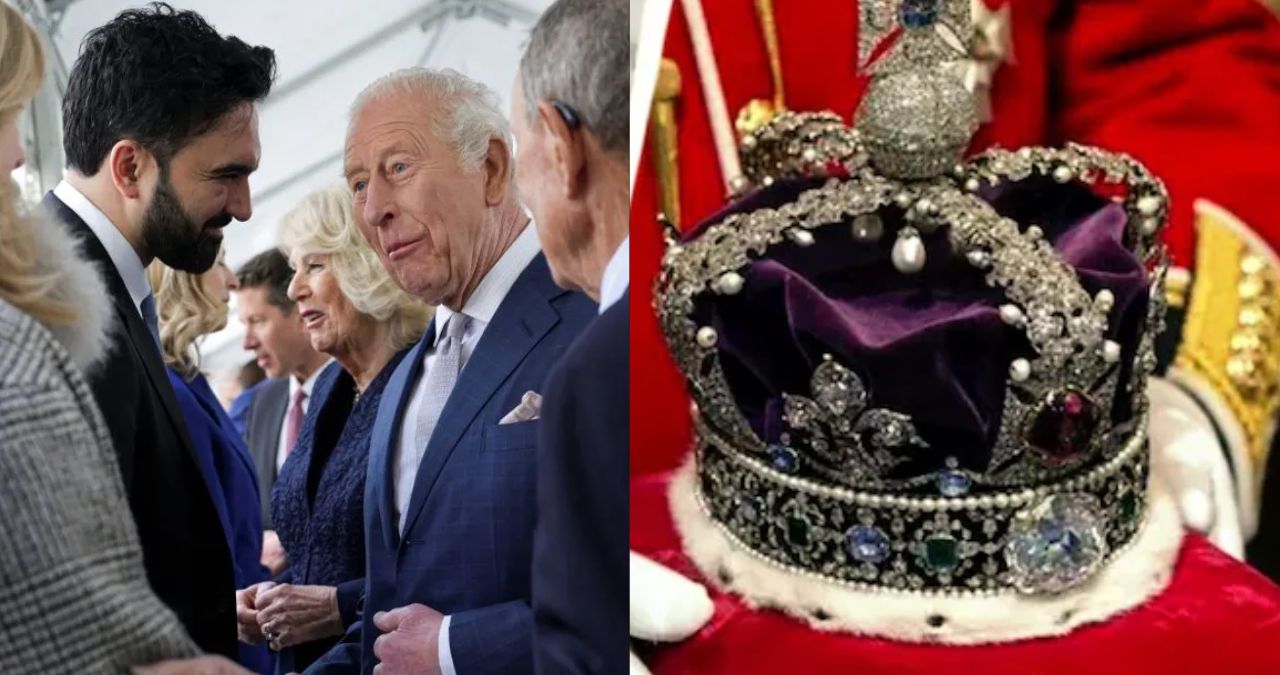

A centuries old gem, the Koh-i-Noor diamond, has reentered the global spotlight following a public call from New York City Mayor Zohran Mamdani for King Charles III to return the stone to India. The request has revived longstanding debates over colonial acquisition, historical ownership, and modern restitution.
The Koh-i-Noor, which translates to “Mountain of Light,” is one of the largest cut diamonds in the world. It was mined in India and has passed through the hands of Mughal emperors, Persian rulers, Sikh maharajas, and ultimately the British East India Company.
Historical background of the diamond
The stone was ceded to the British East India Company in 1849 under the terms of the Treaty of Lahore following the Second Anglo-Sikh War. It was later presented to Queen Victoria in 1850 and has been part of the British Crown Jewels ever since. The diamond is currently set in the Queen Mother’s Crown, on display at the Tower of London.
India, Pakistan, Iran, and Afghanistan have each laid claim to the diamond at various points, citing different periods of ownership and conquest. The British government has consistently maintained that the diamond was acquired legally under the treaty and therefore has no obligation to return it.
Mayor Mamdani’s call and the political context
Mayor Zohran Mamdani, a New York City mayoral candidate known for his progressive stances, made his remarks during a public event addressing colonial legacies. He urged King Charles III to voluntarily return the diamond to India as a symbolic act of reparative justice. Mamdani argued that the diamond’s presence in the British Crown Jewels represents a painful history of colonial extraction.
His comments have drawn international attention, sparking a new wave of commentary from historians, legal scholars, and political figures. Some support the call as a necessary step in addressing historical wrongs, while others argue that modern governments should not be held responsible for the actions of their predecessors.
Legal and diplomatic considerations
Under international law, the return of cultural artifacts and treasures remains a complex area. The 1970 UNESCO Convention on the Means of Prohibiting and Preventing the Illicit Import, Export and Transfer of Ownership of Cultural Property provides a framework, but it does not have retroactive force for items taken before its adoption. The Koh-i-Noor’s transfer predates the convention by more than a century.
The British Crown Estate maintains that the diamond is an inalienable part of the Crown Jewels and cannot be sold or given away. A change in ownership would require a formal act of Parliament in the United Kingdom.
Reactions in India and beyond
In India, the call for repatriation has received support from some politicians and cultural activists, though the Indian government has not issued an official demand in recent years. The issue had largely faded from mainstream political discourse in India until Mamdani’s remarks prompted renewed discussion.
Observers note that the diamond’s history has been cited by other Commonwealth nations seeking the return of artifacts taken during the colonial era. Notable examples include the Benin Bronzes and the Parthenon Marbles. The Koh-i-Noor case is often referenced as a symbolic benchmark for the broader debate on colonial restitution.
British officials have yet to issue a formal response to Mamdani’s specific remarks. A representative for the Royal Collection Trust has stated previously that the institution does not comment on speculative or political requests.
Source: Mashable