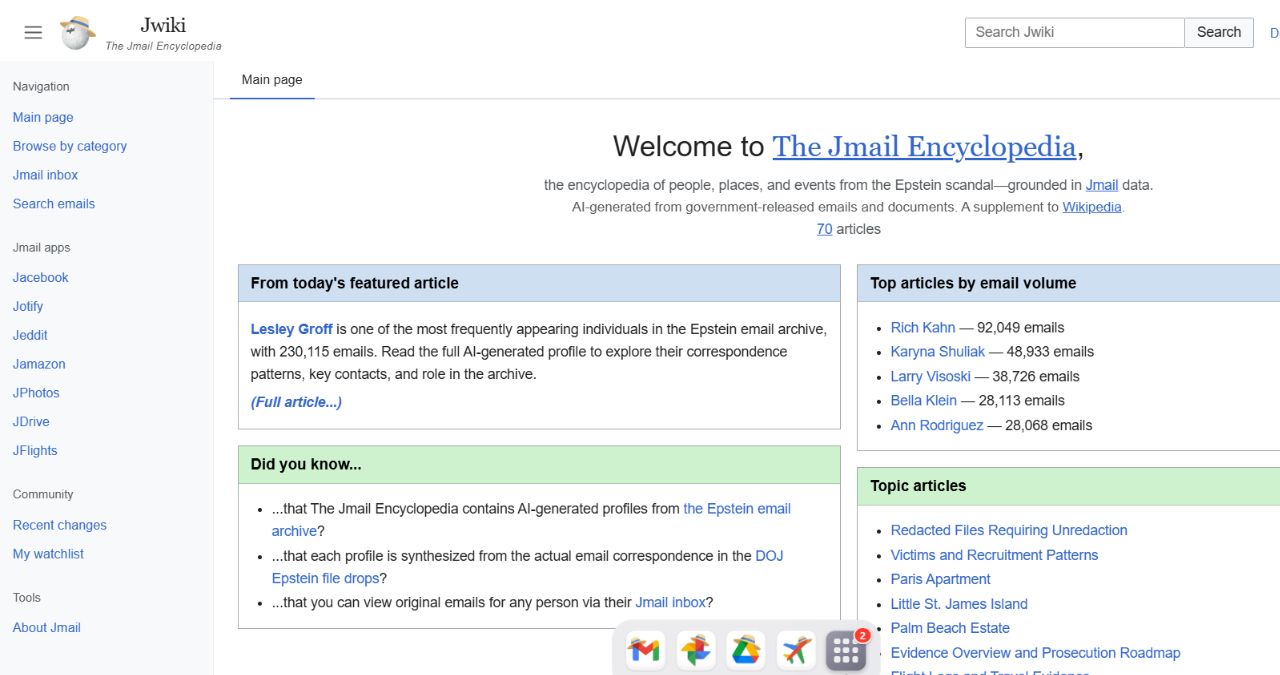

The release of thousands of pages from the Jeffrey Epstein case has created a vast, complex public record. One independent online project, JWiki, has emerged to catalog and index these documents, aiming to provide a structured, searchable database of the materials.
The website describes itself as a Wikipedia-style clone dedicated to the Epstein case files. Its stated purpose is to organize the sprawling document dumps that have followed court orders and Freedom of Information Act requests. The platform allows users to browse and search through names, locations, and events mentioned in the records.
Function and Accessibility
JWiki operates as a publicly accessible website. It does not host the primary legal documents itself but instead creates detailed wiki entries that reference and summarize content from official sources. These entries are intended to link individuals, companies, and events across the different batches of released files.
Access to the JWiki database requires only a standard internet connection and a web browser. The site is structured to allow users to navigate via hyperlinked keywords and a search function. The project is presented as a crowdsourced effort, where registered users can contribute to editing and updating entries, following a model similar to other open wiki projects.
Context and Legal Background
The documents referenced on JWiki stem from multiple legal proceedings related to the late financier Jeffrey Epstein, who was a convicted sex offender. The records include depositions, court motions, and evidence filings from civil and criminal cases. Their release has been the result of years of litigation by media organizations and legal advocates.
Major document dumps occurred in early 2024 and late 2023, following federal court orders. These releases have added significant material to the public domain, contributing to the complexity that projects like JWiki seek to manage.
Neutrality and Verification
As an independent, crowdsourced platform, JWiki’s content is subject to the same verification challenges as any publicly editable resource. The site’s administrators state that entries must cite publicly available source documents. However, the potential for unverified claims or errors exists, a common consideration for user-generated content platforms.
The emergence of such a specialized database highlights the scale of information now public and the public’s interest in parsing it. Other media and research organizations maintain their own internal databases and document tracking systems related to the case.
Future Developments
Further releases of documents related to the Epstein case are anticipated as ongoing legal proceedings continue. Courts are still reviewing materials for potential redactions before public filing. JWiki and similar independent archives are likely to be updated as new official records become available, serving as one of several tools for researchers and the public navigating this extensive case history.
Source: Various court documents and public statements.