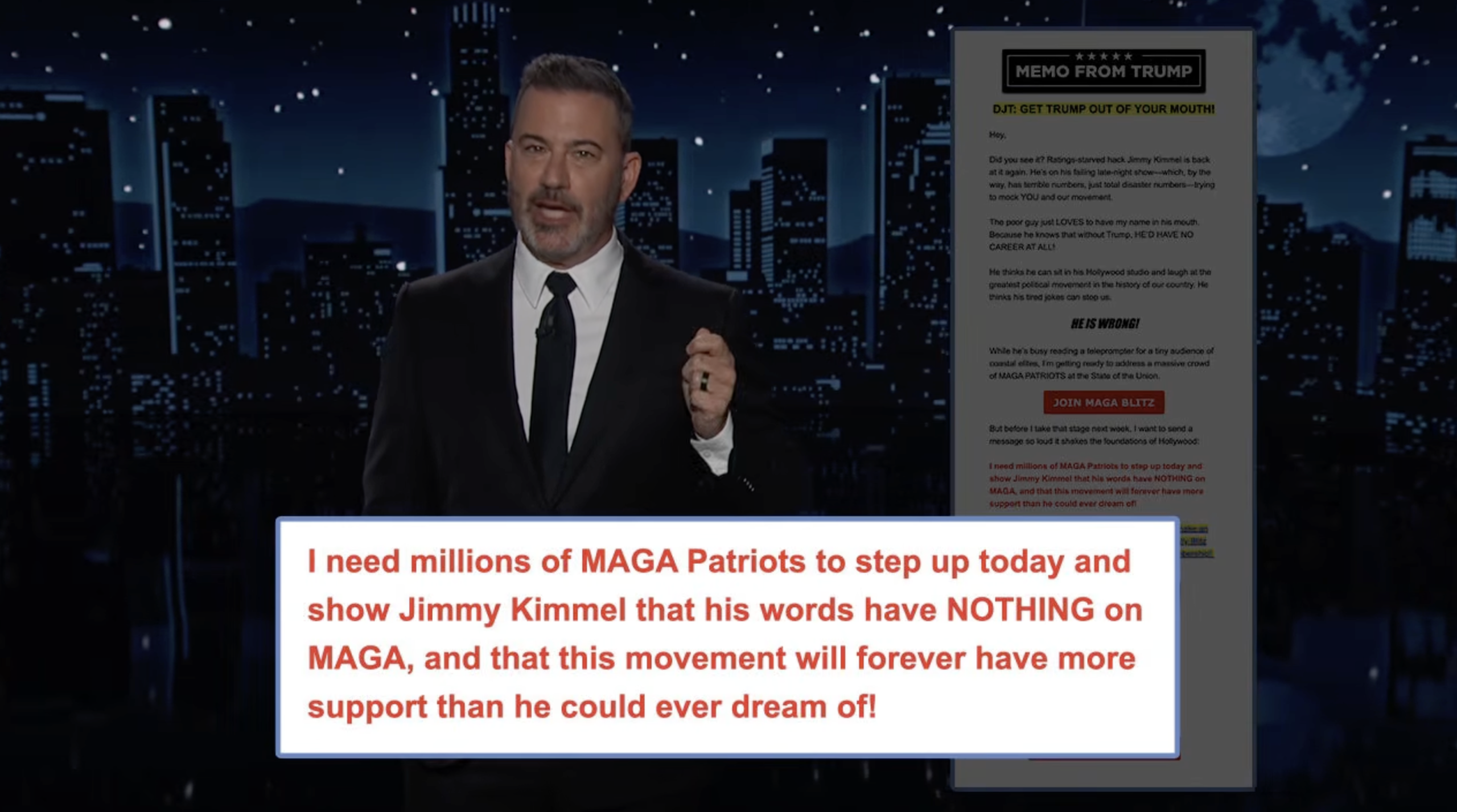

late-night television host Jimmy Kimmel publicly responded on Wednesday to former President Donald Trump, who criticized him in a fundraising email sent to supporters. The exchange, which unfolded on social media and in political fundraising channels, highlights the ongoing intersection of entertainment media and political campaigning.
Details of the Exchange
The incident began when the Trump campaign distributed a fundraising email that singled out Kimmel for criticism. The email was part of a broader effort to solicit donations. In his response, shared on his official social media account, Kimmel posed a direct question regarding the fundraising tactics of a former president. “Why is a president in his second term even sending fundraising emails?” Kimmel wrote. The host did not elaborate further on the substance of Trump’s initial attack within his public reply.
Context and Background
Jimmy Kimmel, the long-time host of “Jimmy Kimmel Live!” on ABC, has a history of political commentary within his monologues, often critiquing figures from both major parties. His show is a staple of American late-night television. Former President Donald Trump remains an active figure in Republican politics and is currently a candidate in the upcoming presidential election. Fundraising emails are a standard tool for modern political campaigns, used to build war chests and engage with a donor base. It is not uncommon for such communications to name-check public figures, including media personalities, to galvanize potential contributors.
Reactions and Broader Implications
Public reactions to the exchange have been divided, largely along predictable political lines. Supporters of the former president have echoed the criticism from the fundraising email, while others have supported Kimmel’s right to respond. Media analysts note that this event is indicative of a persistent trend where late-night comedy shows and political operations increasingly occupy the same media space, often leading to direct confrontations. These interactions frequently generate significant online engagement and media coverage, blurring the lines between news, entertainment, and political strategy.
For the networks and shows involved, such clashes can impact viewership and public perception. For political campaigns, engaging with high-profile media figures can serve to energize core supporters and draw attention to fundraising efforts, though it also risks amplifying the critic’s platform.
Looking Ahead
Given the nature of the election cycle and Kimmel’s role as a nightly host, further comments on the campaign from the late-night stage are considered likely. Political communication experts anticipate that direct references to entertainers and journalists in fundraising materials will continue as candidates seek to define opponents and rally their bases. The public response to this specific incident may influence the tone and frequency of similar exchanges in the coming months. Official statements from either the Trump campaign or ABC regarding this particular exchange are not currently expected.
Source: Mashable