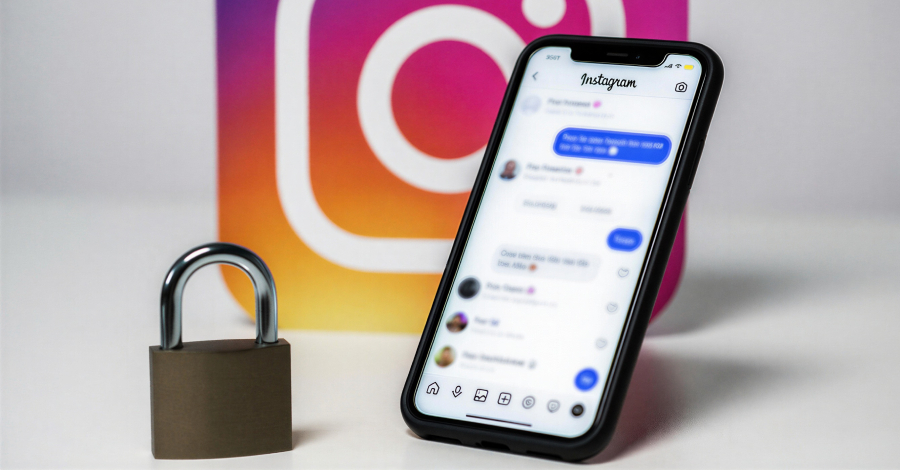

Meta Platforms Inc. has announced it will discontinue support for end-to-end Encrypted (E2EE) messaging within Instagram‘s chat function. The change is scheduled to take effect after May 8, 2026, according to an official company help document.
The decision means that, after the specified date, new direct messages (DMs) on the platform will no longer be protected by the robust security standard that prevents anyone except the sender and recipient from reading message contents. Meta stated that users with chats affected by the change will receive in-app instructions on how to download media or messages they wish to preserve.
Background on end-to-end encryption
End-to-end encryption is a method of secure communication that ensures only the communicating users can read the messages. In an E2EE system, messages are encrypted on the sender’s device and decrypted only on the recipient’s device. Not even the service provider, in this case Meta, holds the keys to decrypt the content during transit. This technology is widely regarded as a critical tool for privacy and security in digital communications.
Its implementation on Instagram’s optional “Secret Conversations” feature was a later addition, contrasting with its sibling platform WhatsApp, where E2EE is enabled by default for all personal chats. The differing approaches across Meta’s family of apps have been a point of discussion among privacy advocates and security researchers for years.
User Guidance and Transition
In its notification, Meta emphasized user guidance for the transition. The company’s help document advises that individuals using older versions of the Instagram application may need to update their software to access the download tools and ensure a smooth process. The company has not specified whether historical E2EE chats will be automatically decrypted and stored differently on its servers after the support ends or if they will simply become inaccessible.
The announcement provides users with a long lead time of over two years to adjust to the impending change. This timeframe is significantly longer than typical feature deprecation notices in the technology industry, suggesting Meta aims to minimize disruption for its global user base.
Industry and Regulatory Context
Meta’s move occurs within a complex global landscape concerning digital privacy, encryption, and law enforcement access. Governments in several countries, including the United Kingdom, the United States, and India, have periodically pushed for legislation that would require technology companies to provide “backdoor” access to encrypted communications for public safety investigations.
Technology firms and human rights organizations have consistently argued that weakening encryption for anyone inherently weakens it for everyone, creating vulnerabilities that could be exploited by malicious actors. Meta’s decision to roll back E2EE on one of its major platforms may reignite debates over the balance between user privacy, corporate policy, and state security interests.
It also highlights the fragmented privacy standards within Meta’s own ecosystem, where WhatsApp remains fully end-to-end encrypted by default, while Facebook Messenger offers E2EE as an opt-in feature, and Instagram will soon have none for its core messaging.
Looking Ahead
Following the May 2026 deadline, Instagram’s direct messaging will rely on other, less comprehensive forms of encryption, such as transport-layer security (TLS). This method secures data between the user’s device and Meta’s servers but allows the company potential access to message content for purposes like moderation, data analysis, or compliance with legal requests.
Meta has not indicated any plans to remove end-to-end encryption from its other messaging services at this time. The company’s forward-looking public statements continue to express a long-term commitment to implementing E2EE across all its messaging apps, making the Instagram reversal a notable deviation from that stated trajectory. Observers will monitor whether this decision signals a broader strategic shift in the company’s approach to privacy and encryption amid evolving regulatory pressures.
Source: Meta Help Center