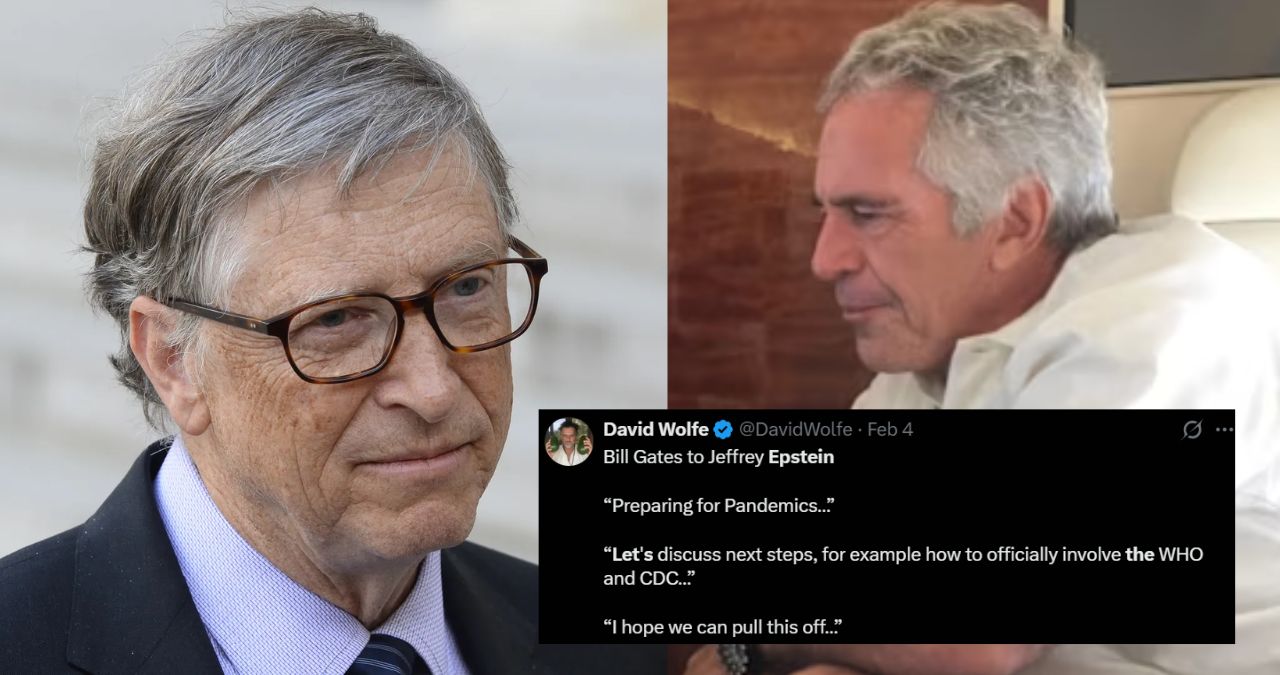

A newly surfaced email from 2010 has sparked renewed online speculation about the relationship between Jeffrey Epstein and Bill Gates, and its potential connection to global pandemic preparedness efforts. The email, which was released as part of a court document dump related to Epstein, shows the disgraced financier forwarding a message to Gates with the subject line “prepare for pandemics.”
The email’s contents, which include a link to a TED Talk by a public health expert, have been circulated widely on social media. This has fueled conspiracy theories suggesting a coordinated plot involving the COVID-19 pandemic. Mainstream fact-checking organizations and news outlets have found no evidence to support such claims.
Context of the Correspondence
The email exchange occurred in early 2010, nearly a decade before the emergence of SARS-CoV-2. In the message, Epstein forwarded a link to a TED Talk by Dr. Larry Brilliant, an epidemiologist known for his work on eradicating smallpox. The talk, titled “Help me stop pandemics,” discussed global early-warning systems for infectious diseases.
This correspondence took place during a period when Bill Gates, through the Bill & Melinda Gates Foundation, was already a prominent global funder of public health initiatives and vaccine research. The foundation’s work on pandemic preparedness was publicly documented years before the email was sent.
Official Responses and Fact Checks
A spokesperson for Gates has previously addressed the relationship, stating that meetings between Gates and Epstein were a mistake and that no business partnership or personal friendship ever existed. The Gates Foundation has reiterated its longstanding, transparent commitment to global health, which began well before any interaction with Epstein.
Major fact-checking agencies, including Reuters and the Associated Press, have investigated the claims stemming from the email. They concluded that the message does not prove a plot to create a pandemic. Experts note that discussions about pandemic preparedness were common in global health circles long before 2020.
Broader Online Reaction
The resurfacing of the email has amplified existing online conspiracy narratives that falsely link powerful figures to the origin of the COVID-19 virus. These theories often misuse fragments of information, such as this email, while ignoring the established timeline of public health advocacy and the lack of any credible evidence for malicious intent.
Social media platforms have seen a significant volume of posts referencing the email, often accompanied by misleading interpretations. This highlights the ongoing challenge of misinformation, where historical documents are re-contextualized to fit pre-existing narratives without factual basis.
Looking Ahead
Legal experts anticipate that the release of documents related to the Epstein case will continue periodically, as mandated by the court. Each release has the potential to surface additional correspondence or records involving various public figures, which may similarly be seized upon for speculative purposes.
Public health authorities and misinformation researchers expect these conspiracy theories to persist online. They emphasize the importance of relying on verified information from scientific institutions and established news organizations when assessing claims about the pandemic’s origins or the motives of philanthropic organizations.
Source: Multiple court documents and agency fact-checks