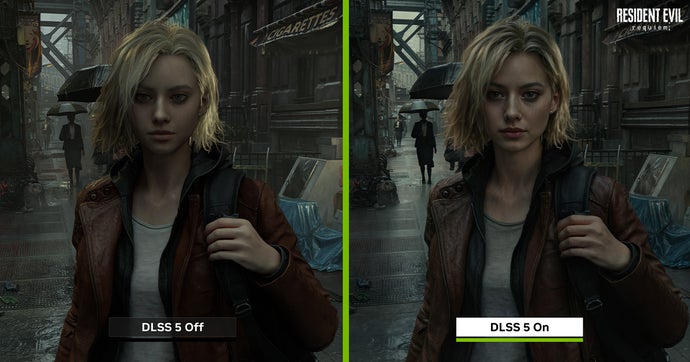

Nvidia Chief Executive Officer Jensen Huang has publicly addressed criticism surrounding the company’s upcoming DLSS 5 technology, stating that detractors are “completely wrong” in their assessment. The CEO made the remarks in response to a growing online debate about the role of AI-driven upscaling in video game development and artistic integrity. Huang’s defense centers on the claim that the technology does not alter or diminish the creative control of game artists and developers.
CEO’s Direct Rebuttal to Criticism
In his statement, Huang directly countered the primary concern voiced by some industry observers and enthusiasts. He asserted that DLSS 5, the next generation of Nvidia’s Deep Learning Super Sampling technology, “doesn’t change artistic control.” This comment appears aimed at alleviating fears that AI-based rendering could standardize visual outputs or override the intentional design choices made by development teams. The CEO’s characterization of the criticism as “completely wrong” indicates a firm stance from the semiconductor leader on the issue.
Understanding DLSS Technology
DLSS, or Deep Learning Super Sampling, is a proprietary Nvidia technology that uses artificial intelligence and machine learning to upscale lower-resolution images in real-time. The process allows games to render at a lower internal resolution, boosting performance, while the AI network reconstructs the image to a higher, sharper output. The goal is to deliver visual quality comparable to native high-resolution rendering but with significantly higher frame rates. DLSS 5 represents the anticipated fifth iteration of this continuously evolving suite of algorithms.
The Core of the Debate
The backlash referenced by Huang seems to stem from a broader philosophical discussion within the gaming and computer graphics community. Some critics argue that an over-reliance on AI upscaling could lead to a degradation of foundational rendering techniques or pressure developers to optimize for AI reconstruction rather than native asset quality. Others express concern about technology becoming a prerequisite for acceptable performance, potentially locking visual fidelity behind specific hardware features. Huang’s comments directly challenge the premise that DLSS infringes upon the creative process.
Industry Context and Adoption
Nvidia’s DLSS technology has seen widespread adoption since its introduction, becoming a staple feature in many PC games and a key marketing point for the company’s GeForce RTX series of graphics cards. Competing technologies, such as AMD’s FidelityFX Super Resolution (FSR) and Intel’s XeSS, have also entered the market, making AI upscaling a standard component of modern gaming graphics. The debate over DLSS 5 occurs as the industry increasingly integrates AI tools not just for upscaling, but for frame generation, denoising, and other post-processing effects.
Looking Ahead for DLSS 5
Nvidia has not yet announced a formal release date for DLSS 5. The company typically unveils major software advancements alongside new hardware generations or at flagship events like its GTC conference. Industry analysts expect more technical details to emerge as the launch window approaches, which will provide concrete evidence to evaluate Huang’s claims. The development trajectory suggests DLSS 5 will focus on further improving image reconstruction accuracy, reducing artifacts, and potentially expanding the technology’s use cases beyond gaming into professional visualization and content creation fields.
Source: GamesIndustry.biz