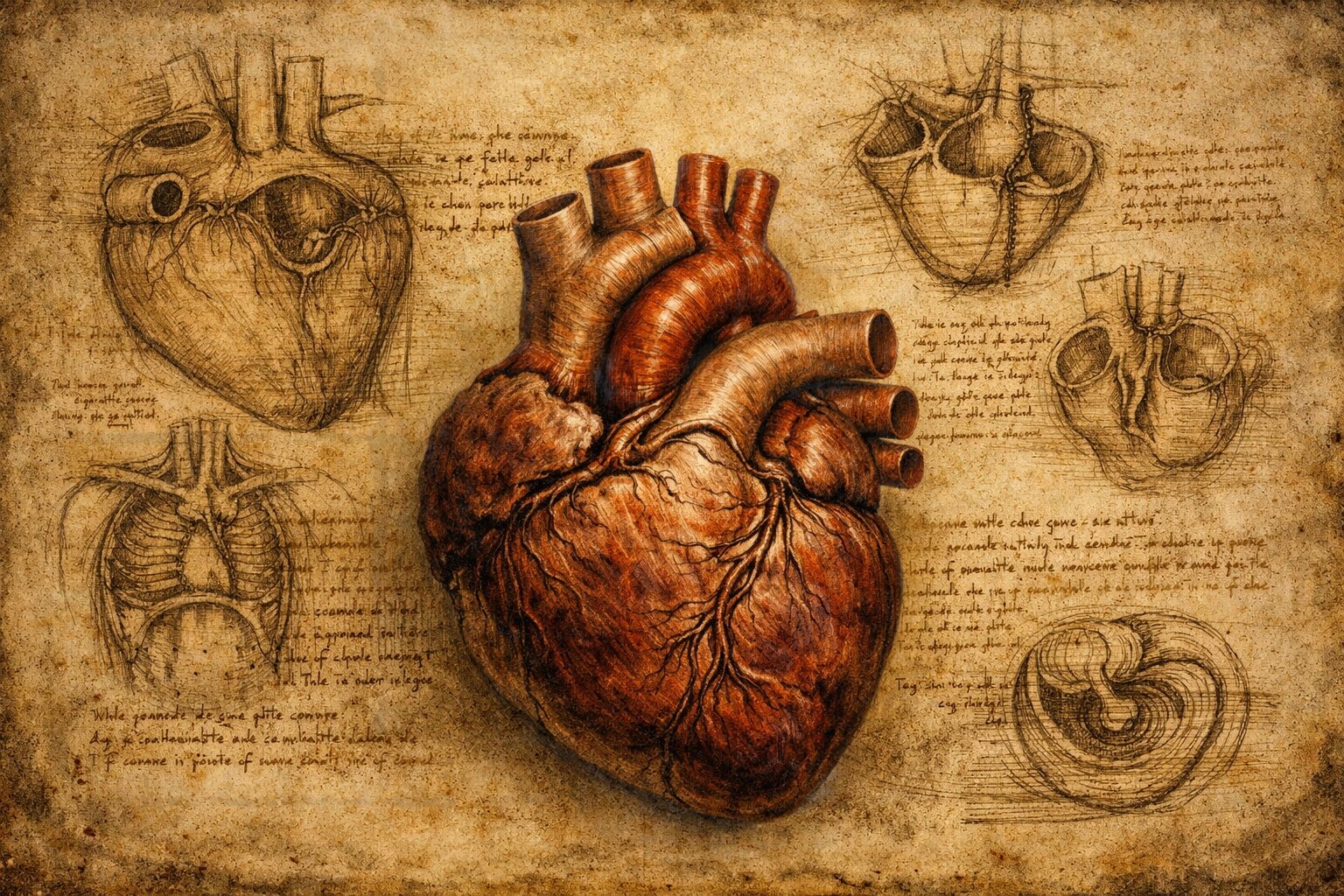

A set of anatomical drawings created by Leonardo Da Vinci more than 500 years ago has provided modern scientists with crucial insights into the structure of the human heart, including the function of tiny muscle fibres known as trabeculae. The findings have led to a deeper understanding of heart disease risk and could inform future diagnostic approaches.
The research, which analysed Da Vinci’s detailed sketches of the heart’s internal architecture, was conducted by an international team of scientists. The drawings, produced in the early 16th century, were found to accurately depict trabeculae, a network of muscle fibres lining the inner walls of the heart’s chambers.
Historical sketches meet modern technology
Da Vinci’s illustrations remained enigmatic for centuries, largely because the function of the trabeculae was not well understood. Using modern imaging techniques, including magnetic resonance imaging (MRI) and computational modelling, the researchers were able to compare Da Vinci’s sketches with contemporary scans of living hearts.
The comparison confirmed that the trabeculae play a key role in the heart’s electrical conduction system and in regulating blood flow. Their structure also influences the heart’s ability to pump efficiently.
Implications for heart disease risk assessment
The study revealed that variations in the shape and density of the trabeculae are linked to an individual’s risk of developing cardiac conditions. Specifically, differences in these muscle fibres were associated with an increased likelihood of heart failure and arrhythmias, conditions that affect millions of people worldwide.
By analysing the data, scientists established that individuals with more complex configurations of trabeculae face a higher risk of certain heart diseases. This finding provides a potential biomarker for early detection and preventive care.
Da Vinci’s observational precision validated
Da Vinci’s drawings were based on dissections of human cadavers, a practice that was both groundbreaking and controversial in his era. Modern scientists have praised the accuracy of his observations, noting that he identified the trabeculae long before the advent of microscopes or imaging technology.
“Da Vinci’s work was centuries ahead of its time,” the research team stated in their published paper. “His ability to capture such fine anatomical details without modern tools is remarkable and has directly contributed to our current understanding.”
Methodology and data sources
The research involved analysing MRI scans from the UK Biobank, a large scale biomedical database containing health information from hundreds of thousands of participants. The team used machine learning algorithms to map the trabeculae structure in each scan and cross referenced the data with participants’ cardiac health outcomes over a follow up period.
The results showed a clear statistical correlation between trabecular patterns and the incidence of heart disease, independent of other risk factors such as age, sex, and blood pressure.
Future directions and clinical applications
The findings open the door to new diagnostic tools that could assess heart disease risk using standard MRI scans. The researchers plan to develop software that automatically analyses trabecular patterns, enabling clinicians to identify high risk patients earlier.
Further studies are expected to explore whether lifestyle interventions or medications can modify trabecular structure over time. Clinical trials may be required before the method is integrated into routine medical practice.
Source: GeekWire / Mashable