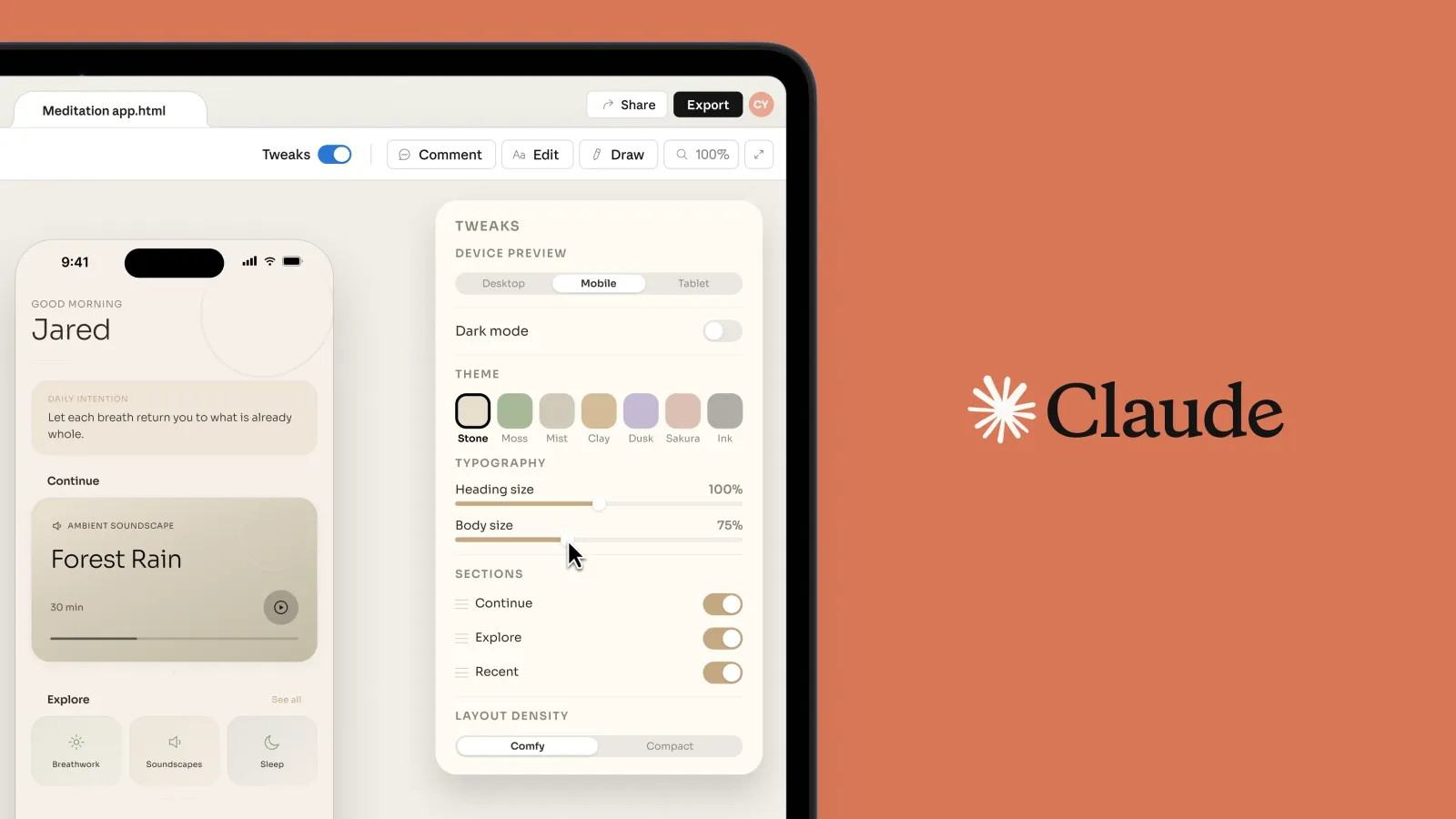

Anthropic, the artificial intelligence research company, has officially launched Claude Design, a new AI-powered tool positioned to compete directly with established design platforms like Figma. The announcement was made this week, introducing a significant new player into the competitive digital design software market.
The tool is powered by Anthropic’s most advanced AI model, Claude 3.5 Opus. This integration aims to leverage sophisticated language understanding and generation to assist with various design tasks directly within a collaborative interface.
Core Functionality and Market Position
Claude Design enters a sector long dominated by tools such as Figma, Adobe XD, and Sketch. Its primary function is to translate natural language descriptions into visual design elements, prototypes, and user interface components. The platform is described as a collaborative environment where designers and teams can generate and iterate on designs through conversational prompts.
By utilizing the Claude 3.5 Opus model, the tool is engineered to comprehend complex design briefs, suggest layout improvements, generate color palettes, and write supporting copy. This represents a shift from manual design assembly to a more AI-assisted, prompt-driven workflow.
Background and Industry Context
Anthropic, known for its focus on developing safe and reliable AI systems, has primarily been associated with its Claude chatbot and API services for developers. The launch of Claude Design marks a strategic expansion into applied, vertical-specific software tools. The move capitalizes on the growing enterprise demand for integrating Generative AI into core professional workflows beyond text generation.
The digital design software market has seen rapid evolution and consolidation in recent years. Figma’s growth, followed by Adobe’s attempted acquisition, highlighted the strategic value of design platforms. The introduction of an AI-native competitor suggests a new phase of innovation, where AI capabilities become a central differentiator rather than an added feature.
Implications for Design Professionals
The release of Claude Design is likely to be closely examined by user experience (UX) and user interface (UI) designers, product managers, and development teams. Proponents suggest AI-assisted tools can handle routine tasks, accelerate prototyping, and facilitate brainstorming. This could potentially free human designers to focus on higher-level strategy, user research, and creative direction.
However, the launch also raises questions about the future role of designers, the learning curve associated with prompt-based design, and how effectively AI can interpret subjective aesthetic and usability requirements. The tool’s performance in handling complex, brand-specific design systems remains to be thoroughly evaluated by the professional community.
Expected Developments and Next Steps
Following its launch, Anthropic is expected to roll out Claude Design to enterprise clients and select partners for initial testing and feedback. Industry analysts will monitor adoption rates and how the tool integrates with existing product development pipelines and other software like project management and developer handoff platforms.
The competitive response from incumbent companies like Figma and Adobe is anticipated, likely accelerating their own AI feature deployments. The coming months will provide critical data on whether AI-native design tools can capture significant market share or if they will serve as complementary aids to traditional software. Further updates on pricing, availability, and specific enterprise features are expected from Anthropic in the near future.
Source: Mashable