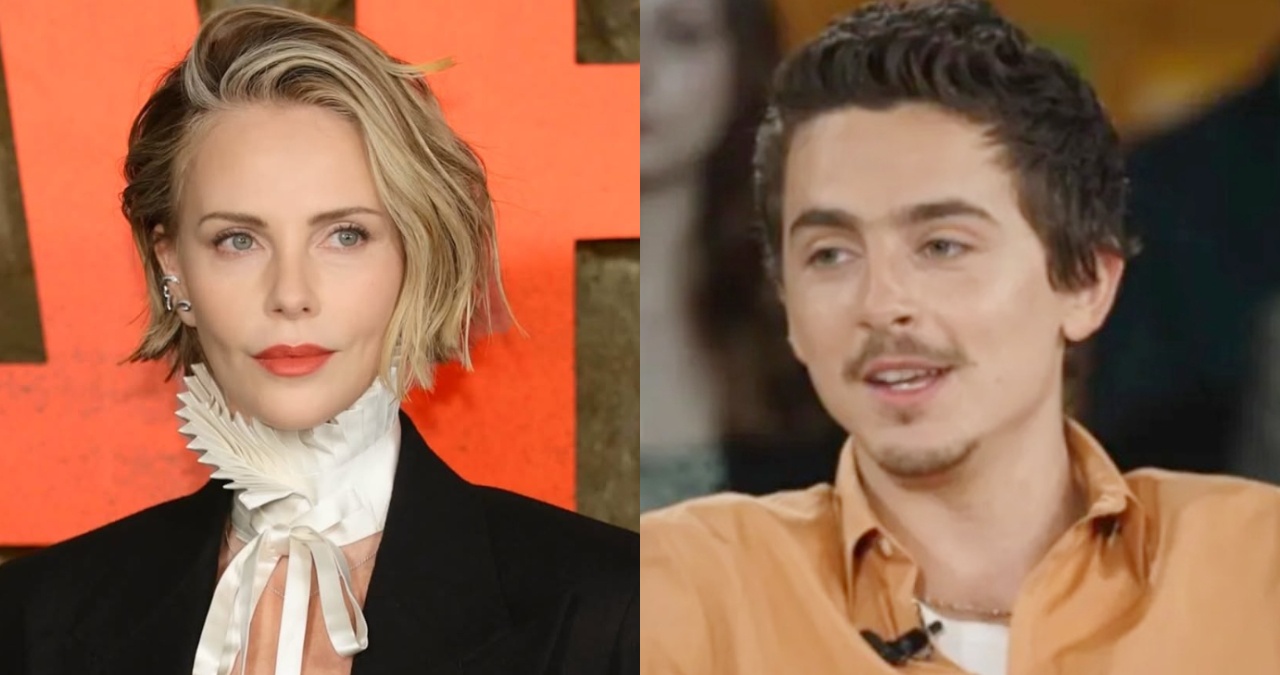

Charlize Theron has walked back her earlier assertion that artificial intelligence could replace actor Timothée Chalamet within a decade, stating that she does not know what the future holds.
The actress made the initial comment during a recent interview in which she speculated about the potential impact of generative AI on the film industry. Her original statement suggested that within 10 years, an AI system might be capable of replicating the performances of a star like Chalamet, sparking widespread discussion across entertainment and technology media.
However, in a follow up statement reported by multiple outlets, Theron clarified her position. She said, “I don’t know what’s going to happen,” acknowledging the uncertainty surrounding the rapid advancement of AI technology and its future role in creative industries.
The exchange has drawn attention to a broader industry conversation about the use of generative AI in film production, including concerns about actors’ digital likenesses, voice replication, and the potential displacement of human performers. Trade unions, including SAG-AFTRA, have recently negotiated new contract terms specifically addressing the use of AI to create digital replicas of actors’ performances without consent or fair compensation.
Industry Context and Reactions
Theron’s remarks come at a time when Hollywood is actively grappling with the implications of AI tools. Major studios have experimented with AI for tasks such as de aging actors, generating background characters, and even script analysis. However, the idea of fully replacing a leading performer like Chalamet with a synthetic actor remains a theoretical and contentious topic.
Technology experts have noted that while generative AI has made significant strides in creating realistic images and audio, challenges remain in replicating the nuanced emotional range and improvisational skill of a human actor. The cost and data requirements for training a model to perform such complex tasks also present substantial barriers.
“The technology is advancing quickly, but the idea of an AI completely replacing a star performer in a lead role within a decade is speculative,” said one analyst familiar with AI development. “We are not at the point where AI can deliver the spontaneous, emotionally resonant performance that audiences expect from a human actor.”
Theron’s Clarification
In her clarification, Theron did not specify whether she had been misquoted, if her views had changed after further reflection, or if she had received new information about AI capabilities. She simply reaffirmed the unpredictability of technological evolution.
The actress’s initial prediction had fueled debate online, with some industry professionals expressing alarm at the potential for job losses, while others viewed it as an overstatement from a celebrity without deep technical expertise. Her backtracking reflects the careful positioning many public figures now take when discussing the sensitive topic of automation in the arts.
Looking Ahead
The discussion around AI in entertainment is expected to intensify as more sophisticated tools become available. Ongoing negotiations between studios and labor unions will likely continue to shape how these technologies are deployed on set and in post production. No specific timeline has been established for when, or if, an AI might be used to generate a primary performance in a major studio film.
As the technology matures, the industry will need to balance innovation with the protection of creative jobs and intellectual property. For now, the future of AI in Hollywood remains an open question, even for its most vocal commentators.
Source: Variety / Mashable