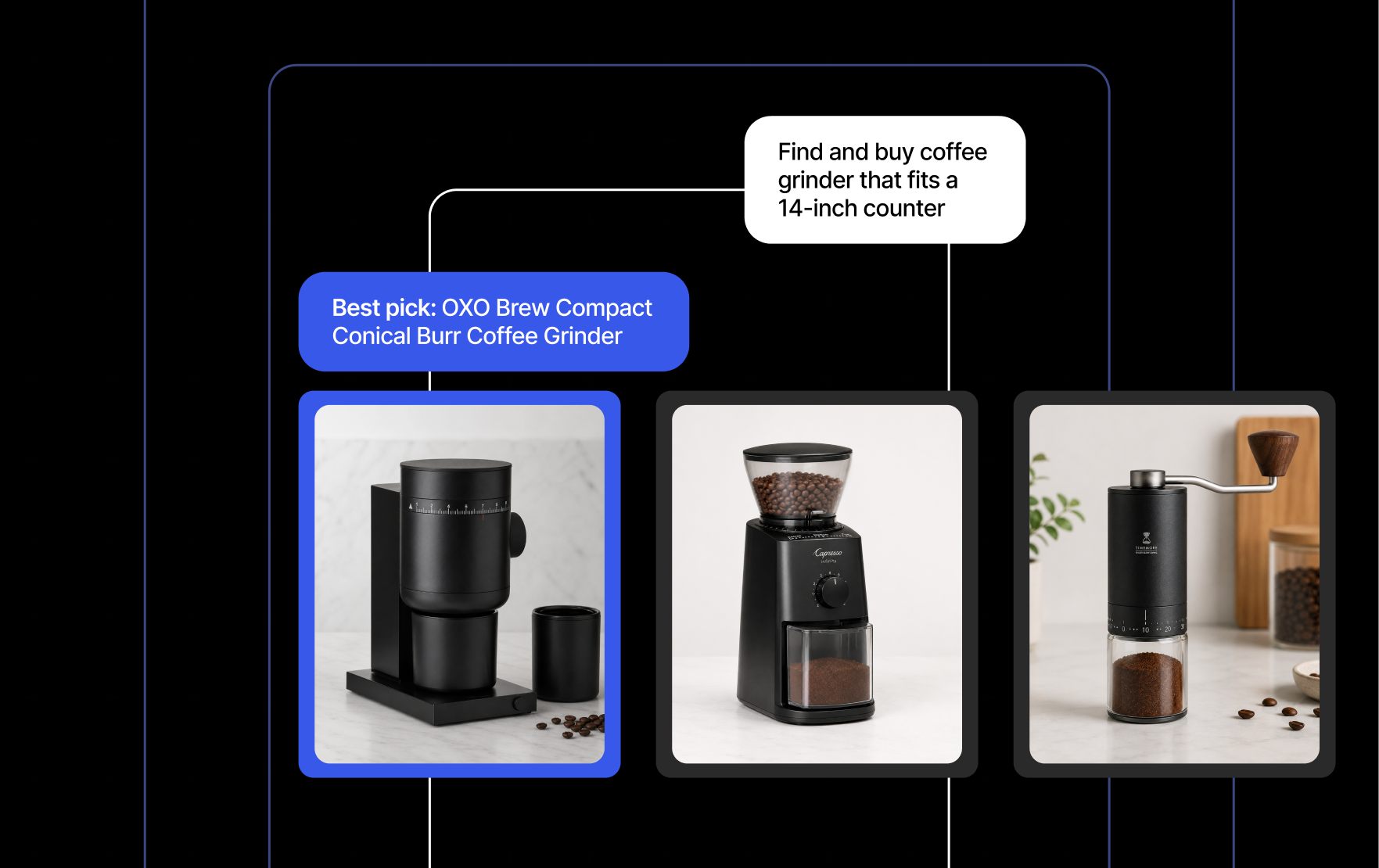

The rise of artificial intelligence is moving beyond product recommendations. AI agents are now capable of finding, comparing, and purchasing products on behalf of human shoppers, a shift that is beginning to alter the landscape of online retail.
This practice, known as agentic commerce, involves a user instructing an AI assistant to find a specific item, such as a coffee grinder that fits under a 14 inch counter. The agent then independently searches for options, filters them based on the constraint, and presents a selection or completes the purchase. For merchants, this means that if product details are vague, missing, or hard for an AI to parse, their store may be excluded from the consideration set entirely.
Data suggests that consumer behavior is already adapting to this trend. According to Reuters, which cited Adobe Analytics data from May 2026, shoppers in the United States who were referred to a site from a large language model generated 53% more revenue per visit compared to non-AI traffic. Earlier Adobe holiday data also indicated a sharp rise in traffic originating from AI-powered shopping assistants and chatbots, signaling that this is not a distant trend but a current market reality.
What is agentic commerce?
Agentic commerce describes a transaction where an AI agent performs the shopping tasks for the buyer. The shopper provides a goal, a budget, specific requirements, or a deadline. The agent then finds products, compares options, and either initiates a checkout or directs the user to the merchant’s store to finalize the purchase. While not yet fully mainstream, this behavior is migrating from product research into the purchase path. A 2025 survey by Omnisend, reported by TechRadar, found that 34% of US consumers would allow AI tools to make purchases on their behalf, though a majority still prefer to make the final decision themselves.
How an AI agent shops
The process generally follows a three step flow. First, the AI discovers products that match a request. Second, it compares those products against the criteria set by the shopper. Third, it either buys the item or directs the shopper to the store to complete the transaction.
Providers such as OpenAI have published details on how their agents weigh products. In a post regarding ChatGPT, OpenAI stated that products are ranked on relevance to the shopper’s query. When multiple stores sell the same product, the selection depends on availability, price, quality, and whether the merchant is the primary source of the product rather than a reseller. These signals determine how often an agent will recommend a given store.
Current status of agentic commerce platforms
The landscape of agentic commerce is fragmented and evolving rapidly. ChatGPT currently focuses on product discovery and merchant-owned checkout; purchases are completed on the merchant’s site. Google has expanded AI shopping through Gemini and Universal Cart, with integrations planned for YouTube and Gmail. Perplexity and Microsoft Copilot both support in-chat checkout with participating merchants, using payment processors like PayPal and Stripe. Anthropic’s Claude can engage in shopping workflows through app connectors but requires user confirmation before making purchases.
While the details vary, the core requirement for merchants remains consistent: agents require clear, structured information to recommend a product and route a purchase.
Payments and trust
In these checkout programs, the shopper typically confirms the purchase, and the store remains the merchant of record. The sale and customer relationship stay with the merchant. However, payment networks are still working through questions regarding refunds and chargebacks when an AI agent places the order. Consumer caution remains high; in the same Omnisend survey, more than half of respondents expressed concern about data mishandling, and 66% still preferred to make their own purchasing decisions. Accurate product data, clear checkout confirmation, and reliable fulfillment are cited as key factors for earning trust from both the agent and the consumer.
Implications for small and independent stores
For smaller businesses, agentic commerce may present an advantage rather than a threat. While large brands may appear first in search results, AI agents reward verifiable facts such as accurate stock information, clear specifications, and reliable fulfillment. A small store with a well organized catalog can outperform a larger company with a messy or inconsistent product database.
A report from Adobe on 2026 digital trends emphasized that retailers must ensure their pages are compatible with AI systems. Analysis of travel sites found that roughly one third of the content on some product pages was not readable by AI. The infrastructure is moving toward shared protocols, such as OpenAI’s Agentic Commerce Protocol and Google’s Universal Commerce Protocol, which are designed to allow agents to complete purchases while merchants retain control over payments, fulfillment, returns, and customer relationships.
Preparing a store for agentic commerce
Merchants can prepare their catalogs for AI agents by focusing on three key areas. First, they should provide clear product information, including titles, descriptions, and attributes that plainly state what a product is, what it does, and who it suits. Second, they should use structured product data, such as schema markup, that provides agents with clean, consistent details on price, availability, dimensions, sizes, materials, and categories. Third, they must ensure their store is reachable by AI crawlers by checking their robots.txt file to ensure it is not blocking the relevant crawlers.
The shift toward agentic commerce means that a store’s catalog now functions as part of the storefront. It not only powers the back end, but also helps AI agents decide whether to recommend the store to a shopper.
Outlook
As AI shopping agents become more common, the standard for online product data is likely to tighten. Merchants who optimize their catalogs for machine readability may gain a competitive edge. The next wave of shoppers may arrive through search, social media, email, or an AI assistant, and the stores that are easiest for an agent to find and read will be best positioned to capture that traffic. Official timelines for broader adoption remain fluid, but early data indicates the trend is already influencing consumer behavior and revenue streams.
Source: GeekWire