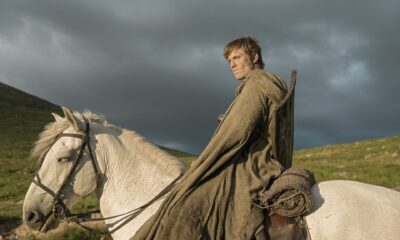

The season finale of the television series “A Knight of the Seven Kingdoms” has concluded, prompting immediate discussion among viewers regarding a fundamental aspect of the show’s fictional setting. The episode, which aired recently, concluded the first season’s narrative arc for the characters Ser Duncan the Tall, known as Dunk, and his squire, the young Aegon V Targaryen, called Egg.
Core Questions from the Finale
The finale’s conclusion left two primary questions for the audience. The first involves the future journey of the central duo, Dunk and Egg, as they depart from their current location. The second, and more immediately debated question, concerns the very title of the series. Viewers are now questioning whether the realm in which the story is set actually consists of nine distinct kingdoms, not seven.
This query arises from details presented within the show’s lore and historical context. The narrative is set in the fictional continent of Westeros, which is part of the larger universe created by author George R. R. Martin. The series is a prequel to the popular “Game of Thrones” television adaptation.
Historical Context of the Seven Kingdoms
In the established lore, the term “Seven Kingdoms” is a historical title for the realm unified by Aegon the Conqueror. Prior to his invasion, Westeros was indeed divided into seven major sovereign nations. These were the Kingdom of the North, the Kingdom of the Mountain and the Vale, the Kingdom of the Isles and the Rivers, the Kingdom of the Rock, the Kingdom of the Stormlands, the Reach, and Dorne.
Aegon Targaryen and his sisters used their dragons to conquer and unify six of these kingdoms. Dorne remained independent for over a century longer before joining the realm through marriage. Thus, the name “Seven Kingdoms” persisted as a formal title, even after unification under the Iron Throne in King’s Landing.
Source of the “Nine Kingdoms” Confusion
The confusion prompting the post-finale debate likely stems from the geographical and political administration of the continent. While historically there were seven kingdoms, the realm is often described as comprising nine distinct regions in the present timeline of the stories. These regions are the North, the Iron Islands, the Riverlands, the Vale of Arryn, the Westerlands, the Crownlands, the Stormlands, the Reach, and Dorne.
Key distinctions create this discrepancy. The Iron Islands and the Riverlands were once a single kingdom under the Hoare dynasty, which Aegon destroyed. He later granted the Riverlands to House Tully as a separate principality. Furthermore, the Crownlands were not a pre-conquest kingdom but lands directly controlled by Aegon around his new capital, carved from territory on the borders of several former kingdoms.
Therefore, the “Seven Kingdoms” refers to the original sovereign states that existed, while the nine regions reflect the practical administrative divisions following the Targaryen conquest and subsequent governance. The series title uses the historical and formal term for the realm.
Official Information and Next Steps
The production company and network have not released an official statement addressing this specific viewer question. The narrative for Dunk and Egg is based on a series of novellas by George R. R. Martin, which provide the canonical source material for the show’s setting and history.
Looking ahead, the discussion is expected to continue among the fan community as they analyze the show’s details. The continuation of the series into a second season, which has not been officially confirmed at this time, would likely follow the further adventures of the knight and his royal squire as documented in the existing literary works. Any future seasons would continue to explore this fictional historical period within the well-established framework of Westerosi geography and political history.
Source: Mashable