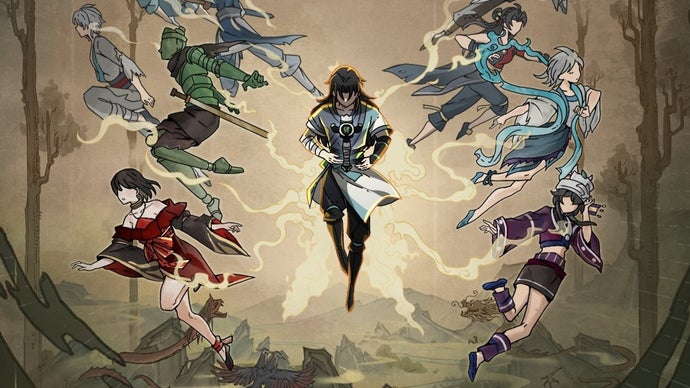

Developers from ConchShip Games, the studio behind the Chinese hit title The Scroll of Taiwu, have outlined what they see as fundamental misunderstandings by Western game companies operating in the Chinese market. They also confirmed a firm rejection of generative artificial intelligence for their game’s artwork.
The Scroll of Taiwu, a martial arts-themed strategy title, achieved significant commercial success on Steam long before the global breakout of titles like Genshin Impact and Black Myth: Wukong. Its performance signaled a large and growing domestic audience for Chinese-developed PC games.
In a recent interview, the developers stated that Western studios often fail to grasp the cultural and gameplay preferences of Chinese players. They suggested that direct porting of Western design philosophies, without localization of core mechanics and narrative themes, frequently leads to poor market reception in China.
Cultural Disconnect and Market Reality
The developers noted that Chinese players often value deep systems, long-term progression, and narratives rooted in local history and folklore. They argued that many Western titles do not adequately adapt their storytelling or monetization models to suit these expectations.
Another point of critique involved the lack of sustained community engagement from foreign studios. The team at ConchShip Games emphasized the importance of continuous live updates and direct developer communication, which they consider standard practice in the Chinese market but are often neglected by Western outfits.
generative AI Artwork Rejected
ConchShip Games also addressed the use of generative AI in game development. The studio stated that it has rejected the use of generative AI for any of The Scroll of Taiwu’s artwork or assets.
“How dare we use something like that on someone’s dream,” a developer was quoted as saying. The statement reflects a belief that art creation should remain a human endeavor, especially for a game with a strong cultural identity. The developers asserted that using AI to generate character or environment art would devalue the creative work of the studio and disrespect the passion of the player base.
This decision stands in contrast to a growing trend in the global games industry, where several major studios have begun adopting generative AI tools for concept art, asset generation, and dialogue writing to reduce production costs.
Implications for the Industry
The Scroll of Taiwu serves as a case study for how Chinese-developed titles can succeed by prioritizing local cultural relevance and handcrafted artistry. The developers’ comments suggest that Western companies seeking to enter China may need to invest more heavily in localized development teams and respect for traditional creative processes.
The rejection of generative AI could also influence other studios in the region. As debates over AI’s role in creative industries intensify, ConchShip Games’ stance reinforces an argument that authenticity and human craftsmanship remain a strong selling point, particularly in culturally specific genres.
ConchShip Games continues to update The Scroll of Taiwu with new content. No official release date has been announced for any sequel or expansion, but the studio has indicated that future projects will maintain the same focus on traditional Chinese aesthetics and deep simulation gameplay.
Source: GamesIndustry.biz