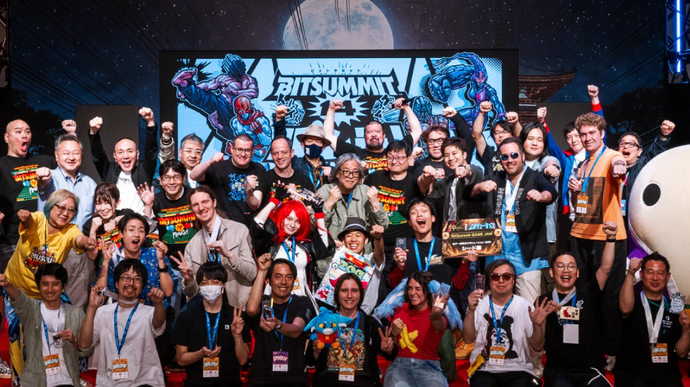

The thirteenth edition of Bitsummit opened its doors in Kyoto a few weeks ago against a backdrop of significant corporate movement in the Japanese entertainment sector. The event showcased a growing trend among Japanese indie developers: a pursuit of multimedia models backed by major entertainment firms.
Before the conference began, entertainment conglomerate TOEI announced plans for a brand new gaming subsidiary, a move that initially generated confusion in Western media circles. TOEI is one of the largest entertainment companies in Japan, widely known for producing globally popular anime franchises such as One Piece and Dragon Ball.
The announcement signals a strategic pivot for the company, which controls a vast library of intellectual property. TOEI’s entry into game publishing represents a major shift for a firm traditionally focused on film and animation production.
Bitsummit 2026 itself served as a platform for dozens of independent Japanese studios to present their latest projects. Observers noted a clear pattern: many of these studios are not limiting themselves to traditional game development. Instead, they are actively seeking partnerships across film, music, and publishing sectors.
Background of the Industry Shift
The Japanese games industry has long operated as a distinct ecosystem, with console manufacturers and large publishers dominating the landscape. However, recent years have seen a convergence of media formats. Anime, manga, and video game franchises now frequently cross over, creating shared audiences and revenue streams.
For indie developers, this environment offers new opportunities. A successful game can now lead to an anime adaptation, a soundtrack release, or a merchandise line. Major entertainment firms like TOEI see this as a chance to leverage their established distribution networks and marketing power.
TOEI’s formal entry into game publishing is one of the clearest examples of this trend. The company has stated its intention to develop and publish games based on its own IPs, as well as partner with external studios.
Reactions from the Industry
Industry analysts have pointed out that this model mirrors successful strategies used in South Korea and China, where entertainment conglomerates frequently manage multimedia franchises from inception. The Japanese approach, however, retains a strong focus on independent creative control.
Developers at Bitsummit expressed cautious optimism. Many see the backing of major firms as a way to secure funding and distribution that would otherwise be difficult to obtain. However, they also emphasized the importance of maintaining artistic independence within these partnerships.
The presence of TOEI and other major entertainment firms at the event demonstrates that these companies are actively scouting for new talent and projects to invest in.
Implications for the Global Market
The shift toward multimedia models has potential ramifications beyond Japan. Successful Japanese indie games that receive multimedia backing could reach wider international audiences through established anime and film distribution channels.
This could change the competitive dynamics of the global games industry, where independent studios often struggle to gain visibility against major AAA releases. A multimedia launch strategy, supported by a major entertainment firm, provides a significant advantage in marketing and brand recognition.
Analysts predict that other Japanese entertainment conglomerates may follow TOEI’s lead in the coming years. The lines between game development, animation, and music production are expected to continue blurring.
Bitsummit 2026 concluded with several partnership announcements between indie studios and media companies. Official timelines for these projects have not been disclosed, but developers indicated that initial releases could appear within the next 12 to 18 months. The convergence of Japanese indies and major entertainment firms is likely to become a defining feature of the industry’s near future.
Source: GamesIndustry.biz