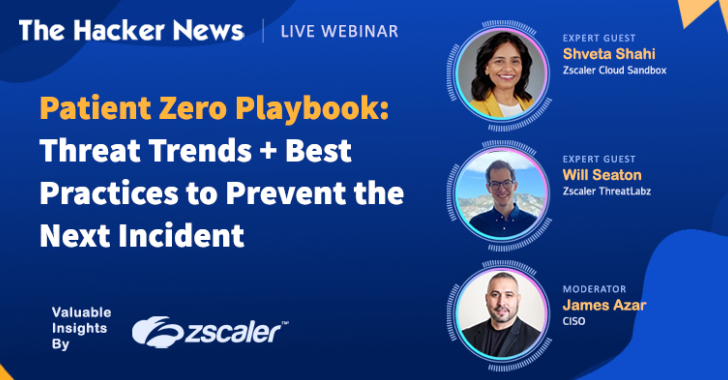

cybersecurity professionals are being forced to reconsider their incident response strategies as attackers increasingly rely on artificial intelligence to initiate stealth breaches. An upcoming industry webinar, titled “One Click, Total Shutdown: The ‘Patient Zero’ Webinar on Killing Stealth Breaches,” aims to address the growing challenge of containing attacks that begin with a single compromised user.
The central thesis of the discussion is that the most difficult aspect of cybersecurity is not the technology itself, but the human element. According to the webinar’s preview, nearly every major breach reported in recent months follows a predictable pattern. It begins with one employee, one carefully crafted email, and one infection at a device level, often referred to as the “Patient Zero” infection.
The Rise of AI-Driven Initial Attacks
The webinar organizers highlight a significant shift in the threat landscape for 2026. Hackers are now using artificial intelligence to generate these “first click” attacks. The sophistication of AI-generated phishing emails and malicious attachments makes them nearly impossible for traditional security measures or trained employees to identify. This creates a scenario where the initial compromise is almost inevitable.
The core question posed to security leaders is straightforward. If a single laptop or device is compromised on their watch, does the organization have a viable plan to stop that infection from spreading and taking down the entire network? The focus is shifting from prevention to containment and rapid eradication of the initial threat.
The “Patient Zero” Problem
The concept of “Patient Zero” in cybersecurity refers to the first infected device in an organization. Traditionally, security teams focus on perimeter defenses. However, with AI-powered threats, the perimeter is often breached instantly. The webinar intends to explore strategies for isolating and neutralizing this first infection before it can establish persistence or move laterally across the network.
Industry experts note that the speed of modern attacks leaves little room for manual investigation. The time between a user clicking a malicious link and the attacker deploying ransomware or exfiltrating data can be measured in minutes. Therefore, automated shutdown and isolation procedures at the endpoint level are becoming critical.
Implications for Security Teams
For security operations centers worldwide, the challenge is balancing user productivity with stringent security controls. The webinar will likely cover technical measures such as micro-segmentation, endpoint detection and response (EDR) settings, and automated playbooks that trigger when a “Patient Zero” device is suspected. The goal is to achieve a “total shutdown” of the threat at the source without taking down the entire business infrastructure.
Looking Ahead
As threat actors continue to integrate AI into their toolkits, the industry expects a corresponding rise in AI-driven defense mechanisms. Organizations are being urged to simulate “Patient Zero” scenarios in tabletop exercises to test their response plans. The webinar is scheduled to provide actionable intelligence on how to update incident response protocols to account for the speed and stealth of modern, AI-assisted breaches. Further updates from the webinar organizers are expected to be released following the session.
Source: Delimiter Online