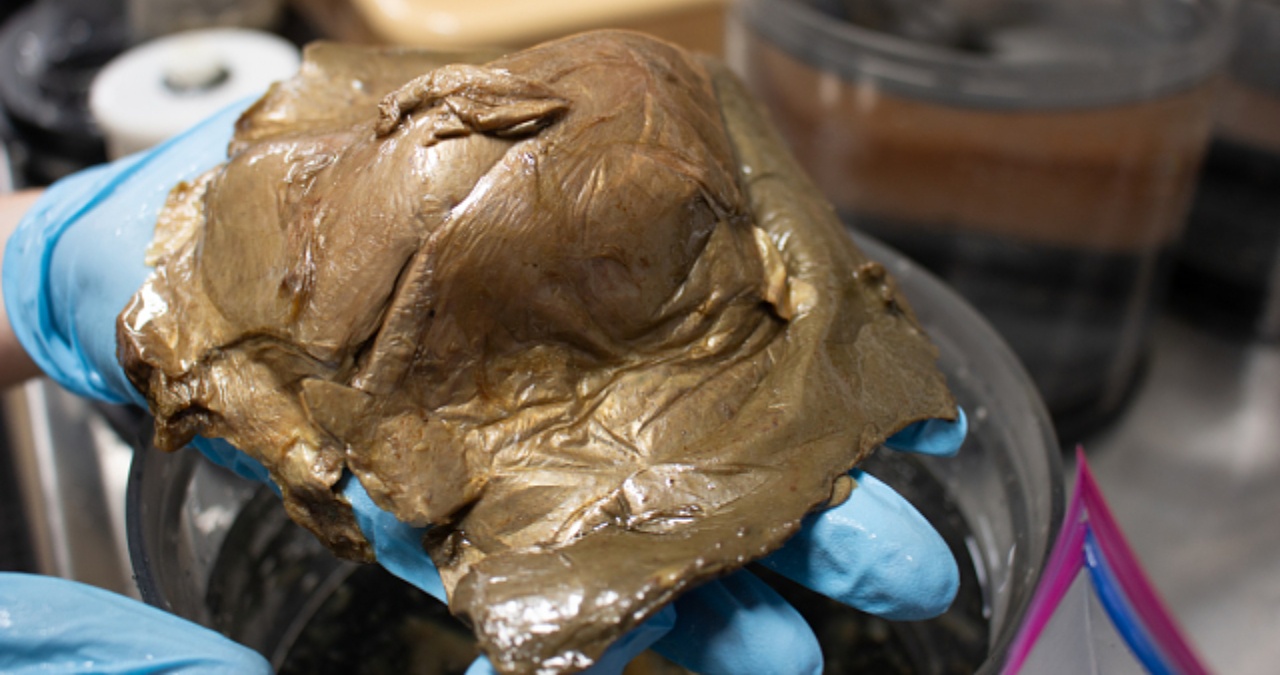

A mysterious golden object discovered on the ocean floor, which sparked speculation about alien origins, has been scientifically identified. Researchers from the National Oceanic and Atmospheric Administration (NOAA) have provided a definitive answer to the deep-sea puzzle.
The object, measuring approximately 10 centimeters in diameter, was found at a depth of 3,300 meters off the coast of Alaska in August 2023. The discovery occurred during a remotely operated vehicle (ROV) dive as part of the Seascape Alaska expedition.
The Discovery and Initial Reactions
The golden orb was observed attached to a rock on the seafloor. It appeared smooth and dome-like with a small hole or tear near its base. The ROV operators initially expressed uncertainty, with one audio recording capturing the comment, “I just hope when we poke it, something doesn’t decide to come out. It is like the beginning of a horror movie.”
The object quickly gained public attention, with many speculating online that it could be an egg case from an unknown species, a new type of sponge, or even evidence of extraterrestrial life. NOAA scientists transported the specimen to a laboratory for analysis.
Scientific Analysis and Findings
After several months of study, scientists concluded that the golden orb is the egg case of a skate, a type of ray related to sharks. The base of the object, initially thought to be a point of damage, was identified as the nuchal horn of the egg case.
Skate egg cases are typically square and dark, but this specimen was unusual in that it was round and appeared golden. Researchers determined that the shell had possibly been dehydrated or had undergone a chemical change after being laid, causing the distinctive color and shape alteration.
The team also noted that the object was “exceptionally large” compared to typical skate egg cases. The specimen was collected and preserved for further morphological and genetic testing to confirm the exact species of skate that laid it.
Broader Context of Deep-Sea Research
This discovery highlights the challenges of deep-sea exploration. Scientists estimate that more than 80 percent of the ocean remains unmapped and unexplored. Dr. Kerry Howell, a deep-sea ecologist involved in the analysis, stated, “It is a reminder of how much we still do not know about the deep ocean.”
The event underscores that new species and unusual biological phenomena are regularly encountered during ROV dives. The identification process involved careful comparison with known species and the application of molecular techniques to rule out other possibilities such as a type of soft coral or a feeding mass.
Implications for Marine Biology
The discovery provides new data on the reproductive strategies of deep-sea skates. Understanding where and how these egg cases are deposited can inform conservation efforts for these vulnerable species, many of which are threatened by deep-sea trawling.
Further analysis of the specimen is expected to reveal whether it represents a previously unknown species or a variation of a known skate. The genetic sequencing will be key to this determination.
Expected Next Steps
NOAA scientists plan to publish the full genetic analysis of the golden orb in a peer-reviewed journal within the coming year. Future ROV expeditions to the same area will attempt to locate additional specimens and observe the life cycle of the responsible skate species. The findings are expected to contribute to a broader understanding of biodiversity in the North Pacific deep sea.
Source: NOAA ocean exploration