
A new wave of demand for graphics processing units (GPUs) is emerging from an unexpected source: astronomy. Researchers are increasingly relying on these specialized computer chips to analyze vast datasets in the search for distant galaxies and cosmic phenomena, adding further strain to an already constrained global supply chain.
The trend was highlighted by recent developments in the field of computational astrophysics, where scientists are deploying artificial intelligence models to sift through enormous volumes of telescope data. This process, often described as finding needles in a galactic haystack, requires immense parallel processing power, a task for which GPUs are uniquely suited.
Growing Demand from scientific computing
Historically, GPU demand has been driven by the cryptocurrency mining industry and, more recently, by the rapid expansion of large-scale AI models for commercial applications. The entry of astronomy into this competitive market represents a significant new pressure point. Researchers from institutions worldwide are reporting longer wait times and higher costs for accessing the necessary hardware.
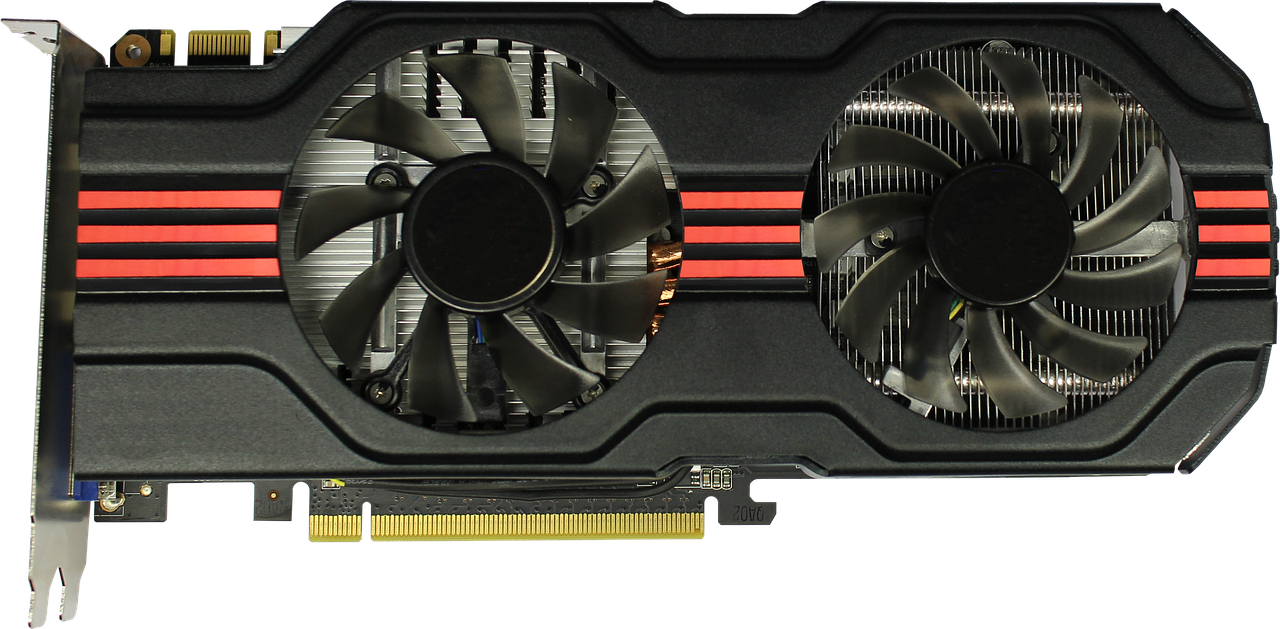
The core of the issue lies in the architecture of modern GPUs. Unlike central processing units (CPUs), which handle tasks sequentially, GPUs can perform thousands of calculations simultaneously. This parallelism is ideal for training the deep learning algorithms that can autonomously identify patterns, such as the signatures of previously unknown galaxies or supernovae, within massive datasets collected by observatories like the James Webb Space Telescope and the Vera C. Rubin Observatory.
Parallel Processing Demands
One researcher involved in a major sky survey project noted that the volume of data being generated now exceeds the capacity of traditional manual analysis. Automated AI systems, which must be trained on labeled datasets, require sustained access to GPU clusters for weeks or months at a time. This creates a direct competition with tech giants and startups for limited GPU inventory.
The shortage is not limited to high-end enterprise cards. Mid-range GPUs, often used in smaller university laboratories and research groups, are also affected. This has forced some teams to either scale down their research ambitions or seek alternative computational methods, such as using cloud computing services, which come with their own escalating costs.
Impact on Research Timelines
The consequences for astronomy are already measurable. Several research collaborations have reported delays in processing data from recent observation campaigns. A delay in analysis can mean the difference between being the first to report a celestial event and missing a transient phenomenon entirely.
For instance, the search for gravitational wave counterparts, which relies on rapidly pinpointing the location of cosmic collisions, is highly time-sensitive. Insufficient GPU power can bottleneck the pipeline of data analysis, potentially causing scientists to lose track of critical astronomical events.
The situation mirrors the broader global chip shortage that has impacted industries from automotive manufacturing to consumer electronics. However, the specific demands of AI workloads in astronomy add a layer of complexity. These workloads often require high memory bandwidth and precise floating-point calculations that are not always prioritized in the current chip design landscape, which is heavily influenced by commercial AI applications.
Infrastructure Challenges
University physics and astronomy departments are finding it increasingly difficult to justify the budget for new GPU infrastructure. The cost of a single high-performance card, which was historically a small line item in a lab budget, can now represent a significant capital investment. This has led to informal resource sharing networks, but these are often insufficient to meet peak demand.
Some initiatives are attempting to pool resources through national and international collaborations. For example, programs that support open-access supercomputing centers are seeing increased demand from astronomers, but these facilities are also competing for the same hardware.
Future Outlook for Hardware Access
Looking ahead, the pressure on the GPU supply chain from scientific research is expected to increase. Next-generation observatories, which are set to come online in the coming years, will generate exponentially more data than current facilities. This will require not just more GPUs, but also more sophisticated architectures capable of handling data streams in real time.
Manufacturers are aware of the demand from the scientific community. Some have begun offering specialized accelerator cards designed for high-performance computing tasks. However, the overall output of GPUs has not yet caught up with the combined demand from cryptocurrency, commercial AI, and now scientific research.
No official timeline has been provided by leading manufacturers regarding when supply will fully stabilize. Until then, astronomers will likely continue to face challenges in securing the computational resources needed to keep pace with the universe’s data.
Source: Delimiter