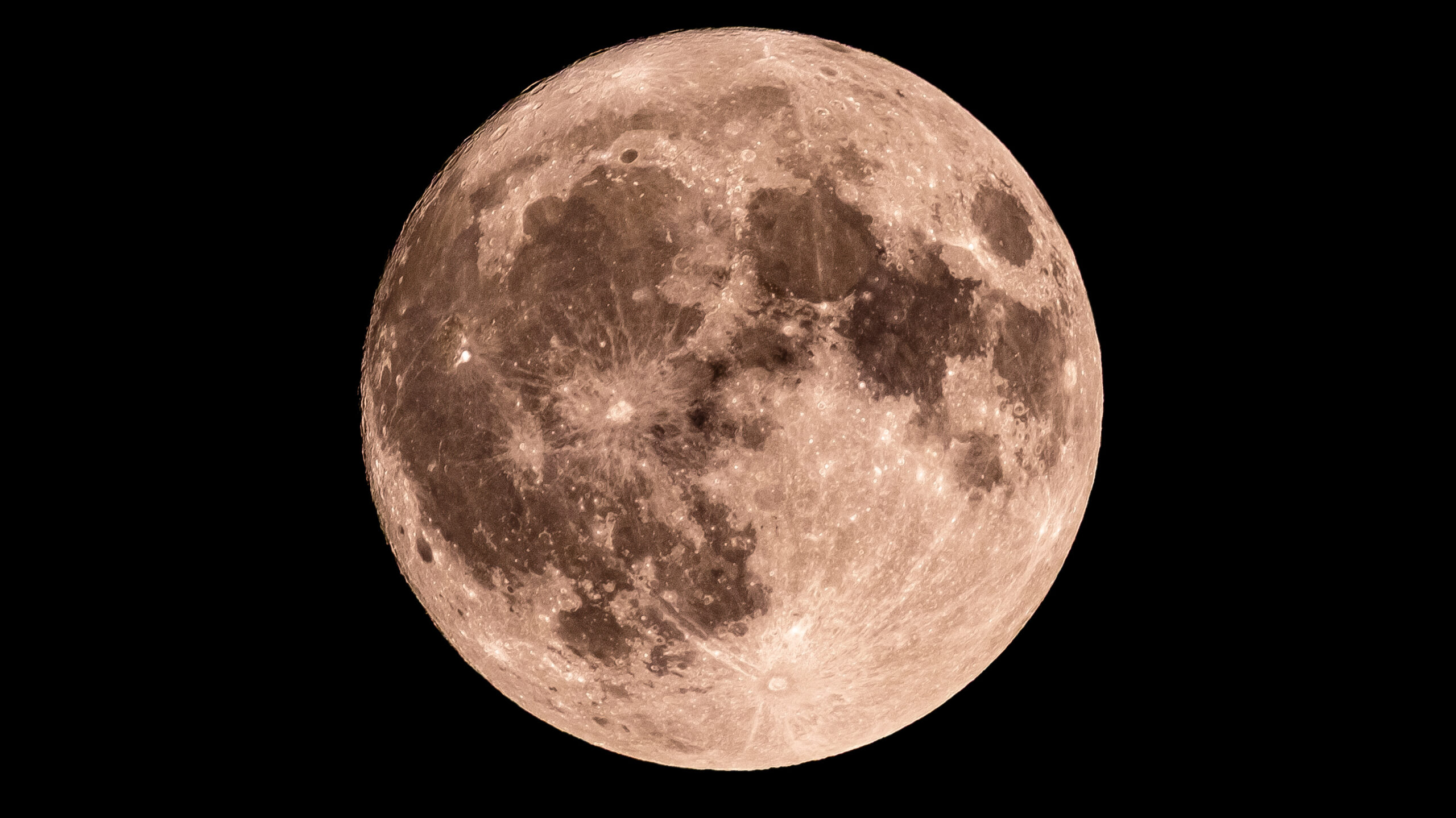

The Moon is currently in a waning phase, appearing progressively smaller each night as it approaches the New Moon on April 8, 2024. This astronomical event is a standard phase of the lunar cycle, which lasts approximately 29.5 days as the Moon orbits Earth. The changing visibility is due to the shifting portion of the Moon’s surface illuminated by the Sun from our terrestrial vantage point.
The Lunar Cycle Explained
The lunar cycle, also known as a lunation, begins with the New Moon, when the Moon is positioned between Earth and the Sun, rendering its Earth-facing side dark. Following the New Moon, the Moon enters a waxing phase, where an increasing sliver of its surface becomes illuminated, leading to the First Quarter and eventually the Full Moon. The current waning phase occurs after the Full Moon, as the illuminated area visibly decreases each night until the cycle restarts with the next New Moon.
This predictable pattern is a result of celestial mechanics. The Moon does not produce its own light; the brightness we see is sunlight reflected from its surface. The fraction of the Moon we see illuminated changes based on the relative positions of the Sun, Earth, and Moon.
Visibility and Observation
During a waning phase, the Moon rises later each night, often becoming visible in the late evening or early morning hours. For observers, this means the Moon will appear as a shrinking crescent in the eastern sky before dawn in the days immediately preceding April 8. The exact time of moonrise and the percentage of illumination will vary slightly by geographic location.
Astronomers and casual skywatchers track these phases as a routine part of observing the night sky. The New Moon on April 8 is of particular note as it will coincide with a total solar eclipse, where the Moon will completely block the Sun’s disk along a narrow path across North America.
Scientific and Cultural Significance
The regular cycle of lunar phases has been fundamental to timekeeping and calendar systems throughout human history. Many cultural and religious observances are tied to specific moon phases. From a scientific perspective, the phases provide a clear, observable demonstration of orbital mechanics.
Furthermore, the dark skies associated with the New moon phase provide optimal conditions for astronomers to observe faint deep-sky objects, such as distant galaxies and nebulae, without interference from moonlight.
Looking Ahead
Following the New Moon on April 8, the Moon will re-enter a waxing phase. A slim waxing crescent will become visible in the western sky just after sunset in the subsequent evenings. The next primary lunar phase will be the First Quarter Moon, expected approximately one week after the New Moon, on April 15. The cycle will then continue toward the next Full Moon, forecast for April 23.
Source: Mashable