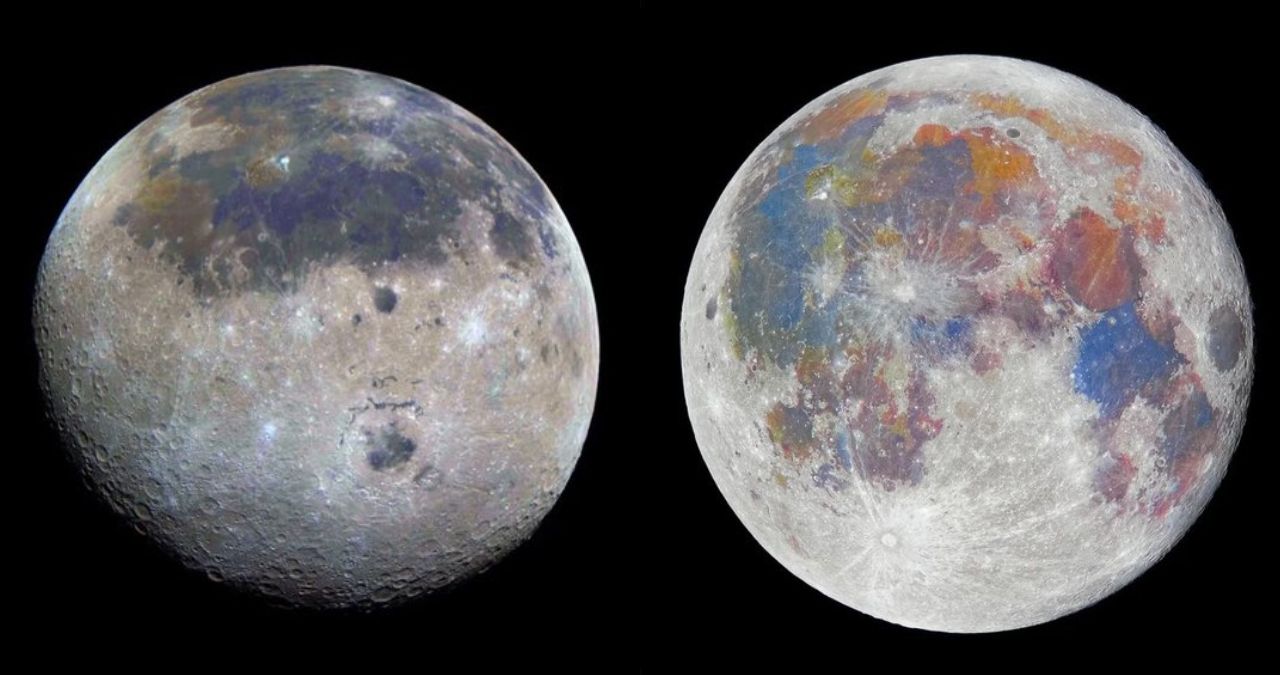

Astronauts aboard NASA’s upcoming Artemis II mission have reported preliminary observations of unexpected color variations on the lunar surface, challenging the long-held perception of the Moon as a uniformly grey world. These observations, made during mission simulations and analysis of high-resolution orbital data, suggest the presence of diverse mineralogical compositions in the lunar regolith. The findings could significantly alter scientific understanding of the Moon’s geological history and resource potential.
Scientific Implications of Lunar Hues
The colors, described as subtle hints of blue, brown, and red in specific regions, are not visible to the naked eye from Earth. Scientists state they become apparent under specific lighting conditions and through advanced spectral analysis. These variations are directly linked to the chemical and mineral makeup of the lunar soil, or regolith. For instance, titanium and iron content can influence the reflectance properties of the surface, creating color signatures detectable by sensitive instruments.
This discovery is not merely aesthetic. Planetary geologists indicate that mapping these color variations provides a non-invasive method to chart the distribution of valuable resources, such as ilmenite, which contains oxygen-extractable titanium and iron. Understanding this distribution is a critical objective for future sustained lunar exploration under the Artemis program.
Background and Mission Context
The Artemis II mission, scheduled for no earlier than September 2025, will carry a crew of four astronauts on a flyby around the Moon. It will be the first crewed mission to the lunar vicinity since Apollo 17 in 1972. While the crew will not land, their unique vantage point and onboard instruments are expected to provide unparalleled observations of the lunar surface. The recent color observations stem from intensive training and data review from uncrewed precursor missions like Artemis I and the Lunar Reconnaissance Orbiter.
NASA has emphasized that crew training for Artemis II includes recognizing key geological features. The ability to identify and report on subtle color differences from lunar orbit is considered a valuable skill for enhancing the scientific return of the mission. This practice turns the astronauts into human sensors complementing the spacecraft’s technical instrumentation.
Reactions from the Scientific Community
The planetary science community has responded with keen interest to these preliminary reports. Experts not involved in the mission have noted that while the presence of mineralogical variation is well-known, detailed human-led observation from orbit could yield new, contextual insights. They caution that the ultimate analysis must come from direct sample returns and confirmed spectral data, but they acknowledge the potential for astronauts to identify unique, localized phenomena that automated systems might overlook.
Official statements from NASA affirm that all observations from the Artemis II crew will be meticulously documented and will feed directly into the planning for subsequent Artemis missions, which aim to establish a long-term human presence on the lunar surface. The agency treats these crew reports as critical operational and scientific data.
Forward-Looking Mission Objectives
The immediate next step is the successful launch and completion of the Artemis II mission, which will provide the first human-eye validation of these observations from lunar orbit. Following this, the Artemis III mission, which plans to land astronauts near the lunar south pole, will be able to target areas of specific mineralogical interest identified from orbit. Ground truth provided by astronauts collecting samples from these colorful regions will be essential for calibrating remote sensing data.
NASA’s official timeline, pending technical readiness and safety certifications, aims for the Artemis III landing no earlier than 2026. The data on lunar color and composition will play a direct role in selecting the final landing site, with a focus on both scientific value and resource utilization for future exploration.
Source: NASA