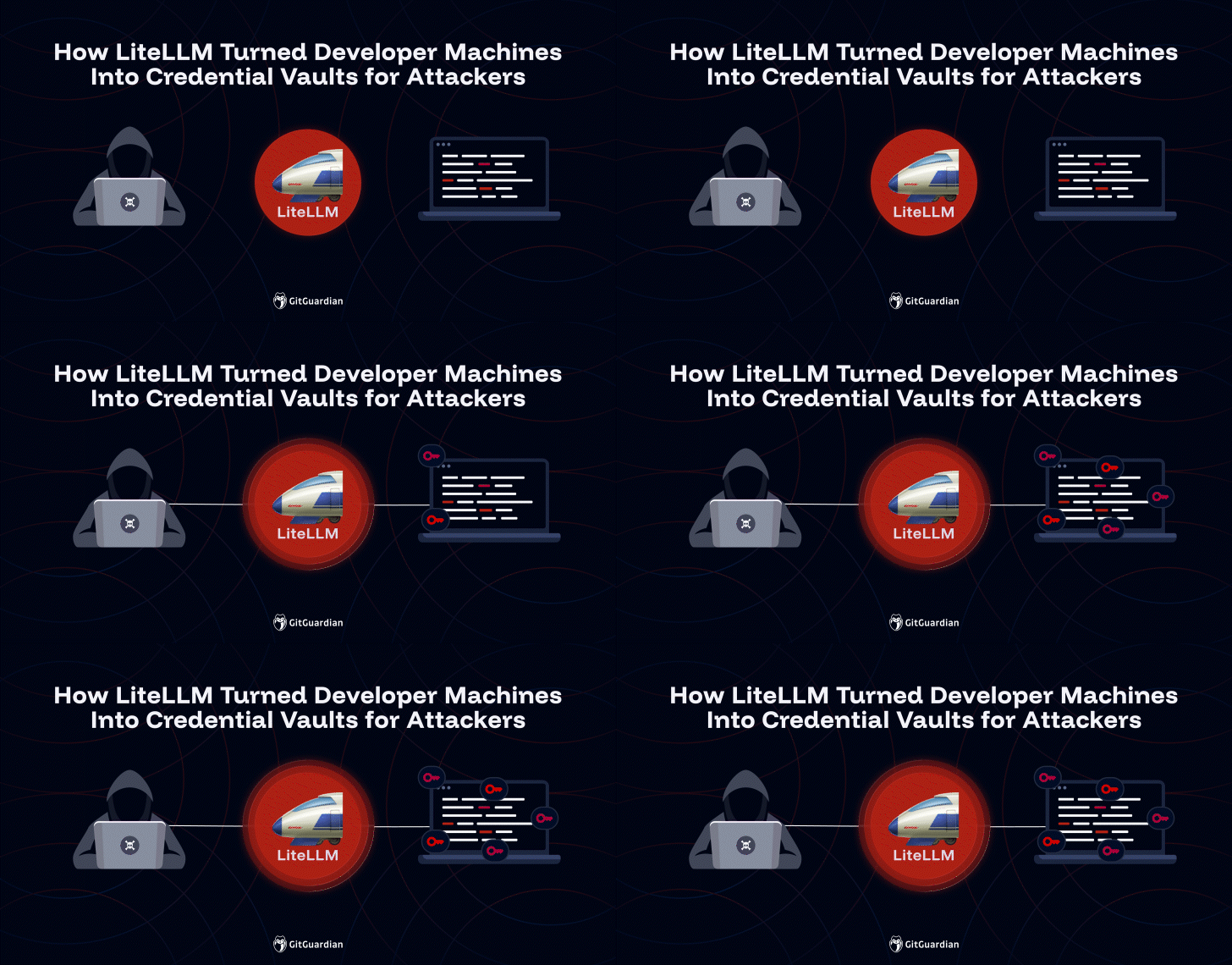

In March 2026, a significant security breach demonstrated the critical risks associated with developer workstations. The threat actor known as TeamPCP executed a supply chain attack targeting LiteLLM, a popular open-source library used by developers to interface with various large language models. This incident turned local development machines into unwitting credential vaults for attackers.
The attack leveraged developer workstations, which are often the most active pieces of enterprise infrastructure. These machines are hubs where credentials for numerous services are created, tested, cached, and reused across a wide array of tools, including build systems, automation bots, and local AI agents.
Anatomy of the Supply Chain Attack
The TeamPCP group compromised the LiteLLM project, introducing malicious code into the library. When developers updated their local installations, the tainted code executed on their machines. The primary function of this code was to scan for and exfiltrate any cached API keys, access tokens, and other authentication credentials present on the system.
These credentials often provide access to cloud services, internal databases, version control systems, and third-party AI platforms. By targeting a tool deeply integrated into the AI development workflow, the attackers gained a high-potential foothold into corporate networks and sensitive data stores.
Scope and Immediate Impact
The breach highlighted a growing security challenge as AI development becomes more decentralized. Security analysts noted that the attack did not exploit a traditional software vulnerability but rather the trusted position of a widely used developer tool. The incident affected an unknown number of individual developers and organizations globally.
Initial reports indicated that the compromised credentials could allow attackers to impersonate developers, access proprietary code, run unauthorized cloud resources incurring cost, and potentially move laterally into more secure internal company networks. The full extent of data loss or further breaches stemming from the stolen credentials remains under investigation.
Industry Response and Mitigation
Following the discovery, the maintainers of the LiteLLM project issued an urgent security advisory. They released a patched version of the library and instructed all users to upgrade immediately. The advisory also recommended that developers using any version of LiteLLM within the affected timeline should rotate all API keys and credentials that were present on their systems.
Major cloud providers and AI platform companies, including OpenAI, Anthropic, and Google, began notifying customers about potential credential exposure linked to this incident. They advised enhanced monitoring of API usage for any anomalous activity.
Broader Security Implications
This event has forced a reevaluation of security practices around local development environments. Security experts point out that developer laptops have long been a target-rich environment, but the integration of powerful AI tools that handle sensitive keys has increased the stakes significantly.
The breach underscores the persistent threat of supply chain attacks, where malicious actors compromise a trusted component to gain access to a wide user base. It also highlights the risks associated with credential caching on local machines, a common practice for developer convenience that can create severe security liabilities.
Organizations are now advised to enforce stricter policies regarding credential management on developer workstations, implement more robust secrets management solutions, and increase scrutiny of open-source dependencies within their software supply chain.
Next Steps and Ongoing Investigations
cybersecurity firms and law enforcement agencies are continuing their investigation into the TeamPCP group’s activities. The focus is on tracing the exfiltrated data and understanding the full scope of the attack. Affected companies are conducting internal audits to determine if any secondary breaches occurred using the stolen credentials.
Industry groups are expected to release new guidelines for securing local AI development tools in the coming months. Meanwhile, the immediate priority for the developer community remains credential rotation, system audits, and updating to the secured version of the affected library.
Source: Various security advisories and industry reports