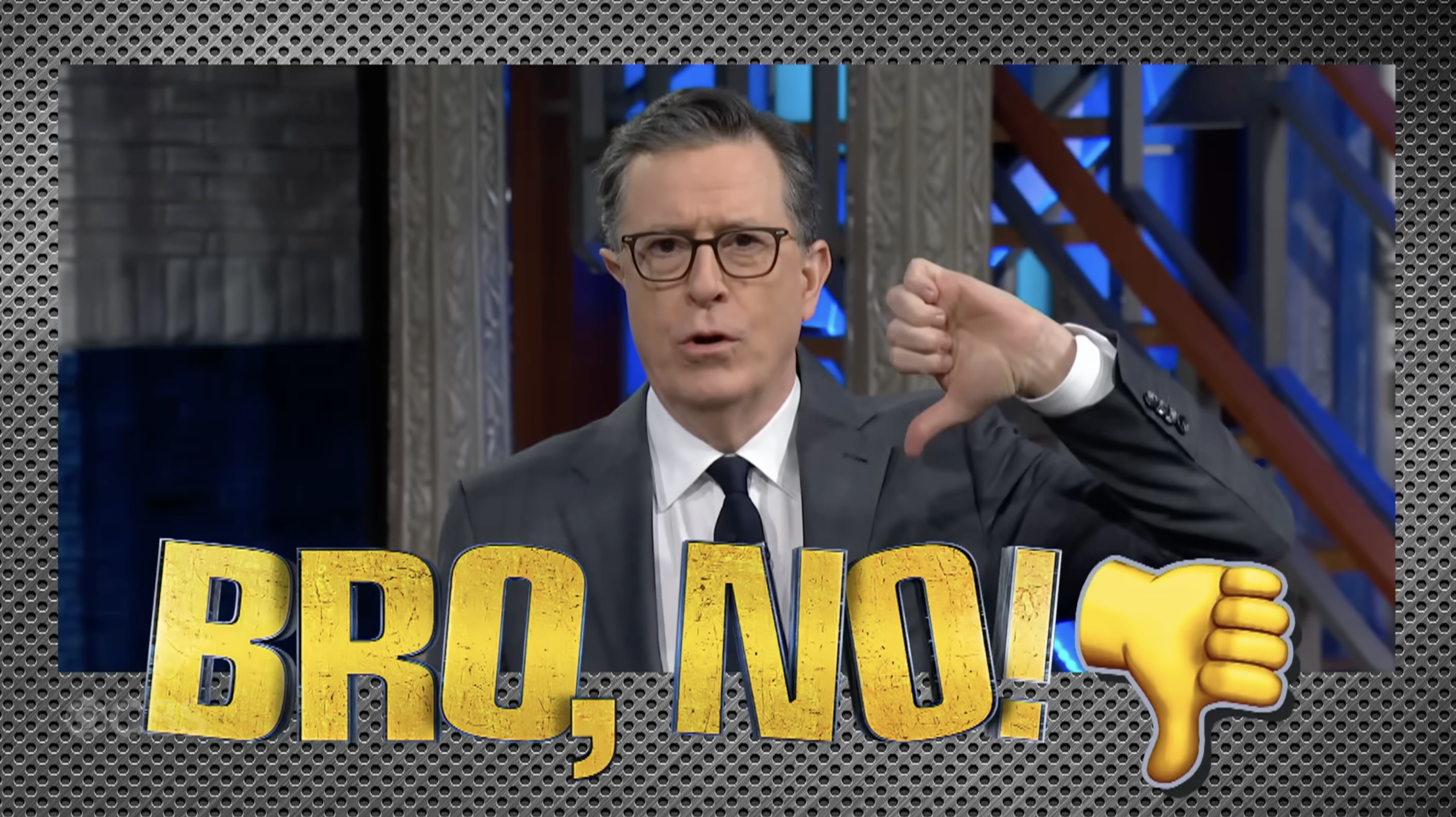

Late-night television host Stephen Colbert addressed the evolution of a notorious internet advertisement during a recent broadcast of “The Late Show.” The segment focused on the “Punch the Monkey” banner ad, a ubiquitous and often-maligned feature of early web browsing, which has reportedly been updated to include a narrative involving a girlfriend for the animated primate character. Colbert’s commentary provided a mainstream media spotlight on a piece of digital nostalgia that defined an era of online advertising.
Background on the “Punch the Monkey” Phenomenon
The “Punch the Monkey” advertisement was a widespread banner ad campaign in the late 1990s and early 2000s. It typically featured a cartoon monkey, often in a jester’s hat, that would move around the banner, prompting users to click on it with the promise of a prize. The ad became infamous for its aggressive and deceptive tactics, frequently leading users to intrusive pop-up windows or low-quality product offers rather than any legitimate reward. For many early internet users, it symbolized the chaotic and often frustrating experience of navigating the web before the widespread adoption of ad blockers and more sophisticated advertising standards.
These ads were a form of “clickbait” designed to generate revenue through pay-per-click models. Their persistence across countless websites made them an inescapable part of the online landscape. The character itself became a cultural touchstone, referenced in discussions about internet history, annoying advertising, and the early commercialization of the web.
Colbert’s On-Air Reaction
During his monologue, Colbert highlighted the reported update to the classic ad format. He noted the introduction of a girlfriend character for the monkey, framing the development with his characteristic wit. Colbert described the update by saying, “This update isn’t merely ooh-ooh ahh-ahh, it’s ooh-ooh la-la,” playing on the stereotypical sounds associated with monkeys and adding a French phrase often used to denote something stylish or romantic.
Colbert’s segment served to introduce the concept to a broad audience that may not have been familiar with the original ad’s notoriety. By discussing it on a major network television show, he connected a niche piece of internet lore with mainstream popular culture. The host’s remarks were presented as observational humor, reflecting on the absurdity of applying narrative progression to a decades-old advertising tactic.
Context of Modern Online Advertising
The mention of the “Punch the Monkey” ad’s evolution comes at a time when online advertising is dominated by highly targeted, data-driven campaigns. Modern ads utilize complex algorithms to track user behavior across sites, serving personalized content based on browsing history, demographics, and interests. In contrast, the “Punch the Monkey” ad relied on a simple, universally applied gimmick to attract clicks through sheer annoyance or curiosity.
Advertising experts note that while the methods have changed dramatically, the core objective of capturing user attention remains constant. The reported narrative addition to the old ad format can be seen as a primitive attempt at engagement, a precursor to today’s story-driven ad campaigns on social media platforms. However, the fundamental difference lies in sophistication and user consent; contemporary practices, though often criticized for privacy invasion, are far more integrated and subtle than the disruptive pop-ups of the past.
The resurgence of discussion around such ads also coincides with increased public and regulatory scrutiny of digital advertising practices. Issues of data privacy, transparency, and user experience are now at the forefront of industry debates, a far cry from the largely unregulated environment in which “Punch the Monkey” ads thrived.
Implications and Cultural Resonance
Colbert’s commentary underscores the lasting cultural imprint of early internet ephemera. The “Punch the Monkey” ad, while commercially motivated, has transcended its original purpose to become a shared memory for a generation of web users. Its mention on a platform like “The Late Show” validates these shared digital experiences as part of a broader cultural history.
Furthermore, the discussion highlights how internet nostalgia is increasingly entering mainstream discourse. Artifacts from the web’s early days, from dial-up modem sounds to primitive website designs, are now subjects of retrospective analysis and humor. They represent a specific period of technological adoption and adaptation, marking the transition of the internet from a niche tool to a central pillar of daily life.
The reaction from the online community to Colbert’s segment has been one of amused recognition. Social media users and technology forums have seen renewed conversations about the ad, with many sharing personal anecdotes of encountering it and debating its current status and the veracity of the reported “girlfriend” update.
Looking ahead, the attention brought by figures like Stephen Colbert may lead to further examination of early internet advertising‘s legacy. Historians of technology and media scholars could potentially explore these formats more formally, documenting their impact on user experience and the development of online commercial strategies. While the original “Punch the Monkey” ad campaign is likely inactive in its classic form, its legend persists, demonstrating how even the most irritating digital artifacts can secure a permanent place in the collective memory of the internet age.
Source: Mashable