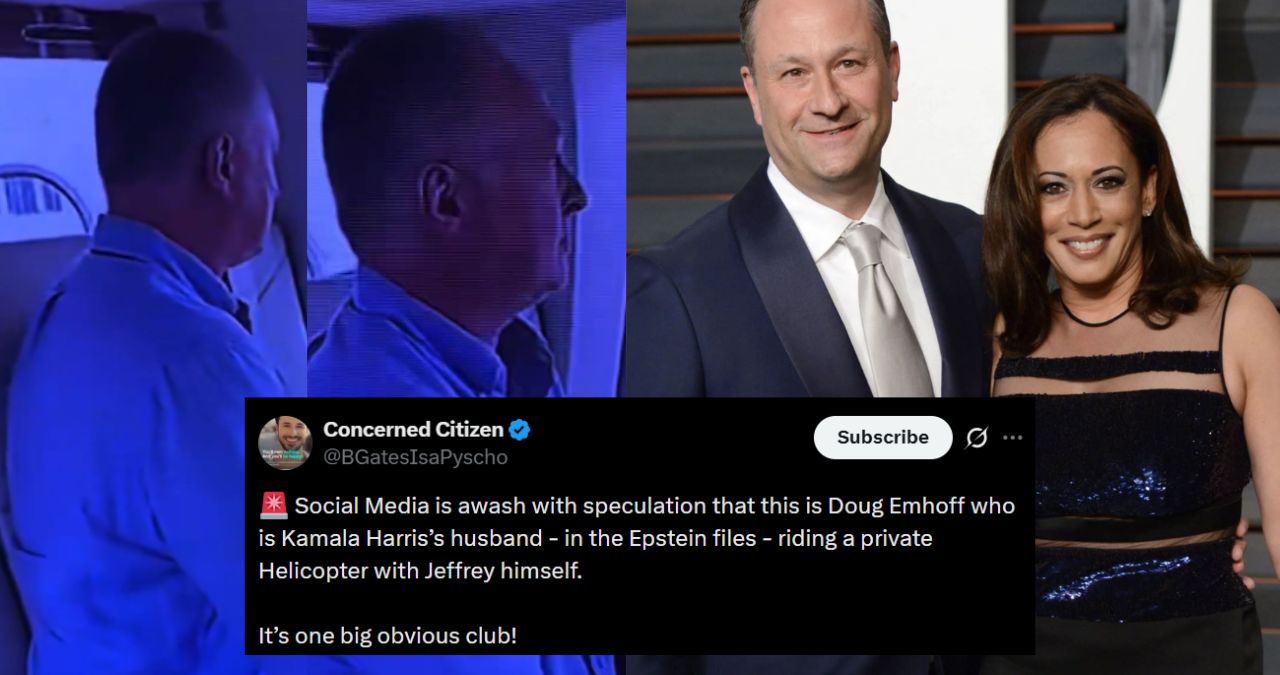

A viral video and associated images purporting to show Second Gentleman Doug Emhoff with the late financier Jeffrey Epstein have been widely circulated on social media, sparking conspiracy theories. No verifiable evidence supports the claim, and the material appears to be digitally manipulated or unverified.
The video, which gained traction on platforms like X (formerly Twitter) and TikTok, shows a man resembling Emhoff disembarking from a helicopter alongside another individual. Accompanying posts and images suggested the other person was Epstein, implying a previously undisclosed connection. The spread of this content coincided with the public release of court documents related to Epstein associates.
Lack of Evidence and Digital Manipulation
Fact-checking organizations and news agencies have found no credible proof linking Doug Emhoff, the husband of Vice President Kamala Harris, to Jeffrey Epstein. A reverse image search of the key photograph indicates the original image may have been altered. The individuals in the source material have not been conclusively identified.
Experts in digital forensics note that the video quality and angles make definitive identification challenging. The dissemination of such content is often facilitated by coordinated online campaigns and algorithmically driven feeds that prioritize engagement over accuracy.
Official Response and Broader Context
There has been no official statement from the White House or the Office of the Second Gentleman regarding this specific video, as it deals with unsubstantiated claims. Representatives for the Second Gentleman typically do not comment on fabricated material circulating online.
The incident occurs within a broader landscape of misinformation, particularly concerning high-profile political figures and their families. Deepfake technology and simple photo editing software have made the creation of convincing but false narratives increasingly accessible.
Platform Policies and Content Moderation
Major social media platforms have policies against manipulated media intended to deceive. However, the enforcement of these policies can be inconsistent, especially with content that falls into a gray area or spreads rapidly before moderation systems flag it.
The viral nature of this claim demonstrates how unverified content can quickly shape public discourse, forcing fact-checking entities to react after the narrative has already been established in certain online communities.
Moving forward, observers expect similar incidents to arise around major news events. The focus will likely remain on the ability of social networks to label or reduce the reach of demonstrably false content and on the continued work of independent fact-checking organizations to provide timely clarifications.
Source: Mashable