
Organizations worldwide are increasingly adopting autonomous, or “agentic,” systems to manage and validate their cybersecurity defenses. This shift marks a significant evolution from traditional, siloed security tools toward integrated, self-directed platforms that can simulate complex attack scenarios. The transition is driven by the growing complexity of digital infrastructure and the need for continuous, realistic security assessments.
The Traditional security validation Landscape
In many complex organizations, the security validation stack has historically been fragmented. It typically consists of separate, non-communicating tools such as breach and attack simulation (BAS) platforms, manual or automated penetration testing engagements, and vulnerability scanners feeding into attack surface management systems. Each of these components provides a limited view of an organization’s security posture. The lack of integration between them creates gaps in coverage and can lead to inefficient resource allocation for security teams.
This disjointed approach often results in delayed responses to emerging threats and an incomplete understanding of how different vulnerabilities might be chained together in a real-world attack. Security professionals have had to manually correlate data from these disparate sources, a time-consuming process that can hinder proactive defense measures.
The Rise of Agentic Security Systems
The emerging trend moves toward what industry experts term “agentic” security validation. This concept refers to systems that employ autonomous software agents capable of performing complex, multi-step security tests with minimal human intervention. These agents can intelligently navigate an organization’s network, identify vulnerabilities, and simulate sophisticated adversary behaviors in a coordinated manner.
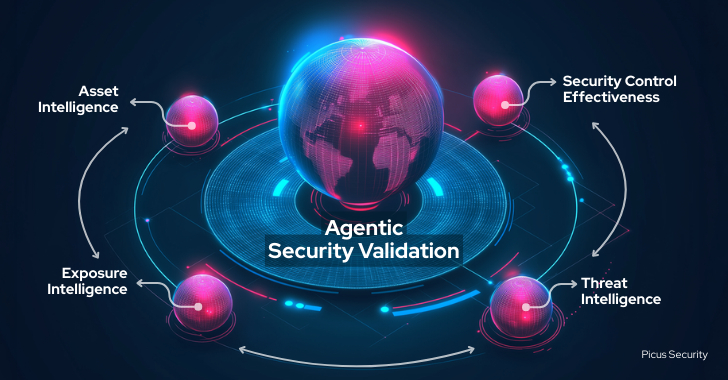
Unlike standalone tools, agentic systems are designed to operate as a cohesive whole. They can share intelligence and context between different validation functions, such as vulnerability scanning, penetration testing, and attack surface analysis. This integrated approach aims to provide a more holistic and dynamic assessment of security resilience against advanced persistent threats.
The technology underpinning this shift often involves advancements in artificial intelligence and machine learning. These allow the systems to learn from each interaction, adapt their testing strategies to new environments, and prioritize actions based on the perceived risk and value of different assets.
Implications for Enterprise Security
The adoption of agentic security validation has several practical implications for organizations. It promises to increase the frequency and realism of security testing, moving from periodic, point-in-time assessments to continuous validation cycles. This continuous approach is better suited to modern development practices like DevOps and continuous integration/continuous deployment (CI/CD), where the IT environment changes rapidly.
Furthermore, by automating complex testing sequences, these systems can free up skilled security personnel to focus on strategic tasks such as threat hunting, architecture review, and incident response planning. The goal is to shift human effort from repetitive execution of tests to the analysis of results and the improvement of overall security governance.
However, the implementation of such autonomous systems also raises considerations regarding oversight, control, and potential risks. Ensuring these agents operate within strictly defined boundaries and do not inadvertently disrupt business operations is a key concern for adopters.
Future Developments and Industry Direction
The security industry is expected to continue its investment in autonomous validation technologies. Market analysts predict increased convergence between different categories of security tools, with platforms offering combined capabilities for simulation, testing, and surface management. Standardization of communication protocols between security agents may also emerge to foster interoperability between products from different vendors.
Research and development efforts are likely to focus on enhancing the reasoning capabilities of security agents, enabling them to understand business context and make more nuanced decisions during testing. The long-term vision is for fully integrated defense systems where validation agents not only identify weaknesses but also recommend or even implement precise remedial actions, creating a self-healing security infrastructure.
Source: Based on industry analysis and expert commentary.