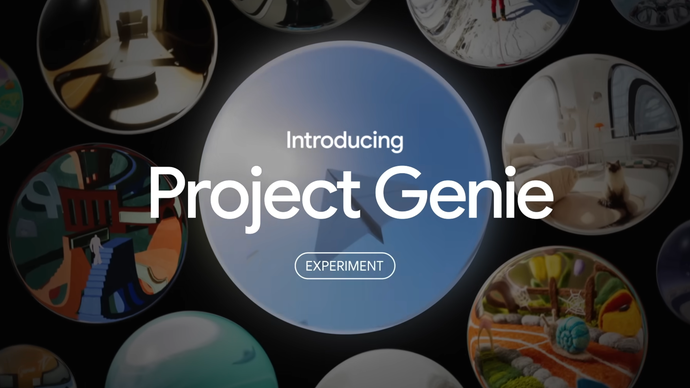

Google’s DeepMind division has detailed the current capabilities and limitations of its latest generative Artificial Intelligence model for creating interactive virtual worlds. During a presentation at the Game Developers Conference (GDC), researchers explained that the Genie 3 model can generate consistent, playable environments from a single image or text prompt, but these worlds begin to show inconsistencies after approximately one minute of operation.
Technical Constraints and Progress
The primary constraint cited is memory limitation within the model’s architecture. As the AI generates frames and predicts future states in an interactive sequence, it struggles to maintain a coherent and consistent world state beyond a certain temporal threshold. This breakdown manifests as visual glitches, logical inconsistencies, or a degradation in the quality of the generated environment.
This announcement, first reported by industry publication Gamefile, also highlighted significant progress. Just months prior to this development, similar world models could only maintain consistency for a matter of seconds. The jump to roughly a minute represents a substantial, though not yet complete, advancement in the field of generative AI for real-time simulation.
Understanding Generative World Models
Genie 3 falls under the category of a “world model,” a type of AI system trained to understand and simulate the rules of an environment. Unlike large language models that predict text, world models are designed to predict sequences of visual frames and interactions. The goal is to create a foundational model that can generate a vast array of interactive experiences from minimal input, a concept with potential applications in game development, simulation, and robotics.
The technology demonstrates an ability to learn the physics and dynamics of various environments from internet videos, without explicit human labeling of actions. This allows it to generate a playable space where a user can suggest actions, like jumping or moving left, and the model produces the appropriate visual outcome.
Implications for AI Development
The revelation of the one-minute limitation provides a clear, factual benchmark for the current state of this specific AI research. It underscores a central challenge in generative AI for dynamic systems: the trade-off between complexity, memory, and temporal coherence. Extending the stable duration of these simulations is a key focus for researchers aiming to create more robust and usable generative environments.
For the broader AI and technology sectors, this development signals both the rapid pace of advancement and the significant technical hurdles that remain. Achieving long-term consistency is critical for any practical application requiring sustained user interaction within an AI-generated world.
Next Steps and Future Research
Based on the information presented, the next phase of research for Google DeepMind‘s team will logically focus on overcoming the memory constraints that cause the model’s breakdown. Future work may involve architectural innovations to improve the model’s long-term memory retention or more efficient data processing techniques. The researchers did not provide a specific public timeline for the next iteration of the model or for when these limitations might be substantially mitigated. Further developments are expected to be shared through academic publications or subsequent industry conferences as the technology evolves.
Source: Gamefile