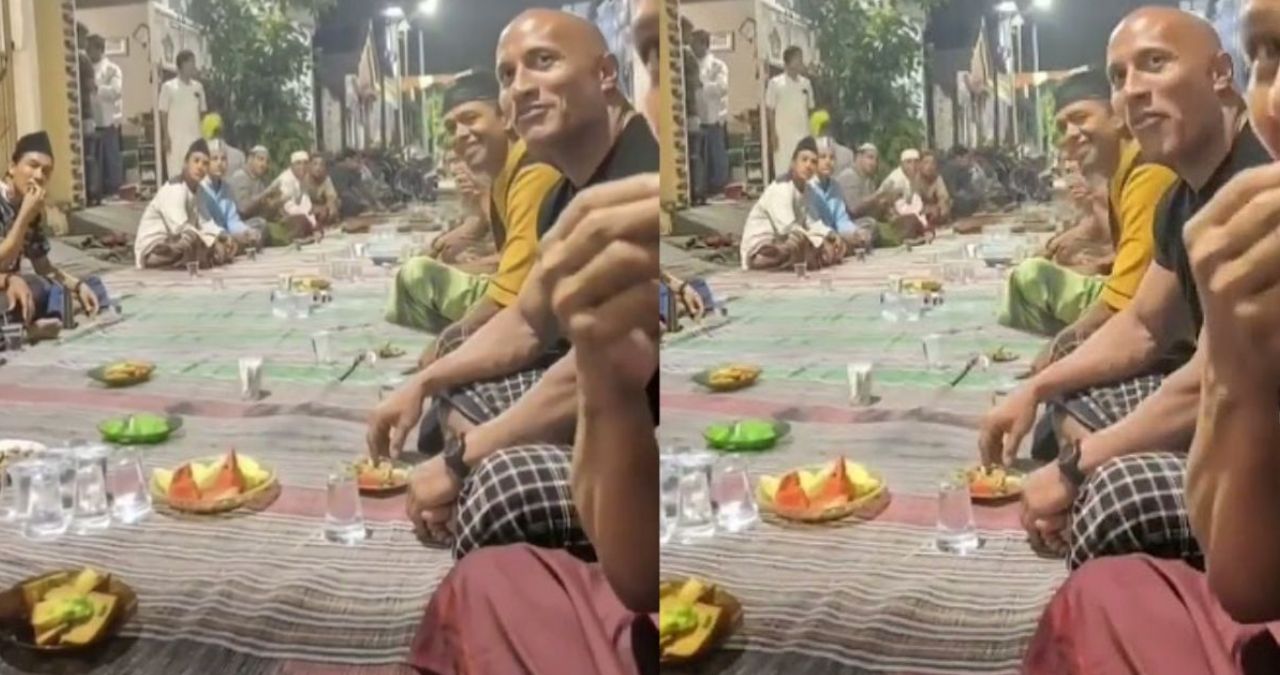

A viral video clip purporting to show Hollywood actor Dwayne “The Rock” Johnson attending an Iftar gathering has been confirmed to be fabricated using artificial intelligence. The digitally manipulated content spread across social media platforms in early March 2026, coinciding with the holy month of Ramadan, leading to widespread speculation before being identified as a deepfake.
Origins and Spread of the Fabricated Clip
The video, which surfaced on platforms like X (formerly Twitter) and Instagram, appeared to show Johnson participating in a traditional Iftar meal, the evening meal with which Muslims end their daily Ramadan fast. The clip quickly gained traction, amassing millions of views and shares. Many users expressed surprise and curiosity, given Johnson’s public persona and the lack of prior association with such events.
Initial online discussion was divided, with some commentators questioning the video’s authenticity due to slight visual inconsistencies. The buzz intensified as fans and news outlets sought to verify the actor’s whereabouts and activities during the period in question.
Verification and AI Identification
Digital forensics experts and fact-checking organizations analyzed the video shortly after it went viral. Their examination concluded the footage was a product of AI-generated media, commonly known as a deepfake. The analysis pointed to telltale signs of manipulation, including unnatural facial movements, lighting discrepancies, and artifacts around the subject’s features that are typical of AI synthesis tools.
No credible evidence has emerged to suggest Dwayne Johnson attended an Iftar event during the 2026 Ramadan season. Representatives for the actor have not issued a public statement regarding the video, a common practice for addressing widely debunked misinformation.
Context of AI-Generated Misinformation
This incident is part of a growing trend of AI-generated content causing confusion online. Deepfake technology, which uses machine learning to create realistic but fake audio and video, has become increasingly accessible. Its misuse poses significant challenges for information integrity, particularly around high-profile individuals and culturally significant moments.
The timing of the video’s release during Ramadan highlights how generative AI can be leveraged to create culturally resonant but false narratives. Experts note that such content often spreads fastest during periods of high social media engagement, where the speed of sharing outpaces the process of verification.
Broader Implications and Response
The rapid dissemination of the fake Johnson video has renewed calls from technology analysts and media watchdogs for improved detection tools and public media literacy. Major social media platforms have policies against synthetically manipulated media that is likely to cause harm or mislead, but enforcement remains an ongoing challenge due to the volume and sophistication of new content.
For the public, the event serves as a reminder to critically assess viral content, especially that featuring celebrities in unexpected scenarios. Recommended verification steps include checking the source, looking for official confirmations, and being aware of reporting from established fact-checking entities.
Moving forward, experts anticipate similar AI-driven hoaxes will continue to emerge. The focus for technology companies, journalists, and regulators is expected to remain on developing more robust provenance standards, such as content watermarking, and promoting educational initiatives to help users identify synthetic media. The evolution of this technology and the corresponding countermeasures will likely define the next phase of digital content authenticity challenges.
Source: Mashable