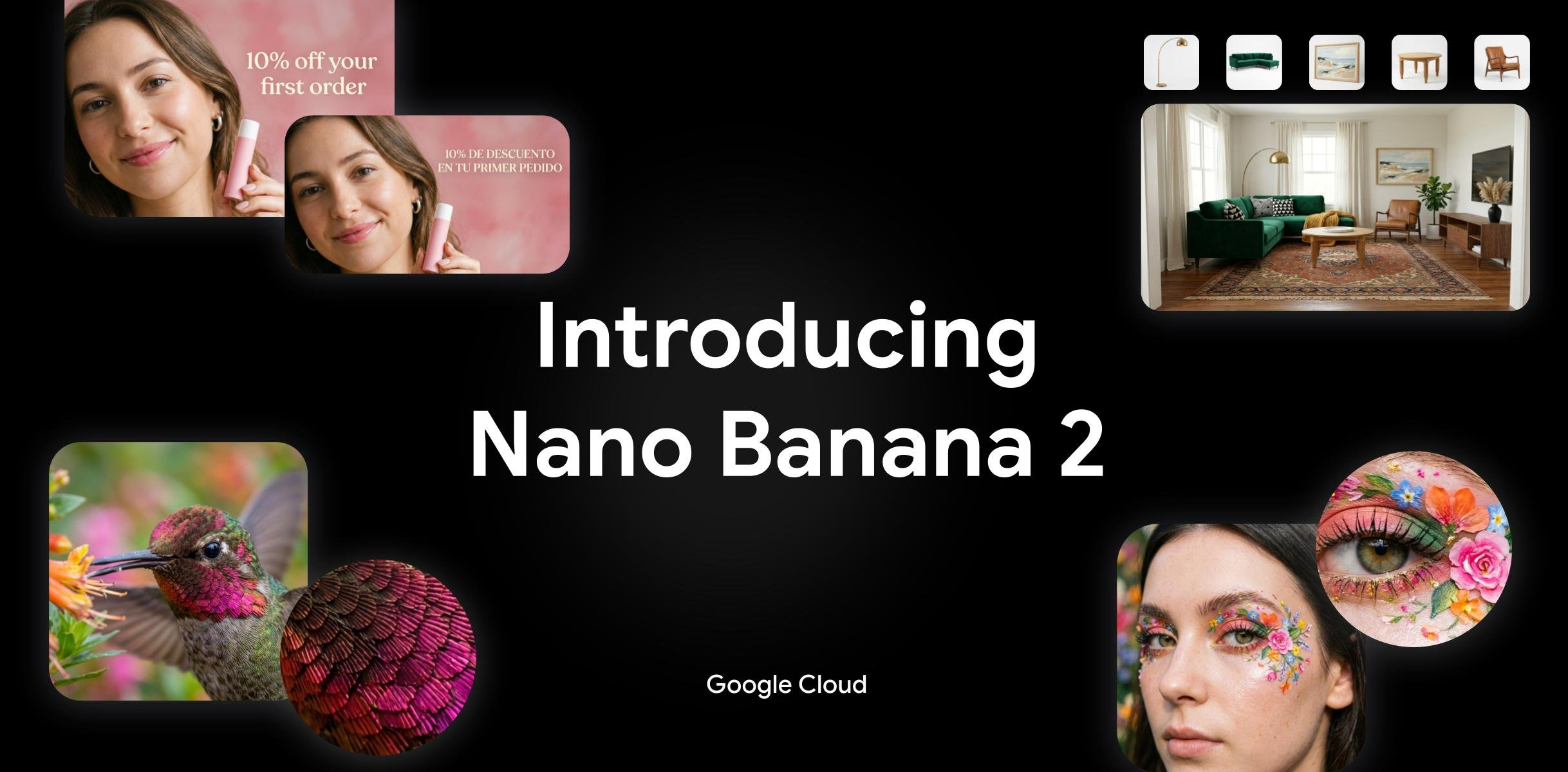

Google has officially launched an upgraded version of its Nano Banana 2 artificial intelligence model, introducing significant improvements to the speed and accuracy of its image generation capabilities. The announcement was made by the company’s AI research division, marking a step forward in making advanced AI image synthesis more efficient and reliable for a global user base.
Core Technical Improvements
The primary advancement in the new Nano Banana 2 iteration is a measurable enhancement in the fidelity and precision of the images it produces. According to the company’s release, the model’s underlying architecture has been optimized to better interpret user prompts, resulting in visuals that more closely match the intended description. This addresses a common challenge in generative AI where outputs can sometimes be distorted or semantically incorrect.
Alongside improved accuracy, the updated model operates at a faster processing speed. This reduction in generation time allows for quicker iteration and could enable more practical, real-time applications of the technology. The improvements are attributed to refinements in the model’s neural network parameters and training data curation.
Context and Industry Position
The release of an enhanced Nano Banana 2 occurs within a highly competitive landscape for generative AI. Several major technology firms and specialized startups are actively developing and releasing their own image generation systems. Google’s continued investment in this area underscores the strategic importance of generative AI as a core future technology.
Nano Banana 2 is positioned as a model that balances capability with accessibility. While not the largest model available, its improvements aim to deliver high-quality results without requiring the immense computational resources of some frontier systems. This approach could broaden its potential adoption by developers and integrated service providers.
Access and Implementation
Google has provided technical documentation and access pathways for developers interested in utilizing the new Nano Banana 2 model. Typical use involves integrating the model via an application programming interface (API), where a text prompt is sent to Google’s servers and a generated image is returned. The company has outlined best practices for crafting effective prompts to leverage the model’s improved accuracy.
The model is expected to be incorporated into various Google cloud-based AI tools and services. Independent developers and enterprise clients can apply for access to experiment with and build upon the technology for a range of applications, from digital content creation to prototyping and design assistance.
Forward-Looking Developments
Based on the current development trajectory, industry observers anticipate further iterative updates to the Nano Banana model family, focusing on even greater contextual understanding and multimodal capabilities. Google’s research team is likely to continue refining the model’s training processes and exploring methods to reduce inherent biases in AI-generated content. Wider public availability through more consumer-facing products is also a potential future development, following this foundational upgrade to the core AI technology.
Source: Company Announcement