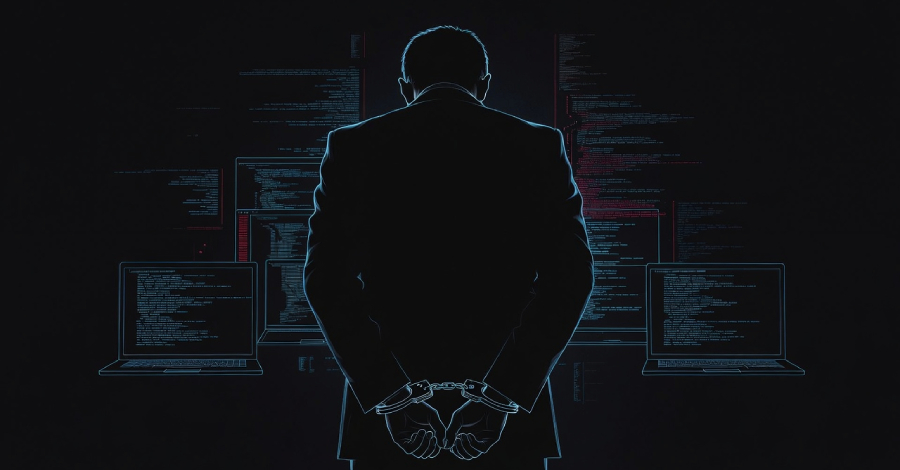

A 29-year-old Ukrainian national has been sentenced to five years in a United States federal prison for his central role in a conspiracy that facilitated North Korea’s fraudulent information technology worker scheme. Oleksandr “Alexander” Didenko received his sentence in a U.S. district court after pleading guilty in November 2025 to charges of wire fraud conspiracy and aggravated identity theft. The case highlights a sophisticated operation where foreign IT workers, primarily from North Korea, used stolen American identities to secure employment with U.S. companies, thereby generating revenue in violation of international sanctions.
Details of the Fraudulent Scheme
According to court documents, Didenko operated a digital infrastructure that was essential to the scheme’s success. He created and managed accounts on various online freelance and job platforms. His primary criminal activity involved stealing the identities of U.S. citizens. Didenko then sold these stolen identities to IT workers who were secretly operating on behalf of North Korean interests.
These workers, posing as American-based freelancers, used the fake identities to apply for and obtain remote IT work with companies across the United States. The workers performed tasks such as software development and other technical services. The income they earned was funneled back to North Korea, providing a crucial stream of foreign currency that bypasses stringent international sanctions imposed on the country for its nuclear weapons and ballistic missile programs.
Legal Proceedings and Guilty Plea
The U.S. Department of Justice initiated the case as part of a broader crackdown on sanctions evasion and cyber-enabled fraud. Didenko was arrested and extradited to face charges. In his November 2025 guilty plea, he admitted to his involvement in the conspiracy, which spanned several years. Prosecutors detailed how his actions directly enabled North Korean IT workers to infiltrate the global freelance marketplace.
During sentencing, the court emphasized the severity of the crimes, which not only defrauded U.S. businesses but also directly undermined national and economic security by supporting a sanctioned regime. The five-year prison term reflects the serious nature of wire fraud conspiracy and identity theft when linked to geopolitical sanctions violations.
Broader Implications for Tech Security
This sentencing brings renewed attention to the vulnerabilities within remote hiring practices and freelance platforms. Security experts have long warned that the digital gig economy can be exploited by malicious actors for sanctions evasion, money laundering, and intellectual property theft. The case demonstrates how stolen personal identifiable information can be weaponized for complex international fraud.
Companies hiring remote IT contractors are urged to enhance their verification and due diligence processes. This includes implementing more rigorous identity checks, monitoring for suspicious work patterns, and being aware of the potential for sanctioned entities to use such schemes as a revenue source. The incident is a stark reminder that cyber threats often intersect with traditional national security concerns.
Ongoing Investigations and Future Steps
The U.S. Department of Justice has indicated that investigations into similar networks are ongoing. Authorities are actively working to identify other individuals and entities involved in facilitating North Korea’s IT worker operations. The sentencing of Didenko is seen as a significant step in disrupting one node of this extensive network.
Looking ahead, legal experts anticipate continued enforcement actions targeting the financial pipelines of sanctioned nations. Further indictments and prosecutions related to similar identity theft and fraud conspiracies are expected as international law enforcement agencies increase collaboration. The case also sets a legal precedent for holding facilitators, not just the front-line workers, accountable for their role in complex sanctions-busting schemes.
Source: U.S. Department of Justice