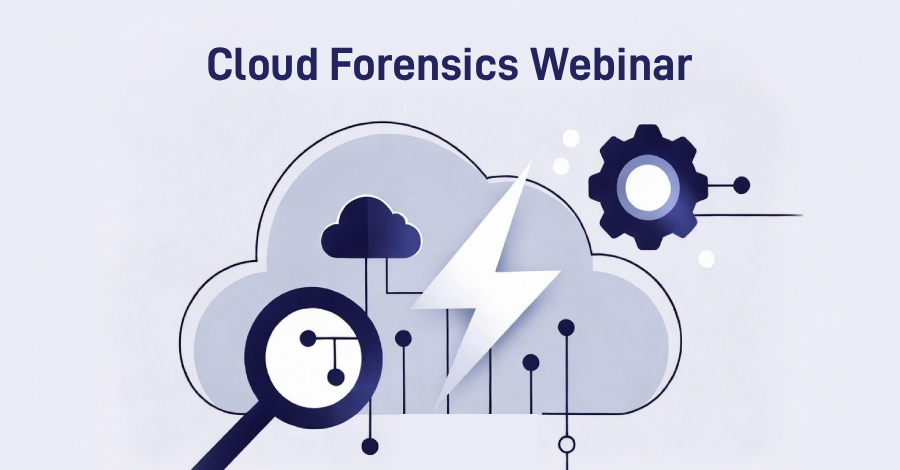

Security operations center teams are increasingly adopting artificial intelligence and contextual data analysis to accelerate investigations into cloud based breaches, according to industry analysis. This shift addresses the unique challenges of cloud environments, where evidence can be ephemeral and traditional forensic methods are often too slow.
The Challenge of Cloud Forensics
Cloud attacks unfold at a pace that frequently outstrips the capabilities of conventional incident response teams. In traditional data center settings, investigators had the luxury of time. They could methodically collect disk images, review extensive log files, and construct detailed attack timelines over several days.
The cloud infrastructure model fundamentally changes this dynamic. Compute instances are often short lived and can be terminated automatically. A compromised virtual machine or container may disappear within minutes of an attack. Security credentials and access keys rotate frequently, and critical log data often has a limited retention period before it is automatically purged.
This environment means that crucial digital evidence can vanish before a security team even begins its analysis, creating a race against time that many teams are not equipped to win with manual processes alone.
Integrating AI and Context
The emerging response from Modern SOCs involves a dual focus on automation and enriched data. Artificial intelligence, particularly machine learning models, is being deployed to triage alerts, correlate events across disparate cloud services, and identify anomalous behavior that may indicate a breach.
Concurrently, teams are prioritizing the aggregation of context. This involves linking user identities, resource configurations, network traffic flows, and API call logs into a unified investigative narrative. The goal is to move from isolated alerts to a coherent understanding of an attacker’s actions and objectives.
By combining AI driven speed with deep contextual awareness, analysts aim to reconstruct attack chains in hours or minutes instead of days. This approach is considered essential for containing breaches before they escalate and cause significant data loss or financial damage.
Industry Implications and Neutral Tools
The evolution in cloud forensics is driving demand for security tools that offer advanced analytics and automation. Industry observers note a trend toward platforms that can ingest data from multiple cloud providers and SaaS applications to provide a single pane of glass for investigators.
These tools focus on normalizing data formats and applying consistent detection rules across hybrid and multi cloud estates. The effectiveness of an investigation increasingly depends on the ability to quickly query and visualize relationships between cloud assets and events.
Training for SOC personnel is also adapting, with greater emphasis on cloud specific knowledge, understanding shared responsibility models, and interpreting the output of automated investigation systems.
Future Developments and Standards
The field of cloud forensics continues to evolve rapidly. Industry groups and standard setting bodies are expected to release further guidance and frameworks for effective incident response in cloud environments in the coming year. The development of more sophisticated AI models for predicting attacker behavior and automating containment actions is also anticipated.
As cloud adoption deepens, the speed and efficacy of breach investigations will remain a critical benchmark for organizational security maturity. The integration of artificial intelligence and comprehensive context is now widely seen as a necessary evolution for security operations to keep pace with modern threats.
Source: Industry Analysis