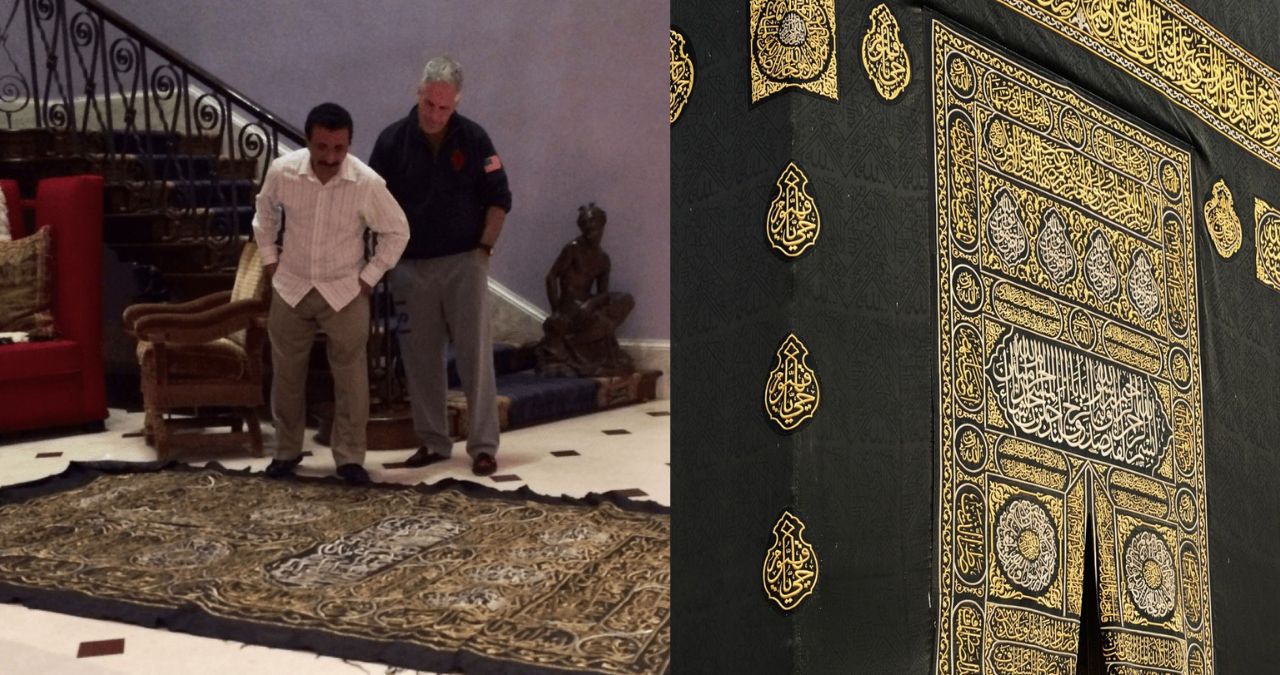

A photograph appearing in newly released court documents related to the Jeffrey Epstein case has triggered widespread condemnation from Muslim communities and leaders globally. The image, which surfaced online, appears to show a piece of fabric resembling the Kiswa, the sacred cloth covering the Kaaba in Mecca, being used as a floor covering.
The controversy emerged as thousands of pages of legal filings from a lawsuit linked to the late financier were made public. Among the visual materials was a photograph depicting an interior space where a distinctive black and gold ornamental cloth is seen on the floor. Many observers immediately identified the pattern as strikingly similar to the Kiswa.
Immediate Religious and Diplomatic Reactions
Muslim leaders and organizations worldwide have expressed profound anger and demanded a full investigation into the photograph’s origin and context. The Kaaba is Islam’s holiest site, and the Kiswa is treated with utmost reverence; its depiction as a carpet is viewed as a deeply disrespectful act.
Official statements have been issued by several Islamic councils and foreign ministries. Saudi Arabian authorities, who are the custodians of the Holy Mosques in Mecca and Medina, stated they are looking into the matter with “great seriousness.” They emphasized the inviolable sanctity of the Kaaba’s symbols.
Context Within the Epstein Document Release
The image was part of a massive document dump from a defamation case involving Ghislaine Maxwell. While the primary focus of the public and media has been on identifying associates and uncovering new details about Epstein’s sex trafficking network, this particular photo has diverted significant attention toward issues of religious sensitivity.
Legal experts note that the photograph itself is not evidence of a crime, but its inclusion in the files has raised questions about the environment and attitudes within Epstein’s circles. Investigators have not yet verified where or when the photo was taken, nor who is responsible for the scene it depicts.
Calls for Accountability and Respect
Prominent Muslim advocacy groups in the United States and Europe have called for accountability. Their demands include a formal apology from any living individuals connected to the photograph and educational efforts to prevent such disrespect toward religious symbols.
Interfaith leaders have also commented, urging greater cultural and religious sensitivity, noting that the incident risks deepening divides at a time of heightened global tensions.
Next Steps and Ongoing Investigations
The immediate focus is on authenticating the photograph and determining its provenance. Digital forensic analysts may be enlisted to verify the image’s metadata and origin. Legal authorities overseeing the broader Epstein case review are expected to be questioned on whether this aspect falls under their purview.
Diplomatic channels are likely to be utilized as Gulf nations and other Muslim-majority states seek official clarifications from the U.S. government. The long-term implications may include renewed discussions about laws protecting religious symbols from desecration in various jurisdictions.
Source: Mashable