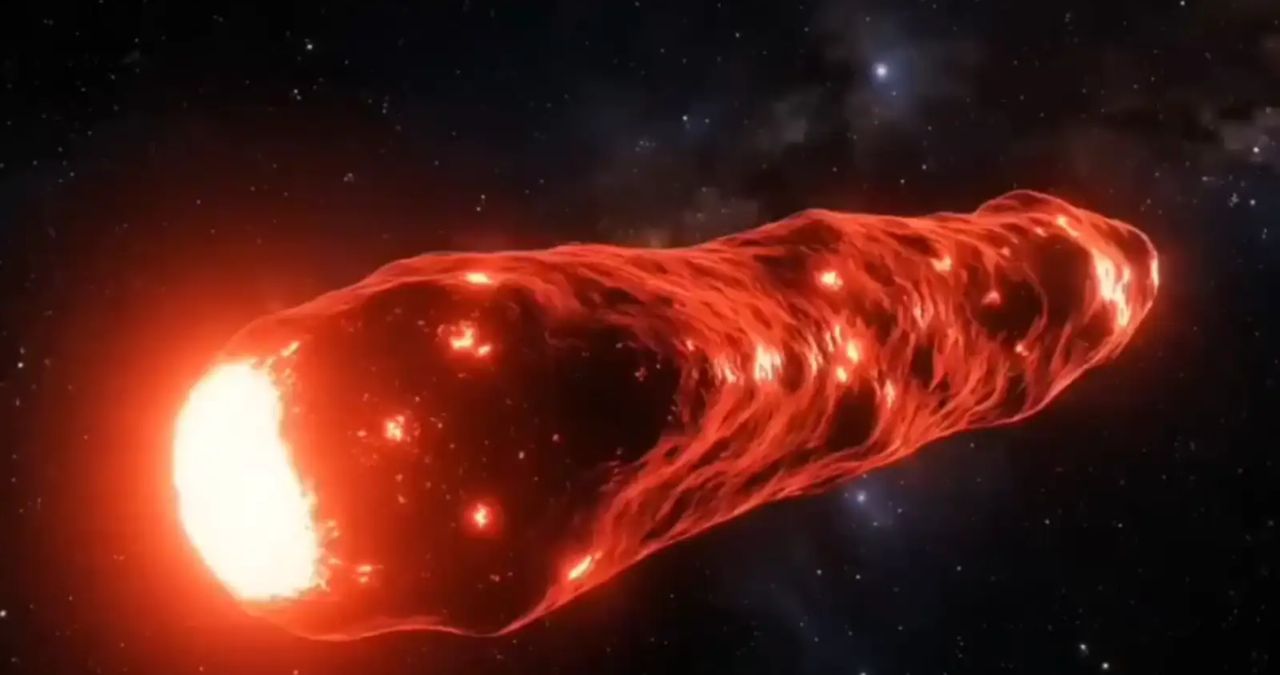

Astronomers are investigating the unusual chemical composition of interstellar comet 3I/ATLAS, which contains unexpectedly high levels of methane. The discovery, based on data from the Hubble Space Telescope and other observatories, challenges current models of comet formation and interstellar chemistry. The findings were published this week in a peer-reviewed study, raising new questions about the origins of this visitor from beyond our solar system.
An Interloper’s Composition
Comet 3I/ATLAS was first detected in 2019 by the Asteroid Terrestrial-impact Last Alert System (ATLAS) survey in Hawaii. It was quickly identified as an interstellar object, only the second such confirmed visitor after ‘Oumuamua. Detailed spectroscopic analysis of its coma, the cloud of gas and dust surrounding its nucleus, revealed a surprising abundance of methane gas.
This detection is considered unusual because methane typically requires very cold temperatures to remain stable in a comet’s nucleus. The presence of such volatile compounds in an object that has traveled through interstellar space for millions, if not billions, of years was not anticipated by most theoretical models.
Challenges to Existing Theories
The high methane ratio forces scientists to reconsider the environments where such objects form. One leading hypothesis suggests 3I/ATLAS may have originated in a region around a young star much richer in carbon than our own solar system’s proto-planetary disk. Alternatively, it could have formed in an extremely cold, outer region of a distant planetary system where methane ice could survive.
“The chemistry we are seeing is a clear departure from what we observe in solar system comets,” stated a lead researcher from the study team. “It provides a direct, albeit puzzling, sample of material from another star system.” The research team emphasized that these are preliminary conclusions based on the available data.
Implications for Planetary Science
Understanding the makeup of interstellar objects like 3I/ATLAS is crucial for astrophysicists. These bodies act as messengers, carrying chemical information about the formation of other planetary systems. The anomalous methane signature suggests that the processes building comets and planets may be more diverse across the galaxy than previously understood.
This discovery also has implications for the search for life’s building blocks in the universe. Methane is a simple organic molecule, and its abundance in an interstellar object indicates that the raw materials for prebiotic chemistry may be common in different stellar environments.
Future Observations and Next Steps
The comet has now traveled beyond the orbit of Mars and is fading from view, making further detailed study with current telescopes difficult. The astronomical community now looks to future observatories, such as the Vera C. Rubin Observatory and the James Webb Space Telescope, to study the next interstellar visitor.
Researchers plan to apply the lessons learned from 3I/ATLAS to refine their observation strategies. The goal is to be prepared to conduct rapid, detailed spectroscopic analysis on any new interstellar objects detected, hoping to determine if this methane-rich composition is an anomaly or a common feature of cosmic wanderers.
Source: Various Astronomical Publications