

The head of the global mobile industry’s trade body has called for urgent action to complete 5G network deployment, responsibly manage artificial intelligence, and strengthen digital security. GSMA Director General Vivek Badrinath issued the warning during the launch event for MWC26, the Mobile World Congress trade show scheduled for next year in Barcelona.
Badrinath stated that the next phase of worldwide digital growth hinges on coordinated efforts from both governments and corporations. He told attendees that while mobile technology connected 5.8 billion people and contributed $7.6 trillion to the global economy last year, the sector now stands at a critical juncture.
Core Challenges for the Mobile Industry
The GSMA leader specifically urged network operators to speed up investment in standalone 5G infrastructure. This technology is required to unlock the full potential of next-generation networks, enabling advanced applications. On the topic of artificial intelligence, Badrinath called for the development of AI systems that are open, inclusive, and governed by responsible frameworks.
He also addressed escalating online threats, noting that rising cyberattacks and digital harms necessitate significantly stronger international cooperation. The goal of such collaboration would be to protect users and rebuild trust in digital ecosystems.
Economic Impact and Persistent Gaps
Coinciding with the event, the GSMA published its annual Mobile Economy report. The 2026 edition underscores the industry’s substantial economic influence alongside persistent digital inequalities. The report notes that 96% of the global population now lives within range of a mobile broadband network.
Despite this widespread coverage, more than three billion people remain offline. The primary barriers are identified as affordability, a lack of digital skills, and limited access to relevant local services. The study projects that the mobile industry’s contribution to the global economy will grow to $11.3 trillion by 2030, representing 8.4% of total global GDP.
A Rapidly Evolving Technology Landscape
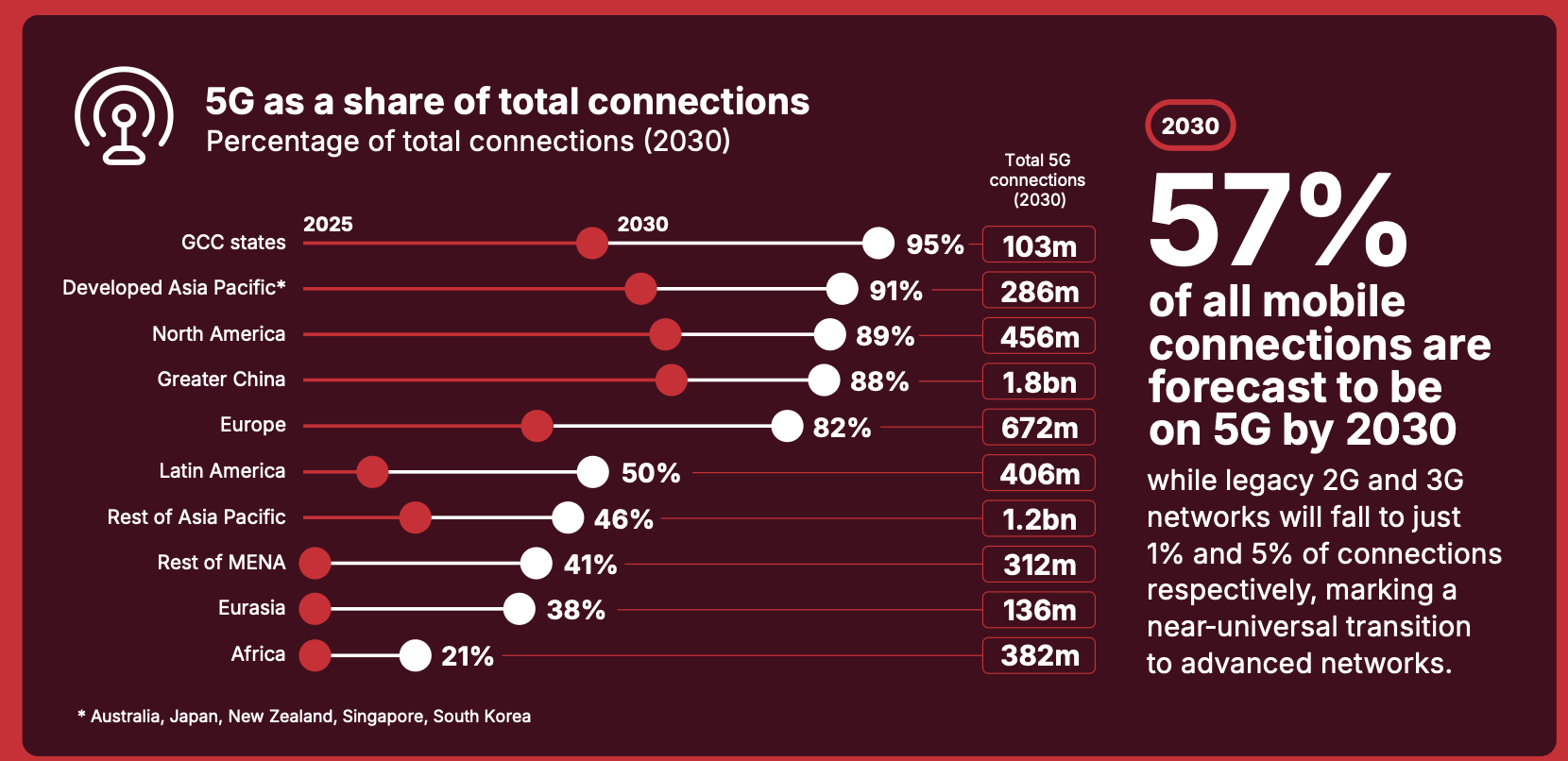
The report further illustrates the swift pace of technological change within the sector. It forecasts that by 2030, 57% of all mobile connections worldwide will be on 5G networks. Concurrently, older 2G and 3G networks are expected to be largely phased out.
Operator revenues are predicted to rise from $1.19 trillion in 2025 to $1.36 trillion by 2030. This growth is anticipated to be supported by approximately $1.2 trillion in capital expenditure on network infrastructure over the same period.
Looking ahead, the industry’s focus is expected to remain on the dual imperatives of infrastructure advancement and inclusive governance. The GSMA’s statements set the stage for ongoing discussions at future industry forums, with policy development and cross-border security agreements likely to be key topics as the 2030 projections approach.
Source: Mobile News